
Home, still the Italians' safe haven asset: in 2025 market at 134 billion and 770,000 sales
Rising prices (+3.1%) due to a shortage of supply, while almost 40% of sales are of second homes. Generational transition rewrites market balances. Milan first for dynamism
Key points
The home is confirmed as the main investment of Italian families and one of the pillars of the country's economic and social system. This is what emerges from the fourth Osservatorio sull'Abitare Una casa è per sempre - un investimento che vale (A house is forever - an investment that counts), produced by Scenari Immobiliari and Abitare Co., which photographs an expanding residential market thanks to stable rates and inflation. Turnover in the residential sector will be close to EUR 135 billion in 2025, up 8.25 per cent in the last twelve months and more than 60 per cent in the last decade.
Purchases and sales reaching 800,000
Purchases and sales reached 770,000 units (+7% on 2024), with a forecast of 800,000 transactions for 2026. In this context, about 40% of the purchases and sales concern second homes, also purchased for investment. However, this growth is accompanied by an imbalance between supply and demand: average prices rose by 3.1% in 2025, with a forecast of +4% for 2026. The rise is even more pronounced for new product, values of which have risen by 6.5% in 2025 and will increase by almost 7% in 2026.
Wealth on the move: 2,250 billion redraws the balance
Underpinning the market is a solid demand, also fuelled by a historic phase of capital transition. In the European panorama, Italia stands out for certain peculiarities that define the current and future market. With an ownership rate among the highest in the major continental economies, the country has built over time a housing model that is intertwined with the culture of family savings and the intergenerational transmission of wealth. According to the report, this is one of the key issues driving the current lack of product in large cities, as the country is in the midst of a historic phase of wealth transition, as more than EUR 2,250 billion of real estate wealth from generations born between 1945 and 1964 are redefining the balance of supply and demand.
Milan is again the most dynamic market
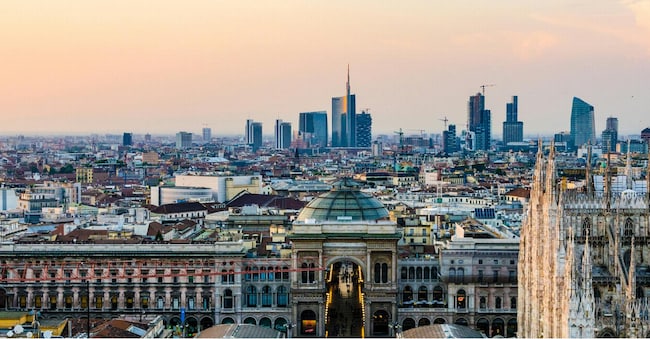
The real crux remains the lack of quality supply. Milan and Rome concentrate over 70% of the 17,200 new homes available in the large centres, but the weight of the new does not exceed 8% of the overall stock. Milan has returned to being the most dynamic market with 26,000 purchases and sales (+8.3%) and a turnover of 11.8 billion, but the shortage of properties pushes the search for smaller units, such as studio apartments, which are once again the protagonists in urban centres.
However, 2025 also marks the consolidation of Rome as the leading market by volume of business, with turnover reaching 12.6 billion (+4.1%). In the capital, the combined effect of the Jubilee and the NRRP investments has regenerated interest in the historic centre, where average prices have now reached €10,750 per square metre.
Brand connect


Newsletter RealEstate+
La newsletter premium dedicata al mondo del mercato immobiliare con inchieste esclusive, notizie, analisi ed approfondimenti
Abbonati