
Casati Flock & Fibers focuses on recycling with 460,000 euro plan
The Brianza-based company has been producing flock for over 70 years and has now decided to expand production from textile waste from 350 to 500 tonnes per year
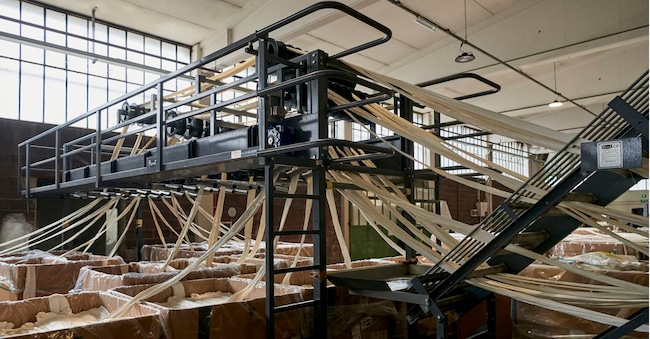
Casati Flock & Fibers focuses on recycling and saving energy and water: the Brianza-based company from Renate has launched a 460,000 euro plan - 50% co-financed by the Lombardy Region (with the Ri.Circo.Lo. tender) - that envisages an increase in the recovery capacity of textile residues that could not be processed until now, as well as a rethinking of the entire production process with lower electricity and water consumption.
"We aim to make the mills, the machines that grind textile waste, more efficient, working together with machinery manufacturers to increase the production capacity of recycled flock from 350 to 500 tonnes per year," says President Lorena Rossi Casati in detail. On the energy and water aspect, she adds: "We already have a solar panel system, and we are waiting for authorisation to expand it in a nearby plot to cover all our needs. We have also introduced automatic dispensers for chemicals and management software to reduce waste. We have started to use digitally controlled valves for reusing water in the dyeing baths and are working on recovering it from the centrifuges.
Casati Flock and Fibers is a family business founded in 1952 and led today by the fourth generation: the managing director is Lorena's daughter, Beatrice. It has a turnover of 6 million euro, an annual production of 900 tonnes of flock and 33 employees. 'We are integrating new specialised figures such as materials engineers and industrial chemists: they are bringing a breakthrough in the applications of the product, which can be used in new composite materials,' stresses the president. The investment plan, with the first interventions already started and the prospect of concluding it by 2027, foresees, thanks to the bet on recycling, an increase in production, recovering the original vocation of flock, the textile powder born from the waste from the shearing of velvet.
Today, virgin flock is obtained by cutting long natural or artificial fibres (tow). Dyed and electrostatically charged so that the hair falls straight up on the glue of the final application, the flock is then able to give the velvet effect. The applications are manifold: textiles, packaging, medical, automotive. 'For the Mint, we produce five colours for the safety fibres that can be seen under ultraviolet rays. Our flocks are also used on Covid pads, pipe cleaners, lip glosses,' says Rossi Casati.
Ora quella del riciclo è una sfida che ha del potenziale. La raccolta differenziata dei rifiuti tessili è obbligatoria in Italia dal 2022 e in Europa dall’1 gennaio 2025 in base alla direttiva Ue 2018/85. In realtà non è mai davvero decollata perché non è mai partita la responsabilità estesa al produttore (Epr) per il settore tessile. Ma il comparto si muove già verso una maggiore sostenibilità. «Da sempre abbiamo avuto i mulini per macinare gli scarti tessili di qualunque materiale: cotone, lino, lana. Ora c’è forte l’esigenza del riciclo, abbiamo deciso di puntarci per la sua importanza. Ce lo chiedono anche le aziende di moda che hanno scarti: li riceviamo da tutta Europa», spiega sempre la presidente. Proprio in ottica di economia circolare è nata lo scorso anno Pulvera, spin off della Casati Flock & Fiber fondata dall’ad Beatrice Casati con la sorella Eleonora: studia come trasformare il flock ottenuto dagli avanzi per realizzare nuovi materiali. Un laboratorio per accompagnare l


