
Cash remains the king of payments: still worth 52% in Europe
However, the hegemony is steadily declining: cash transactions in shops were 59% in 2022, 72% in 2019 and 79% in 2016

2' min read
2' min read
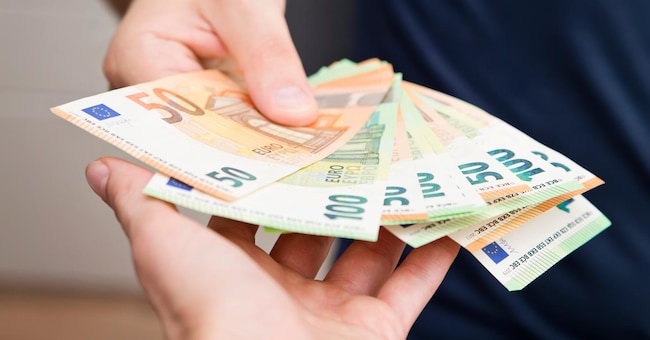
Cash is king, cash remains the king of payments in the euro area. But perhaps not for much longer, in a world where daily online payments are increasing. The third edition of the ECB study on consumer payment habits in the euro area (Space) found that in terms of the number of payments, cash is still used in shops, points of sale, as the main means of payment, accounting for 52% of the total number of transactions. Cash also remains the most important payment option for most respondents (31% very important, 31% fairly important), mainly due to privacy concerns.
Bending
.However, the hegemony of cash is steadily declining: 52% of transactions in shops in 2024 is lower than 59% in 2022, 72% in 2019 and 79% in 2016 when this survey began. The third edition of the study is based on face-to-face interviews and questionnaire collections conducted between September 2023 and June 2024 among a sample of 50,000 consumers in the eurozone.
Fewer cards, more smartphones
.For online payments alone out of the total daily payments, credit cards are confirmed as the most popular means but with a declining trend (at 48% of the total in 2025 compared to 54% in 2019 and 51% in 2022) while mobile phone apps are on the rise. Credit cards are the most widely used payment instrument in shops in terms of transaction volumes.
Italy country of cash
.In Italy, 61% of transactions in shops are made in cash (among the highest percentages in the euro area where the lowest is 22% in the Netherlands), followed by 32% with credit cards and only 4% with mobile phone apps.
Finally, the ECB study found an increasing share of consumers (those surveyed) owning crypto-assets: the percentage more than doubled, though from a low 4% in 2022 to 9% on average in 2024. In Italy, the ownership of crypto-assets was found to be 9%, on average in the eurozone. The use of this instrument is predominantly as a means of investment and not as a form of payment.


