News

Cassation, Nordio: 'Blasphemous to say that the reform undermines the independence of the judiciary'

The Justice Minister, speaking at the Court of Cassation for the opening of the judicial year, rejects the accusations: 'No attack on autonomy and independence'. President of the Republic Sergio Mattarella present

by Ivan Cimmarusti

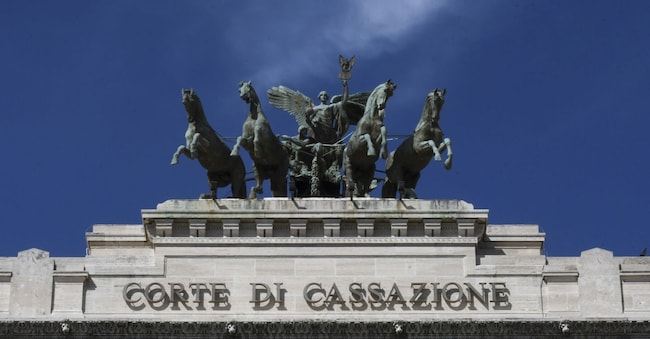
CORTE DI CASSAZIONE ESTERNO ESTERNI PALAZZACCIO PALAZZO DI GIUSTIZIA

6' min read

Translated by AI
Versione italiana

6' min read

Translated by AI
Versione italiana

'My presence' for the fourth year at the inauguration of the judicial year 'demonstrates government stability, which is a decisive factor for domestic and international credibility'. Thus Justice Minister Carlo Nordio.

Under the gaze of the Head of State, Sergio Mattarella, the Court of Cassation opens the 2026 judicial year in the Aula Magna: a ceremony that, in addition to the ritual, brings to the stage the most sensitive political-institutional issue, that of the independence of the judiciary. First President Pasquale D'Ascola and Attorney General Piero Gaeta will be in the front row; speeches by Justice Minister Carlo Nordio and SCCM Vice-President Fabio Pinelli are expected. Also present will be the Presidents of the Chamber and Senate Lorenzo Fontana and Ignazio La Russa, the President of the Constitutional Court Giovanni Amoroso and the Undersecretary to the Prime Minister Alfredo Mantovano.

Loading...

The reform

The Minister of Justice Carlo Nordio, speaking in the Aula Magna of the Court of Cassation for the opening of the judicial year, rejected in the harshest terms the idea that the reform under discussion could undermine the constitutional guarantees of the judiciary. For Nordio, claiming that the reform 'tends to undermine' the independence and autonomy of judges is not only an unfounded accusation: it is a distorted reading that overturns the very meaning of the intervention, almost turning it into an attack on the judicial order.

In his reasoning, the point is to prevent the institutional confrontation from slipping into a terrain of ideological opposition, where every regulatory change is automatically interpreted as an attempt to compress the autonomy of the judiciary. Nordio therefore asserted that the reform, at least in the government's intentions, is not moving against the judiciary, but within a perimeter of rules and arrangements that remain compatible with constitutional principles: this is why he defined it as 'blasphemous' to attribute to it purposes of weakening independence.

In essence, the minister's message is that the debate should focus on the substance and concrete effects of the rules, not on a 'principled' narrative that, in his view, risks fuelling a permanent conflict between the powers of the State and poisoning the climate around justice.

According to the first president of the Supreme Court, Pasquale D'Ascola, "the concern of the judiciary is to ensure that the independence and autonomy of the jurisdiction remains effective as a cornerstone of the constitutional system". "In a Constitution that has in the principle of equality upheld its essential pivot, the judiciary, which exercises the jurisdictional function so that the law is equal for all, feels it has fulfilled its duty if the right, every right, has effective protection and not if it is only declaimed. Its autonomy and independence is not a privilege, but rather a prerequisite for the judge to always be impartial,' he added.

Civil and criminal backlog falls

In the balance sheet illustrated during the ceremony, D'Ascola highlighted the reduction of the backlog and the pace at which proceedings in both criminal and civil law are being completed.

"In 2025, about 44,000 criminal appeals will last in the Court and 40,815 have been finalised. The portrait we uncovered last year amounted to only 13,628 files, only as many as the Court was able to define in four months," said the first president. "We therefore have a Supreme Court capable of exhausting criminal contingencies in an average of 122 days. The latter is a slightly higher figure than in previous years, but it is worth considering the lack of organic matter for a new focus on the balance of the quality of the audience, so as to address it with the utmost attention that will make it more complex.

"In the civil sector," he added, "the backlog has been reduced by a third in five years: from 120,473 at the end of 2020, and pending costs until 31 December 2025 have dropped by 80,000. The Court maintains a medium-to-high settlement rate: citizens who sometimes wait a long time for the final outcome of their disputes know this well'.

D'Ascola recalled that "in 2020 the average time for the definition of a civil cassation judgement was 1,530 days; that the prescription of time provisions delivered to us at the beginning of 2026 had to be completed in 977 days, and in 2025 if we were to resume in 863 days, another hundredth less than what was imposed on us to maintain the agreement with the European Union," he stressed. "This was thanks to the definition of 34,062 procedures in one year. The 75,000 civil and criminal appeals defined in 2025 were the work of about 300 magistrates between councillors and section presidents, which became 357 thanks to the autumn grafts. Their efforts were supplemented by the cooperation of colleagues from the Massimario and naturally corroborated by the invaluable port of the Court's General Prosecutor's Office'.

Femminicidi

Pasquale D'Ascola explained that, in his daily work, every judge closely observes the phenomena with which he comes into contact and which had already been highlighted last year: first of all, crimes of violence against women, right up to the barbarity of feminicides; then the transformation of the world of work, which fuels insecurity and instability and leaves behind a tragic toll of deaths and injuries; finally, the scourge of suicides in prison. Mr D'Ascola added that, in these situations, what is affected is the very dignity of the person: in the man or woman unjustly deprived of work, in the destitute person left alone, in the abused prisoner, and sometimes in the sick person who has reached the end of life.

Digitalizzazione

Pasquale D'Ascola, first president of the Court of Cassation, also referred to another critical front for justice: that of digitalisation. According to his reasoning, the most urgent issues include the launch and maintenance of the telematic criminal trial and the adaptation of the telematic civil trial, both in the courts of merit and in the Supreme Court. Mr D'Ascola noted that the investments of recent years, although substantial, have not yet produced results up to the mark and that a change of method is needed: structural initiatives must be built on the real needs of judicial offices, involving them before designing IT programmes and tools, so as to immediately verify their effectiveness.

Pinelli, do not debase role of magistrates

"In a liberal democracy, it is up to politics to dictate the rules, because it is the expression of the power of representation based on free elections", and "it is equally necessary to avoid positions that can debase the crucial and irreplaceable role that the Constitution assigns to the judiciary", recalling that "the judiciary is one of the pillars on which democracy rests: whether one wants it or not, it is the State itself in one of the manifestations of its sovereignty". This was said by the vice-president of the Csm, Fabio Pinelli, in his speech at the Court of Cassation for the inauguration of the judicial year, adding that "it is, therefore, important to always bear in mind what it means to be a magistrate: exercising a function that is indispensable to guarantee, according to constitutional principles, the direct and impartial application of the law".

"Reciprocal delegitimisation weakens the institutions and breaks the pact of trust between them and the citizens who, disoriented, may wonder whether they must or can still trust those who decide, in various ways, their fate, both with the introduction of new rules, even of constitutional rank, and with the application and interpretation of the law, in the exercise of jurisdiction". This was said by the vice-president of the Csm, Fabio Pinelli.

Pinelli went on to emphasise that, 'in a modern liberal democracy', the solidity of the system depends on the ability of the institutional actors to recognise themselves as part of a common horizon, even in the divergence of roles, 'sharing the fundamental principles underlying the civil coexistence that permeates democratic institutions'.

And he concluded by reiterating that 'the need for harmony' must be asserted even more forcefully in a phase marked by tensions: precisely for this reason, he explained, it is indispensable for the institutional actors to respect the principle of loyal cooperation, as a natural complement to the separation of powers, especially at points where the different functions touch and may interfere with each other.

Copyright reserved ©
  • Ivan Cimmarustigiornalista

    Luogo: Roma

    Lingue parlate: Italiano, inglese

    Argomenti: Sicurezza, giudiziaria, inchieste, giustizia tributaria

    Premi: Nel 2011 tra i vincitori del Premio Internazionale Antimafia Livatino-Saetta

Loading...

Brand connect

Loading...

Newsletter

Notizie e approfondimenti sugli avvenimenti politici, economici e finanziari.

Iscriviti