

Borse, dividendi mondiali oltre i «rumori di fondo»: primo trimestre da record
di Maximilian Cellino

5' min read
5' min read
If design has always been - even before the mere design of products - the ability to plan and devise solutions to the needs of an ever-changing society, it is clear that today the priority need, and therefore the most urgent solution to be found, is the management of climate change that is causing ever more damage to our Planet. Hence the great attention to sustainability that Italian furniture companies have been demonstrating for years, with even significant investments in production processes and in the design of their products.
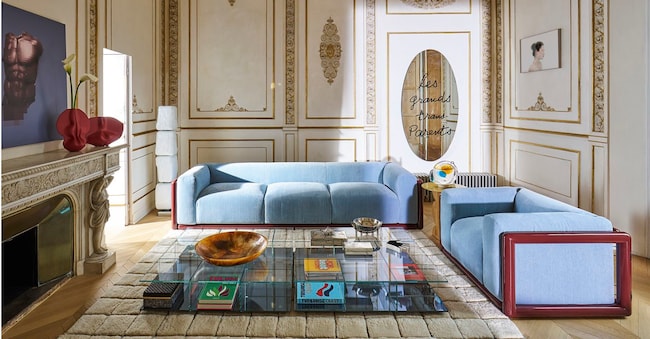
But sustainability means considering not only the environmental, but also the social and economic impacts of one's production. And here the matter becomes more complex, because supply chains intertwine and integrate with each other and dialogue between different sectors becomes necessary. This is why Cassina - the historic Italian design brand founded in Meda in 1927 by Cesare Cassina - chose to accompany the presentation of its fourth Sustainability Report with a meeting entitled 'Investing in Sustainability: the Dialogue between Design and Real Estate', to discuss the challenges inherent in these sectors and to promote a choral change. Speakers at the event included Luca Fuso, CEO of the Design Division of Haworth Lifestyle, Claudia Soravia, Head of Investment Division & Technical Director of the Yard Reaas Group and Patricia Urquiola, architect, designer and art director of Cassina, as well as Marco Capellini, CEO of Matrec and circular economy expert.
"We wanted to organise this event, bringing together voices from the real estate, architecture and design sectors to promote an increasingly shared approach," explains Luca Fuso. "For Cassina, sustainability remains a fundamental pillar that guides our strategic choices with an integrated vision that permeates all areas of activity, from design to production, to the management of our people and relations with the local community.
Designing, building and producing today entails increasing attention to social and environmental impacts, far beyond slogans and marketing strategies: compliance with ESG criteria and the adoption of Circular Economy measures are necessary to ensure a more sustainable future, but also to achieve concrete results in terms of economic and financial performance.
During the conversation, concrete challenges and adopted solutions were presented, highlighting how sustainability today has taken on a strategic role, redefining the concept of value for customers, suppliers and stakeholders. Cassina, for example, has been producing its Sustainability Report for four years now, which highlights the objectives, progress and results of its environmental, social and governance (ESG) performance along three main lines: Product, People and Planet.

