Sport and the local area

Castelbuono: the race that gets the whole region moving

In the Madonie mountains, the running race is celebrating its 100th edition. It’s not just about sport: the ‘Cursa’ of Sant’Anna has become a key factor in boosting the reputation of a town in the inland regions, successfully combining high-quality tourism, local identity and business

4' min read

Translated by AI
Versione italiana

4' min read

Translated by AI
Versione italiana

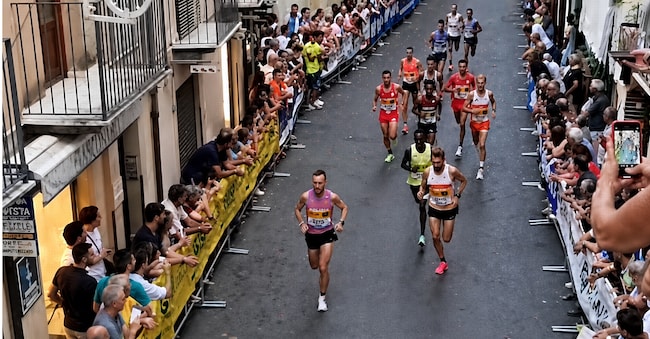
In Castelbuono, the Giro begins before the starting gun is fired. It begins at the tables in Piazza Margherita, in the shop windows that stay lit, on the balconies from which you watch the street transform into a race circuit. It begins in the photographs dug out of family archives, in the stories of those who remember a champion, a sprint finish, a summer’s evening when the town seemed larger than life.

On 26 July, at the 100th edition of the International Running Race, it won’t just be the athletes taking part. A part of Castelbuono – a village in the Madonie mountains that for over a century has used its most famous race to tell its story beyond the boundaries of the inland area in which it lies – will also be taking part.

Loading...

A parade of Olympic stars

Some have described this edition as a ‘parade of stars’. And it’s not just a figure of speech: ‘Yeman Crippa, winner of the Giro in 2025 and Italia’s number one in the long-distance middle-distance; Tamirat Tola, Olympic and world marathon champion; Selemon Barega, Olympic gold medallist in the 10,000 metres at Tokyo; Victor Kiplangat, 2023 world marathon champion; Amos Kipruto and Amos Kipkurui Langat among the Kenyans; and, among the Italians, Eyob Faniel, Yassine Rachik and Ahmed Ouhda’. It is a start list that gives the race an international flavour and confirms the appeal of an event that originated in a small town in the Italian hinterland.

A journey through the tourist offering

Castelbuono has built its appeal on quality: the Ventimiglia Castle, the museums, the Madonie landscape, the cuisine, the pastries, local produce and unhurried hospitality. Within this model, the Giro plays – as the saying goes – an important role.

There are no structured data on the economic impact of the race. It would therefore be a mistake to attribute unmeasured economic benefits to it. However, its value lies in its ability to focus attention, audiences, media coverage and relationships on Castelbuono. An event of this kind does not solve the problems facing inland areas – from depopulation to transport links – but it can become a form of intangible infrastructure: it takes the town’s name beyond its borders, attracts enthusiasts and journalists, creates opportunities for people to come together, and bridges the gap between memory and the future.

The book and the history of the community

This is well documented in the book published to mark the anniversary, *Il Giro Podistico Internazionale di Castelbuono 1912/2026. 100 edizioni tra sport, storia, fede, cultura* (The Castelbuono International Road Race 1912/2026: 100 editions of sport, history, faith and culture), edited by Martino Spallino, Tommaso Raimondo and Antonio Castiglia for Edizioni Le Madonie. It is not merely a roll of honour. It is the story of a community that has kept a race alive through wars, financial crises, organisational changes, social transformations and periods of renewal.

The first edition dates back to 1912. It was organised by the Nebrodese Sports Club, under the auspices and at the expense of the Committee for the organisation of the patron saint’s festival of Saint Anne. From the very beginning, therefore, the race was rooted in the social and economic life of the town: sport, religious festival, trade and public participation. It was not yet regional marketing, but it already possessed some of its characteristics: attracting people, generating interest, and giving the town an event that stood out.

The newspaper that saved the match

The most significant story dates back to the 1920s. When the Giro was in danger of being cancelled, *Il Bancarello*, the local newspaper edited by Giovanni Lupo, stepped in to take the reins. It was not merely a publication that reported on the event, but one that helped to organise it. Lupo, who was already one of the founders of the Sport Club Nebrodese, even went so far as to pay the competitors out of his own pocket during times of financial difficulty.

From *Il Bancarello* to *L’Eco delle Madonie*, right through to *Le Madonie*, the local press has covered the Giro for decades, preserving its reports, results, images and history. Even before social media campaigns and press offices, Castelbuono had already built up a lasting narrative around the race.

Relations with local businesses

This is where the company’s role comes in. Not simply as a sponsor, not just as a logo displayed along the route, but as part of a deeper relationship with the local area. The Fiasconaro case is emblematic. The family that has put Castelbuono on the international pastry map has been linked to the race for generations. In the centenary book, this connection is also evident through the photographs: the Extrabar Fiasconaro, in Piazza Margherita, ‘where sport is at home’; Gelindo Bordin being honoured in 1988 by Don Mario Fiasconaro; the family bar as a meeting place for athletes, organisers, journalists and local residents.

Loading...

“My father Mario saw the Giro as a family and community affair,” says Fausto Fiasconaro. “The Extrabar, in Piazza Margherita, became a meeting place during the race: athletes, organisers, journalists and friends would all drop by. Supporting the Giro means giving something back to Castelbuono and continuing a bond that goes back a long way.”

The challenge following the 100th edition

The 100th edition thus becomes a litmus test. It is not enough to say that the Giro is historic, prestigious and beloved. Meanwhile, one fact remains – not a figure, but an obvious one: for 100 editions, Castelbuono has regarded the Giro not as an expense to be borne, but as a heritage to be defended. Mayor Mario Cicero writes in the centenary book: ‘The Giro Podistico is part of Castelbuono’s heritage: it tells the story of its citizens, its entrepreneurs, its workers, and those who strive tirelessly every day to bring prestige to our culture and our identity’. A tangible mark of the hundred editions of the Castelbuono Giro will be the new ‘Walk of Fame’ created at the starting line, with the names of all the winners engraved in stone and two illuminated steles to preserve their memory.

Copyright reserved ©
Loading...

Brand connect

Loading...

Newsletter

Notizie e approfondimenti sugli avvenimenti politici, economici e finanziari.

Iscriviti

Tutto mercato WEB