
Catania, Stm prepares lines for space and supercomputers
by Nino Amadore
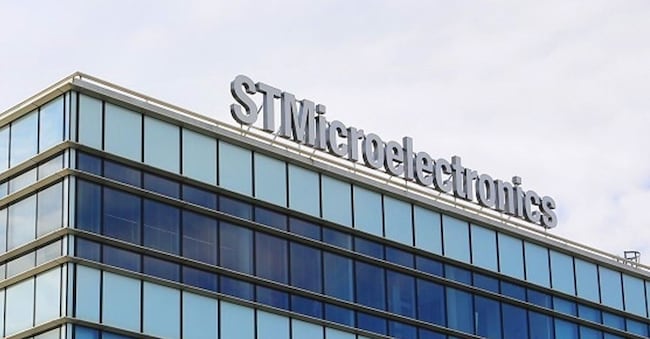
It is not just a production site, and it is no longer just a bet on the electric car. In the new industrial design of STMicroelectronics, the Catania pole aims to occupy a wider and more ambitious space: that of power technologies in the service of energy, data centres, artificial intelligence, advanced industry, robotics and space. This is the real prospect that emerged from the meeting held yesterday in the offices of the Sicilian Region's Department of Productive Activities, where Fabio Gualandris, president of Quality, Manufacturing and Technology at STMicroelectronics, illustrated to Councillor Edy Tamajo, Catania's mayor Enrico Trantino, and union representatives a detailed update on the Etna site's prospects. A plan that extends until 2034 and reconfirms Catania's centrality in research, product development and production activities on power and wide band-gap technologies.
For Tamajo, it is 'a fundamental step, because we are entering the heart of an industrial project that the government led by President Renato Schifani has chosen to strongly support'. The most important novelty lies in the choice of extending the horizon of the pole within a phase of profound market transformation: the group explicitly links the 2024-2034 framework to the new drivers of computing power, cloud, artificial intelligence, energy management and space, together with geopolitical constraints, competition with China, American tariffs and the transformation of the automotive market. Gualandris was clear: "The Catania cluster plays a worldwide role for all power and wide band-gap technologies. It has invested, invests and will invest in production, technological research, product development, reliability methodologies, application laboratories, marketing and planning activities'. In this key, the Sicilian site appears as one of the nodes on which the group intends to build its industrial transition. The first pillar of the perspective is the investment on the 200 millimetre silicon carbide, included in the European Commission Decision of May 2024. For the period 2025-2032, that decision foresees a production capacity of up to 15,000 slices per week on 8-inch wafers, with a total investment of 5.1 billion, 2 billion of which are non-repayable: 1.7 billion from the central government and 300 million from the Sicilian region. The employment forecast is between 2,000 and 3,100 new highly qualified jobs.
The total financial framework for the hub amounts to 5.8 billion: 700 million for substrates and 5.1 of the European Decision. Of this, 1.4 billion has already been invested, 1.7 billion is the remainder to complete Phase 1 - from 0 to 5,000 slices per week - and 2.7 billion is earmarked for Phases 2 and 3, from 5,000 up to 15,000 slices, subject to the materialisation of demand in the new markets. Today, the company is focused on Phase 1, which envisages reaching 5,000 slices by Q4 2028, with a capacity growth of 206%. The intermediate target of 2,000 slices is expected in Q2 2027.
The entire progression remains subject to one concrete condition: the signing of the water supply contract with Sidra, the company that manages the service, by June. ST has reiterated this point clearly, specifying that without an agreement, investments will not be able to proceed. The objective is to build a second leg for Catania, less exposed to the automotive cycle alone and distributed over sectors with more diversified growth trajectories. On the employment front, the pole has already grown by about a thousand employees between 2020 and 2025, from 4,481 to 5,469. From 2030 growth will resume: the plan's projections foresee, in the two scenario hypotheses, between 7,500 and 8,500 employees by 2034. Fiom CGIL and Cgil of Catania expressed satisfaction with the confirmations arrived from the company on investments, production and employment guarantees, but they issued a warning to the municipality: time is up, referring to the Sidra issue.


