In the cellar

Catarratto, the Sicilian answer to the wine crisis

At Santa Cristina Gela in the Palermo area, the first festival dedicated to the island's most cultivated grape variety. Businesses aim to move from quantity to quality, linked to the territory and Arbëreshë culture

by Nino Amadore
3' min read

Translated by AI
Versione italiana

3' min read

Translated by AI
Versione italiana

To make Catarratto no longer the symbol of an agricultural Sicily that produces a lot, but the sign of a wine-growing Sicily that wants to produce better, tell a better story and sell better. For decades this wine has been told almost only through numbers: hectares, yields, production capacity. Now a group of producers is trying to change this perspective. Catarratto must become a tale. And the tale must start from the places.

A paradigm shift at a difficult time for wine

The point is not only oenological. It is economic and cultural. In a difficult phase for wine, in which it is no longer enough to produce a lot to stay on the market, the decision to focus on Catarratto takes on the value of a paradigm shift. It means taking a historic grape variety, often associated with quantity, and transforming it into a lever of identity, reputation and value. No longer the wine that fills cellars. But the wine that narrates a territory and tries to impose itself for its qualities.

Loading...

The Catarratto Festival in Santa Cristina Gela

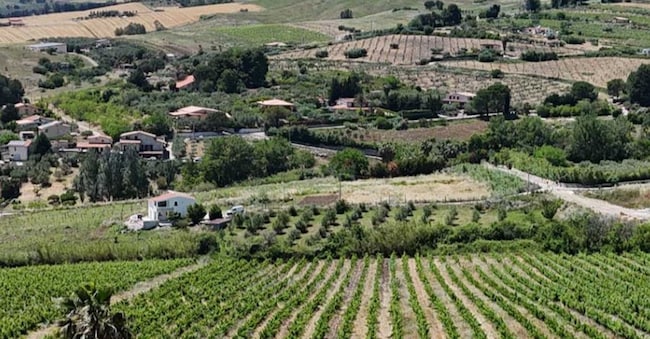
Hence the first Catarratto Festival, scheduled for 6 and 7 June in Santa Cristina Gela, in the Palermo area. Not a simple promotional event, but an experiment that can become a model: bringing together producers, the local community, Arbëreshë culture, gastronomy and landscape to build a stronger narrative around the wine. Catarratto is not presented as an isolated product, but as an expression of a precise area, an agricultural history and a community that preserves language, traditions and memory.

"The first Catarratto Festival was born as an experiment in the education, promotion and valorisation of Catarratto," explains Sebastiano Di Bella, ARCA president and producer. The objective, he adds, is to involve "the territory and the local community" and integrate wine production "in a broader cultural context", making known the most authentic expressions of the vine.

Arca wineries and Catarratto numbers

The initiative is promoted by Arca, the Regional Association of Authentic Catarratto, together with the six founding companies: Bagliesi, Caruso & Minini, Castellucci Miano, Di Bella, Feudo Disisa and Tenute Lombardo. The project starts from an impressive datum: in Sicily, Catarratto still occupies about 28 thousand hectares, although in the 1990s it was about 90 thousand. Within this reduction there is already the sign of a season that is over. The future can no longer be entrusted to production capacity alone. It must come through selection, quality, recognisability.

From volume to value

In this sense, the Santa Cristina Gela festival has a broader significance than the event itself. It becomes the place where ARCA tries to demonstrate that a grape variety considered 'mass' for years can become the centre of a different strategy. The member companies cultivate a total of 80 hectares of Catarratto, with a production potential of around 7 thousand hectolitres: small numbers compared to the regional dimension, but consistent with a choice that does not focus on volume. It focuses on value.

'Fresh, elegant wines can be born from Catarratto. Wines with great personality and surprising verticality,' underlines Di Bella. The phrase indicates the direction of the project: to shift the discourse from yield to quality, from production function to the expressive capacity of the grape variety. "Our task is to create value, to give Catarratto back the prestige it deserves," adds the ARCA president.

The link with the Arbëreshë culture

The Arbëreshë frame is not decorative. It is part of the message. Santa Cristina Gela offers Catarratto a recognisable cultural context: traditional costumes, local cuisine, local products, community. The programme confirms this, with tastings of wines and typical products, the presence of strangùli, a local dish, and parades in arbëreshë costumes. Wine thus becomes a key to reading a territory, not just a product to be tasted.

The new expressions of the vine

The masterclass given by Othmar Kiem, director of Falstaff Italia, together with oenologist Tonino Guzzo, also goes in this direction. It serves to focus on the different expressions of Catarratto and to explain why a grape historically considered generous can give rise to wines that are 'fresher, more contemporary and with great ageing potential', as Di Bella points out.

A way out of the quantitative model

This is the point to make: ARCA uses Catarratto to propose a way out of the crisis of the quantitative model. It is no longer enough to say that a grape variety is widespread. It is necessary to build around that vine an identity, a reputation, a promise of quality. The Catarratto Festival tries to do exactly that: transform an agricultural tradition into an economic and cultural project.

Sustainability and perspective

Catarratto, on the other hand, has a characteristic that is relevant today. It is a resistant grape, capable of adapting to Sicilian microclimates. 'The success of Catarratto is linked to its rare balance,' notes Di Bella. 'It is a grape that resists drought and major diseases'. For this reason, he concludes, it is 'a very modern grape because of its sustainability characteristics'.

Copyright reserved ©
Loading...

Brand connect

Loading...

Newsletter

Notizie e approfondimenti sugli avvenimenti politici, economici e finanziari.

Iscriviti