
Catering and sustainability attract luxury tourism
Italia is confirmed as Europe's leading luxury hotel hub according to 60% of investors

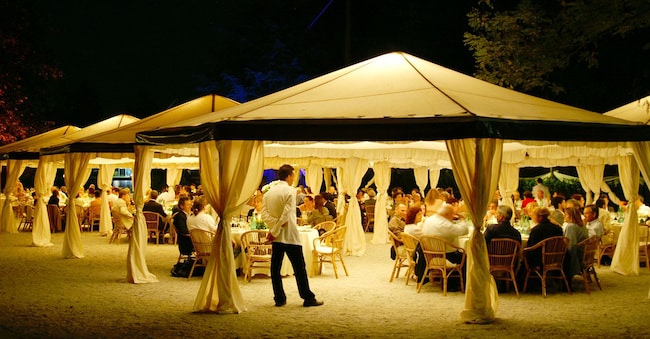
Catering as the other pillar of hospitality. The importance that hotel groups give to the food & beverage business is growing, especially in the luxury hotellerie. A pillar for differentiation and growth that drives investors' choices. "In this context, the role of food & beverage is increasingly growing as a key factor of differentiation and attractiveness for luxury customers, with more than 70% of investors and operators planning to invest in this area," observed Benedetto Puglisi, director real estate & hospitality at Deloitte, during "Luxury hospitality reloaded: repositioning and balancing sustainability". The richness and variety of Italian cuisine, a Unesco heritage site, represent a competitive lever to strengthen the positioning of facilities in the luxury segment, also through investments dedicated to spaces and partnerships with chefs and brands of reference". Italia thus confirms its position as the main European hub for luxury hotellerie according to 60% of investors. In this phase of transformation and uncertainty marked by geopolitical tensions, investments in food & beverage and environmental sustainability emerge as strategic levers of competitiveness and value creation for operators in the sector. In fact, the food and wine proposition now accounts for 30-40% of revenues, with peaks reaching 50% in some cases, all accompanied by increasingly attractive margins.
In the process of upgrading and repositioning a structure, one works on the attractiveness of the location, the availability of capital and the strength of the brand of the chosen chain. Investors' focus is increasingly on existing structures and the attractiveness of Italia is also catalysed by the many period structures, an enviable identity heritage even though these properties are characterised by architectural and conservation constraints. In this field, Italia confirms itself as a particularly attractive market, thanks to the breadth of the existing hotel offer and the opportunities for reconversion of historic buildings and prestigious properties.
"As our study shows, Italia remains the most attractive market in Europe for the luxury tourism sector, thanks to its unparalleled cultural and landscape heritage and established reputation as a destination of excellence. Among the sector operators we interviewed, about six out of 10 indicate our country as the main pole of attraction and development of luxury hotel industry in Europe over the next three years," explains Angela D'Amico, partner and real estate sector leader at Deloitte. Growth prospects extend beyond historically established locations such as Rome, Milan, Venice and Florence and include regenerated villages, mountain territories and emerging destinations". Among the main obstacles, on the other hand, are the difficulty in accessing the capital required to support redevelopment investments and the still positive performance of properties in the segments in which they currently operate.
There is another key asset besides the heritage represented by the facilities of luxury hotels and the offer of quality catering is the increased focus on sustainability and EGS certifications. Between 2024 and 2025 there has been a 22% growth in the number of facilities with EGS certifications, while 73% of travellers would like their tourism spending to generate direct benefits for communities. Thus, ESG certifications are emerging as a prerequisite for competing in the global market: more than a discretionary choice, they represent a credibility passport for high-end accommodation facilities, necessary to attract customers and institutional investors, as well as to access major sources of financing. Furthermore, responsible management of natural resources, including reducing energy consumption, implementing renewable sources, water conservation, circular waste management, is a differentiating element in the eyes of investors and customers. Indeed, facilities that decide to invest in this area achieve a 6-10% increase in property value through energy retrofitting, mitigating the uncertainty of the energy market in a complex geopolitical context.
"We are witnessing an important change in the type of guests who choose to stay in these types of facilities. In fact, this is a clientele that is looking for a unique and tailor-made experience that is also able to generate positive effects," points out Fabio Giuffrida, director of Deloitte Climate & Sustainability. "The expectation is that the experience goes beyond the simple offer of services within the structure, but is able to enhance the external resources that the territory, community and local economy can offer and that therefore make the stay unique and memorable. Sustainability is therefore confirmed as a strategic lever in being able to mitigate its own environmental impact, linked for example to energy and water consumption, and to be able to add value to the resources made available by the community and the territory'.

