
Catricalà: an exhibition with a very strong artistic, cultural and identity value
For the curator, it means international exposure, showing what you have learnt and whether you have the broad shoulders to manage projects of such magnitude

3' min read
3' min read
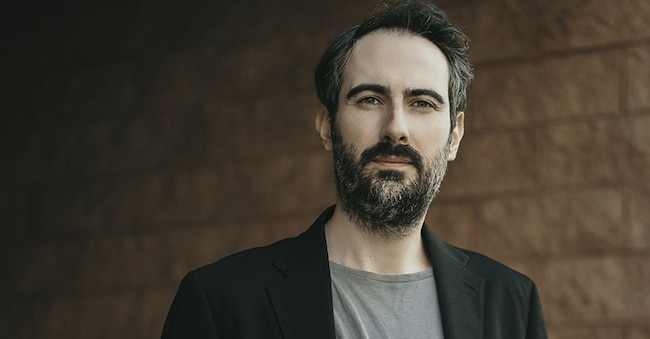
Working on museum cultural projects in Saudi Arabia, Valentino Catricalà, a Roman born in 1984, left the capital to refine his education between Manchester and Paris, between the SODA-School of Digital Art and the MODAL art centre and the Sony Lab, focusing on transdisciplinarity combining art and technology, questioning artificial intelligence, sustainability, new forms of cultural production and fruition.
Tell us about yourself, your path and your curatorial vision? Above all, which exhibitions, in terms of impact and importance, can be qualifying of your path?
I started with a strong research approach that characterised my first big event, the Media Art Festival, hosted by MAXXI and promoted by the Fondazione Mondo Digitale. I brought a lot of artists to Rome for several years, and then moved on to work in Paris with the Sony Lab, a project on the edge of contemporary art. Then I went to Manchester because I took over the artistic direction of the MODAL Gallery at SODA-School of Digital Art, a big project that originated with a £35 million grant, and now the jump to Saudi Arabia. In these transitions I have never lost sight of research, the basis that gave me my PhD, to always try to pursue innovative projects, such as the Dara Birnbaum exhibition at the Fondazione Prada (Observatory) in Milan and Tokyo (co-curated with Barbara London and Eva Fabris), the great Bill Viola retrospective at the Palazzo Reale in Milan, and recently the great exhibition on the relationship between art and the inflatable at the Grand Palais in Parisand then many other exhibitions in San Francisco, New Delhi, among many other publications...
Looking back, is there an Italian Pavilion that has particularly impressed or inspired you and what mistakes should not be repeated? And broadening your gaze to international ones?
I believe that pavilions should be interpreted according to the needs of the historical period in which they are located. The need to propose many artists to represent a country used to be common practice (with the exception of the pavilion curated by Ida Giannelli), but today fewer artists with large-scale installations are preferred. In this I think Germany was the forerunner and, certainly, the pavilion of Cecilia Alemani was a watershed as far as Italy is concerned.


