
Cat's eyes ready for the skilful shot
The avant-garde and futuristic shots of the Wulz sisters, Wanda and Marion, in early 20th century Trieste are exhibited at the Magazzino delle idee
4' min read
Key points
- The feminism of the Trieste Babes
- The Wulz family exhibition in Trieste
- Marion and Wanda
- The dynamis of shots
4' min read
There was a time when Trieste embodied the myth of the Belle époque. Port traffic, insurance, the coffee trade created at the beginning of the 20th century the conditions for the blossoming of a young generation, trained by the Habsburg Empire to speak Italian and German indifferently (the Slovenes also spoke Slovenian), interested in culture, with economic availabilities that allowed travel from Vienna to Florence, where they introduced literary, theatrical, artistic and scientific movements of which nothing was known in the rest of Italy: from Peter Altenberg to Karl Kraus, from Sigmund Freud to Walter Gropius, from Egon Schiele to Gustav Mahler.
The feminism of the Trieste Babes
.In this northernising context, Triestine women, or babes, had a freedom, daughter of the Habsburg tradition, only dreamt of by Italians. And this prepared the ground for the birth of cultured and rebellious female artists, who embodied an androgynous, wiry, sporty female model, but who did not get the glory they deserved, remaining imprisoned by history. After the Second World War, Trieste went from being the queen of the Habsburgs to the last thought of the Belpaese, who withered away at the port. Having halved the city's economic structure, culture followed the same fate. But at the beginning of the 20th century, Trieste was still in turmoil and churned out a handful of outstanding artists: among them, only Leonor Fini managed to make it on the international scene because she moved to Paris (until 22 June, Palazzo Reale in Milan is dedicating an exhibition to her, see Ada Masoero's article). Other personalities were less fortunate, such as Maria Lupieri (1901-61), painter and set designer; Maria Melan (1923-2023), architect, painter, illustrator, advertising graphic designer, teacher and atelierist; Miela Reina (1935-72), painter, graphic designer, cartoonist, set designer, sculptor; Anita Pittoni (1901-82), fashion, theatre costume and furniture designer, craftswoman, designer, painter, poet, writer and publisher. Lastly, the Wulz sisters, Wanda (1903-84) and Marion (1905-93), photographers.To these legendary figures, who experimented with new scripts, graphics and textiles, and photographic superimposition techniques, drawing inspiration from the avant-garde, the Italian Cultural Institute in Brussels had dedicated an exhibition last year, curated by Marianna Accerboni.
Loading...
The Wulz family exhibition in Trieste
With an exhibition at the Magazzino delle Idee, Trieste pays homage to the Wulz family and, in particular, the sisters who transformed their shots into futurist experimentation. De relato, the portrait also extends to Anita Pittoni, who lived a period with them, mixing skills, ideas and affections, after the death of Carlo Wulz, father of the brilliant sisters.Fotografia Wulz exhibits a series of shots, selected at the Alinari Archives, which acquired the material from the family studio founded by Giuseppe, grandfather of Wanda and Marion. From 1968, Giuseppe chronicled the expansion of Trieste, starting with the work on the Old Port, the shipyards, the factories and the large Lloyd ships. Trieste, before Charles VI gave it the status of a free port in 1719, had been a village of six thousand souls which Maria Theresa had then transformed into a White Vienna. Carlo, Joseph's son, turned his attention to portraits of notables, sports groups (from cyclists to jockeys to fencers), and artists, to the point of documenting the historical passage of the funeral procession for Archdukes Franz Ferdinand and Sophia that paraded on 2 July 1914 in Trieste, after their assassination in Sarajevo on 28 June. Carlo also ventured into ethnographic investigation, portraying the people in eccentric and elegant traditional Montenegrin and Slovenian clothing.
Marion and Wanda
But it was the daughters who turned the photo into art, behind and in front of the camera, where they acted out a waiting world. They breathed the city populated by Svevo and Joyce, Saba and Bazlen, with Montale arriving for parties at Villa Veneziani, Svevo's father-in-law. But they also sensed the theatre of shadows, in a city where the trenches of the First World War had been built just a stone's throw away from the fine cafés and the squadrism was advancing resolutely against the Slovenians. The Wulz sisters, a harmonious mixture of German and Slavic genes, tempered by their Mediterranean flair, turned each other into models for daring experiments. Fascinated by the Futurist movement - there are also two beautiful portraits of Filippo Tommaso Marinetti - they let themselves be portrayed in horizontal and vertical striped dresses of a rigorous, colourful and imaginative geometrism, designed with special fabrics by Anita Pittoni, who also designed the traditional Swahili and Gypsy dresses that W and M danced in.
The dynamis of shots
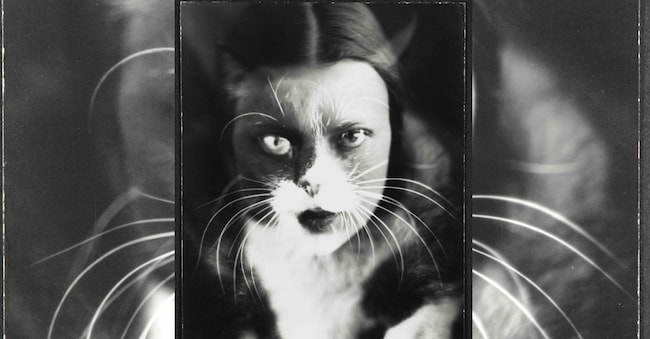
.The sisters loved to capture the dynamism of female athletes during gymnastic evolutions, the gold medallist Irene Camber at the Helsinki Olympics, Etta Paulin's acrobatic school. Wanda was then portrayed by Marion as an aviatrix. It was the Wulz sisters' poetic project with hints of eroticism. In 1932 Wanda was the only woman to participate in the National Exhibition of Futurist Photography in Trieste. In legend Wanda is remembered for superimposing her face with the features of a feline snout, in Io + Gatto, whose original negative plates are exhibited in Trieste. Marion, on the other hand, for documenting the arrival in 1945 of the Yugoslav and New Zealand forces that liberated a divided and prostrate Trieste, damp and black like almost all its European sisters.


Brand connect
Loading...
