Catwalk, cat-walking: the protagonist most loved by stylists and creatives
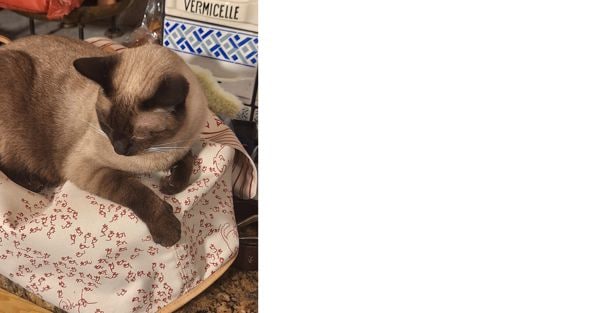
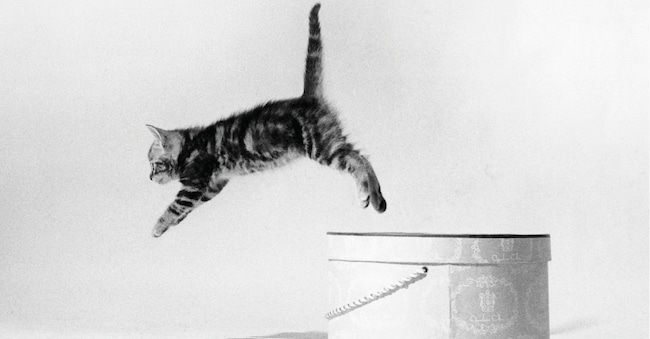
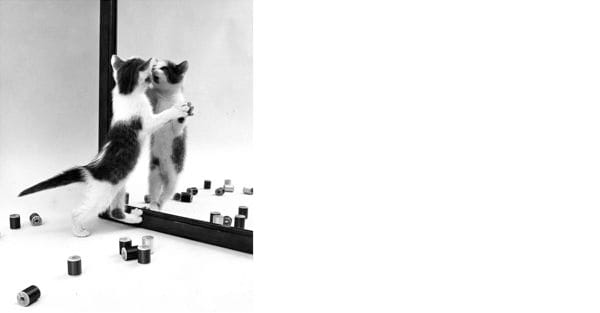
An undisputed master of feline portraits, Walter Chandoha, and the quintessence of elegance: Persians, Siamese, Ragdolls, Manx amidst shoes, bags, mirrors and hat boxes.
In human beings, it is a dowry, or rather, a gift, with which one is born and which is discreetly rare: we are talking about the natural elegance of a body, which goes far beyond poise. It is mysterious, like beauty, after all: for millennia, poets, writers, essayists and scientists have been trying to define or find canons of beauty, an exercise so difficult that many take refuge in the many variants of the saying 'beauty is in the eye of the beholder'.
Elegance is perhaps more universally perceived, when it manifests itself, than beauty: it is composed of various elements, such as proportions and harmonies, but also of gestures, movements and sometimes even tone or timbre of voice. Assuming that elegance and beauty are gifts and not curses - as other artists have argued over time - these elements may or may not all be there. One thinks, to dip into the pop atmosphere, of the song Video Killed the Radio Star, in which one imagines that the charm or elegance, precisely, of a radio star melts away like snow in the sun trying to repeat the success achieved on the airwaves as a TV personality. Or one can imagine a beautiful and elegant person whose charm disappears when he opens his mouth. But let us return to elegance, understood as a characteristic of our physical part, of the body within which we walk on this planet, move in small or large environments, alone or in the midst of other people, known and unknown. Different, of course, from the possible elegance of thought, which would merit separate treatises. Sometimes elegance of bodies is matched by elegance of dress. Although it would be more correct to speak of taste, rather than elegance of dress. Although almost all of us human beings are convinced that we have good taste (and a sense of humour), we can say, leaving in abeyance the judgement on our personal, eventual, good taste, with a certain fondness that this is not the case, that bad taste exists, and how. And there is a very important difference between the elegance of a body and the true, desired or merely presumed elegance of dress. The first is perceived from the outside, almost unequivocally and certainly more than beauty which, as we have said, can depend on the eye and soul of the beholder. The second, the elegance of dress, depends on the taste of the beholder. Paradoxically, people (women and men, and even children) with very elegant bodies, sometimes do not know how to enhance them because they lack, precisely, taste, which in the end, when it exists, is a form of self-confidence and allows us, at least in part, not to be at the mercy of the judgement, aesthetic and otherwise, of others. Audrey Hepburn used to say: 'Elegance is the only beauty that never fades' and she was probably right. Perhaps she said it precisely because she had experienced beauty and its fading, and she certainly had the good fortune - who knows if she considered it such - to have always been seen as both beautiful and elegant at the same time.
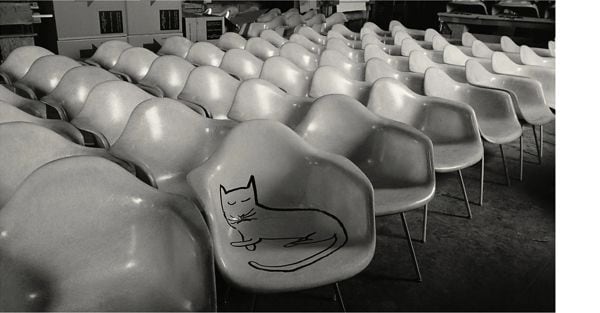
After this long introduction, let us come to cats: the writer is convinced that they are the only animals, along with many other felines, to be born all, indiscriminately, kissed by elegance and - not to sound blasphemous - good taste. It is probably for this reason that many stylists and designers of furniture and furnishings have placed them at the centre of clothing and accessory collections, as well as objects for the home. Although the discourse should extend to artists: on these pages you will find some shots taken from the book, recently published by Damiani Books, Family Cats from the Archive 1949-1962 by Walter Chandoha, considered the undisputed master of feline photography, with a preface by Grace Coddington, a very recent example of cats inspiring fashion. In fact, the second collaboration between the historic journalist of U.S. Vogue and Louis Vuitton was only a few months ago, with its cats, surrounded, moreover, by mice, as the protagonists, in apparent harmony. Coddington aside, the cats stolen from their lives to end up on key rings, T-shirts, bag charms or mobile phone tricks in recent decades cannot be counted. Small and especially large felines have also been kidnapped by many jewellery houses (one name above all: Cartier) and, compared to what we see for clothing and accessories, for necklaces and bracelets it is even more evident that it was the purity of the shapes and poses of cats and felines that inspired the jewellery designers. After all, how do you say catwalk in English? Catwalk! If cats knew what an important contribution they have made (and will continue to make) to creative people, perhaps they would demand royalties convertible into overhead kennels or small stuffed toys filled with catnip, who knows. The truth is that fashion needs cats, but cats do not need fashion.
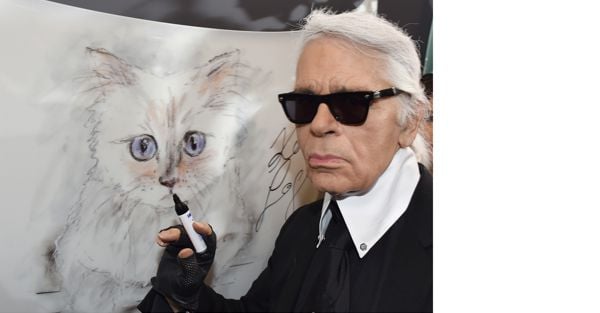
Think of our beloved dogs, who inhabit a parallel universe to the little felines and are not particularly bothered when we choose coats, collars and - in the most extreme cases - other accessories for them. Try to dress a cat or lead it on a leash... practically impossible, except perhaps for those breeds - not surprisingly selected over time by us humans - known for their submissiveness and docility. In any other case, it is as if the cat were telling us: if I had to dress up, I would decide what to wear and as for going out on a leash, no way. I am not a dog!

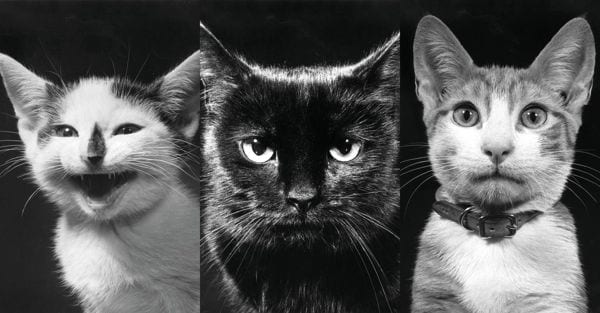
Returning to the taste of human beings, we can compare cats to film stars, woman or man it matters little, who do not accept the advice of the stylist on duty. In our reality they are, indeed, very rare cases, perhaps also because artists, in general, are fragile people and more exposed and sensitive to the judgement of others - especially in the age of social media. So they are also more insecure than average, even in their choice of clothes. Perhaps the only case of a Hollywood star who gave the impression of being her own stylist was Diane Keaton. A woman with a very strong personality - her work and life choices tell us this - perceived as elegant, but of what is often called a peculiar beauty. A non-coincidental combination, perhaps, of self-confidence, elegance and, indeed, personal taste that could scarcely be influenced except for stage requirements. On red carpets or when she was caught on the streets of her beloved New York, Diane Keaton seemed to leave home wearing what she and only she had decided, probably with care, to wear. She loved and had always had dogs, but perhaps in a previous life she had been a cat. Let's be clear: the comparison between small felines and dogs is not a competition, nor does it serve to determine who is better. As said, they live in parallel universes, in between there are us humans, who cross their existences and observe them.