
Cellnex accelerates on dividends: 'Arrived at a turning point'
CEO Patuano: 'We are working on raising the shareholder remuneration plan, but there is still no timing'. And on Italia: 'We want to invest more, but operators need the non-burdensome renewal of frequencies in order to be able to invest'

An important milestone achieved during the year was the completion of the 1 billion share buyback programme, which was realised one year ahead of schedule. Furthermore, in January 2026, the Group started paying dividends with the first tranche of the annual commitment of EUR 500 million. All this while keeping for 2025-2030 an annual floor of 800 million. Cellnex at this point, however, does not rule out putting its 'little treasure' into shareholders' hands.
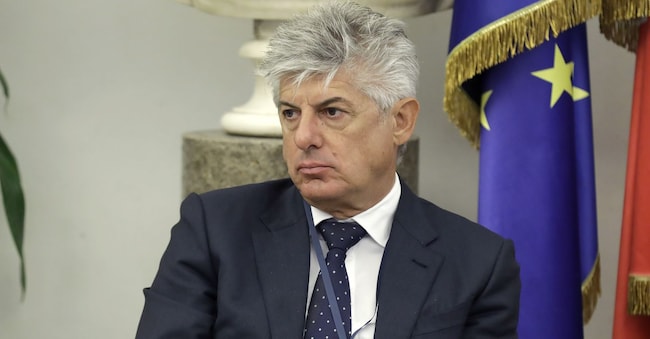
In this interview with Il Sole 24 Ore, the ceo, Marco Patuano, does not shy away from a future revision of the remuneration plan: 'We are working on it, to increase the return to shareholders',' although he specifies: 'There is nothing defined yet and there is no timing. First we want to be sure that the increased cash generation is structural'. The premise, however, is concrete. 'We have reached a turning point,' says Patuano who, from Madrid, outlined the accounts of the Spanish transmission tower giant. In 2025 free cash flow touched 350 million (at the top end of the range between 280 and 380 million) and the company is aiming for 600-700 million in 2026, with expected revenues between 4.075 and 4.175 billion and adjusted Ebitda between 3.425 and 3.525 billion. In 2025, revenues rose to 3.995 billion (+5.8%), adjusted Ebitda to 3.3 billion (+7.1%). The net loss also rose from EUR 28 million to EUR 361 million, however, discounting the one-off impact of the reorganisation plan in Spain and write-downs. However, no such impact is expected in 2026.
'Growth, financial discipline and value creation can go hand in hand,' claims the CEO. And he adds a goal that for the company - which is Europe's largest operator of transmission towers (with 113,000 managed sites in its portfolio) - sounds like a breakthrough moment: 'We are on track to break even or make a profit in 2026-2027'. In this framework, 'everything we generate net of deleveraging and investments for industrial projects, we will return to shareholders'.
Within the 'industrial projects', for Patuano, Italia (22,638 operating sites that make it the leading operator together with Inwit) has a special place. It weighs about 20% of the group's turnover, 'but receives less than 20% of the investments, simply because there is a lack of projects'. The CEO does not mince words: 'We want to and can invest more in Italia. The point is to create the conditions. And this is where the frequency dossier comes in. "States have to choose: either make cash or encourage investment,' he reasons. "I trust that we are moving towards a free renewal of frequencies with investment and coverage obligations. This is the way to open a new season of network quality'.
Quality that has become a social requirement before being a technological one: 'Europe needs digital infrastructure. And the lack of signal or service quality is no longer accepted and will increasingly be so'. The circle closes: the need for more sites, more densification, more fibre and more indoor solutions, i.e. more work for those renting space on the towers.


