
Censis: a surge in vulnerability, but for Italians aged over 65, old age begins at 76.7 years
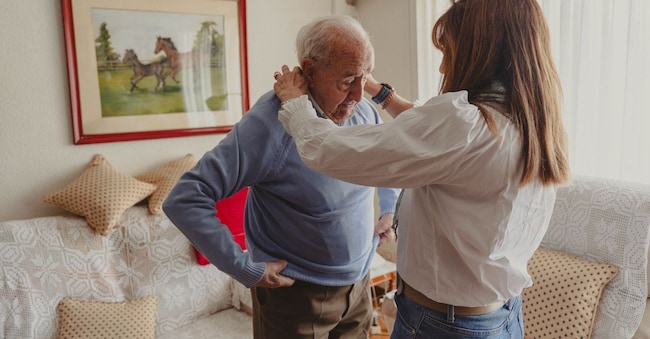
36.6% of Italians aged 65 and over say they need some help with day-to-day tasks: this figure has doubled over the last twenty years. When help is needed, the family is there: 52.7 per cent rely on their children, 49.6 per cent on spouses and partners, and 16.0 per cent on relatives. Only 1.9% rely on nurses or home carers from public services. Too much loneliness: one in two 85-year-olds lives alone

Key points
Older people are becoming increasingly frail and in need of help with everyday life. The report “Ageing in an Italia of Longevity. How to build a country suited to the elderly’, produced by Censis and presented on Thursday 2 July in Rome. Speakers at the presentation of the report included Elsa Fornero, Honorary Professor of Economics at the University of Turin; Emanuela Notari, Longevity Strategist at Intoo GiGroup, Monsignor Vincenzo Paglia, President Emeritus of the Pontifical Academy for Life, Alessandro Rosina, Full Professor of Demography at the Catholic University of Milan, and Giorgio De Rita, Secretary-General of Censis
36.6% of older people say that, although they are self-sufficient, they still need some help with daily life. Over the past twenty years, the proportion of people aged 65 and over who feel vulnerable and ask for support has doubled: in 2006, it stood at 18.3%. Today, 31.7% occasionally need help, whilst 4.9% often do so because they experience considerable difficulties with everyday activities. 1.4% of respondents describe themselves as completely dependent, whilst 62.0% describe themselves as completely independent. However, in 2006, 78.8 per cent described themselves as completely self-sufficient: 16.8 percentage points more than today.
Beyond the rhetoric of longevity
89.6% of the long-lived say that, however well one looks after oneself, physical decline cannot be stopped. 79.3% of the long-lived have come to terms with the fact that certain changes linked to the passing of time are irreversible and definitive. There is a new awareness of the fragility associated with advancing age. This represents a different approach from the rhetoric of active longevity and maintaining performance even in old age. Furthermore, for 79.8% of long-lived people, accepting old age as a permanent condition helps them to value the present more highly.
A decisive challenge for Italia, Europe’s oldest country
The needs associated with old age represent a major challenge for Italia, given that people aged 65 and over already account for 25.1 per cent of the total population – a figure that makes Italia the country with the longest life expectancy in the European Union. This is a powerful ‘grey wave’ that could become a problem, as it coincides with a slump in the birth rate and a dwindling number of young people. Between 1951 and 2025, the number of children up to the age of 17 fell by 38.8 per cent, and the number of young people aged between 18 and 34 by 18.9 per cent. By contrast, the number of people aged between 35 and 64 has increased by 53.7 per cent, and those aged 65 and over by 248.6 per cent. Demographic projections for 2050 indicate that there will be over 18.9 million older people, accounting for 34.6 per cent of the total population: more than one in three Italians.
When you grow old
According to people currently aged over 65, the average age at which one becomes an elderly person is 76.7. In fact, 5.7 per cent of the elderly people surveyed believe one becomes elderly at 65, 16.6 per cent at 70, 24.5% at 75, 28.7% at 80, 14.5% at 85, whilst 9.5% do not believe there is a specific age and 10.0% did not express an opinion. In summary, 41.0% of respondents set the age of old age between 70 and 75, and over 43% set it beyond the age of 80. In any case, regardless of age, 69.4% of the long-lived believe one becomes elderly upon losing one’s independence; 24.9% believe it is upon the death of friends and peers; 22.3% believe it is upon the death of one’s spouse; for 8.0 per cent, upon retirement; and for 4.2 per cent, when they become grandparents.


