The Interview

Centemero: The EGM must be the starting point for a path of growth for SMEs

The Lega representative has weighed in on the debate regarding the size thresholds for SMEs to access the Indiretto National Strategic Fund

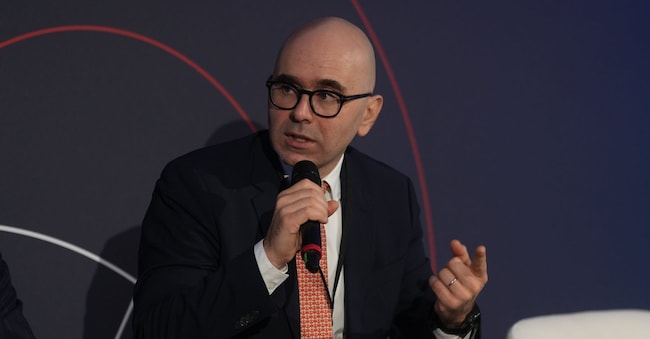
Giulio Centemero, capogruppo lega in commissione Finanze della Camera (Imagoeconomica)

4' min read

Translated by AI
Versione italiana

4' min read

Translated by AI
Versione italiana

“If we want the Indirect National Strategic Fund to contribute to the development of the capital market, we must ensure that its operating procedures respect the dynamics of supply and demand, and are consistent not only with the structure of our businesses but also with the needs of investors.” So said Giulio Centemero, Lega group leader on the Chamber of Deputies’ Finance Committee, in response to the appeal launched last week by Plus 24 to lower the current thresholds set by the National Indirect Strategic Fund (FNSI) of Cassa Depositi e Prestiti.

Does Centemero see any weaknesses in our analysis? 

Loading...

Let me say that this issue is particularly close to my heart. Not least because I was the first signatory to the legislation that made the creation of the Fnsi possible. The legislator paved the way for this new instrument and set out its rationale. The regulations and operational criteria, including the thresholds and management, are, however, the responsibility of the CDP.

Why is he emphasising this?

This is an important distinction. The figures cited in your investigation are significant, but I believe they suggest the need to take a broader view: assessing an instrument designed to bring about structural change in the market, based solely on a snapshot of IPOs in recent years, risks confusing the starting point with the end point. I also understand that, in drawing up the rules, the CDP consulted with asset management firms and investors. These discussions highlighted the importance of factors such as company size, free float and corporate governance.

But without a start, there can be no finish 

The EGM cannot be regarded as an isolated ecosystem. It is the culmination of a journey for an SME that decides to list itself. It must increasingly serve as the gateway to the stock market as part of a growth strategy. And this is where the 10-million threshold for capital increases by already listed companies warrants further consideration: it is an operational decision by CDP that should be assessed on the basis of results. But it must also be understood in the context of the overall strategy: for an already listed EGM company, a capital increase does not simply serve to raise new funds; it can be the step through which a business changes scale, finances investments and carries out acquisitions, expands its free float and lays the groundwork for a potential move to the main market. The capital market must be the instrument through which a small enterprise becomes a medium-sized enterprise.

 But going public is an essential step in a company’s organic growth

Yes, but if we look solely at the IPO stage, the question inevitably becomes: how many EGM companies currently exceed certain thresholds? If, on the other hand, we consider the entire life cycle of a listed company, the question becomes more interesting. How many companies can we guide through the market beyond those thresholds?

Right, how many? 

Loading...

A company can list whilst still relatively small and then use the market to raise new capital, finance acquisitions, merge with competitors, increase its free float and grow until it is ready for the main market. Even a translisting is not merely a technical formality. It may require a new free float and investors capable of supporting the operation. An institutional partner such as CDP, through the indirect mechanism provided for by law, can foster an ecosystem capable of supporting EGM companies in their growth through the market.

But if we don’t set off…

Companies with a market capitalisation of less than one billion account for around 80 per cent of listed companies, but just 3 per cent of total market capitalisation. This is therefore not a problem confined to the EGM, but one of the structural imbalances in our market. Hence the interest in initiatives such as the Intermonte Valore Italia index, which brings together one hundred listed companies with a market capitalisation of less than one billion. It is significant that the selection criteria take into account not only size but also liquidity, free float, corporate governance, analyst coverage and financial sustainability. A company’s size does not necessarily determine its investability.

There is also the issue of research

On the EGM, almost two-thirds of companies are covered by just one analyst – often not an independent one – and only a very small proportion are covered by more than three analysts. The problem for SMEs, therefore, does not end when the IPO bell rings. In a sense, it begins right then. Without independent research, there is insufficient visibility; without visibility, investor interest wanes; without investors, trading volumes and liquidity decline; and without a sufficiently deep secondary market, it becomes more difficult to build an efficient primary market as well.

We must therefore ensure that access, growth, liquidity and mobility go hand in hand.

It is in this context that the role of the FNSI should be understood. When I championed the legislation that made its creation possible, the aim was not to establish a public body tasked with selecting the companies in which to invest, but to enable public capital to act as a catalyst for private capital, thereby fostering a broader and more stable pool of investors specialising in SMEs. And this leverage can contribute not only to the growth of individual companies but also to the formation of industrial and technological clusters, fostering the pooling of expertise and the development of critical mass. A deeper capital market can thus also become an instrument of industrial policy, supporting businesses in M&A transactions and in scaling up their operations. This does not mean treating the Fund’s thresholds and criteria as set in stone: if experience shows that certain parameters limit its effectiveness, it would be right to assess them pragmatically. Rules are tools, not dogmas. But it would be equally short-sighted to base policy for tomorrow’s capital market exclusively on the size distribution of yesterday’s IPOs.

Copyright reserved ©
Loading...

Brand connect

Loading...

Newsletter

Notizie e approfondimenti sugli avvenimenti politici, economici e finanziari.

Iscriviti