Century-old companies at the forefront of innovation: ‘We last so long because we change’
Fortunato Amarelli, President of the Union of Italian Centenary Companies: “Our history and our genuine connection with people and local areas attract young people”

Charles Darwin’s law is clear: in nature, those who are best able to adapt to change survive. This principle also applies to businesses: those that embrace and manage evolution can go on to celebrate long histories, even spanning centuries. There are currently fifty companies that form part of the Union of Italian Centenary Enterprises, all of which are at least a hundred years old but are spread throughout Italia across various sectors – ranging predominantly from agri-food to publishing houses, from wineries to jewellers – which together employ 11,000 people and generate a turnover of 2.6 billion euros.
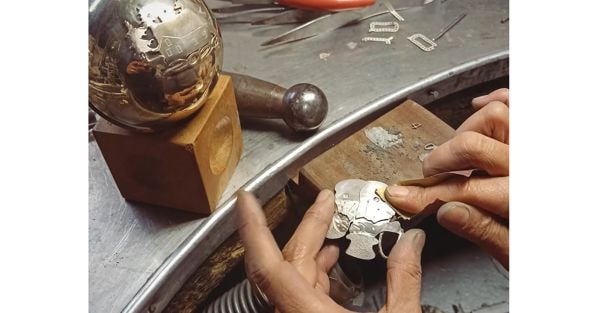
What unites them, however, is precisely that factor: being constantly open and receptive to change, capable of embracing innovation – even in its most avant-garde forms – whilst maintaining their identity as traditional workshops. Giusto Manetti Battiloro 1820, for example, which has been based in Campi Bisenzio for over five centuries, has done just that, extending the use of gold leaf from the arts to the dishes of the most celebrated chefs and to the most effective and luxurious beauty treatments; so too has the Amarelli family, who, from the 18th century to the present day in Calabria, have produced liquorice extract – first for the pharmaceutical industry, then for children’s sweets, and finally for an audience of adult connoisseurs.

“The secret to our longevity is always staying relevant, whilst maintaining our identity and promoting our heritage,” says Fortunato Amarelli, CEO of the family business – of which he represents the eleventh generation – and president of the Union of Centenary Businesses. “ “I believe this approach can add value and support our country’s entire economy, where the average lifespan of a business is around 12 years.”
In this era of perpetual crisis, and amidst a technological evolution rendered difficult to comprehend by its sheer speed, change can, however, also mean unpredictability. “Living with the Unpredictable” is the title of the Union’s annual national conference, to be held on 13 November in Florence, the city where the association has been based since 2000. One talk will be dedicated to “The Algorithm of Chaos. Cultural, geopolitical and financial impacts of Artificial Intelligence on business strategies’: “We cannot fail to embrace new technologies,” adds Amarelli. “Yet, even though we have largely welcomed those of the past as tools for improvement, AI is probably the most divisive technology ever. However, we must not fear it, but rather understand it and manage it. That is why, in Florence, we will be hosting speakers who will explain what it is and how to turn it into an opportunity for our future.”

During the conference, the Union of Centenary Companies’ Graduation Award will also be presented to the authors of degree theses that have explored the theme of corporate longevity: ‘No era is the same, just as no generation is the same. Today, for young people, work is a means of defining their identity, understanding their purpose, and contributing to something greater and broader,” emphasises Amarelli. “In this sense, our companies are very attractive, because they carry on a history written by many people before us. But even in this case, I believe an evolution is needed: to view younger people as assets and colleagues, delegating tasks and trusting their vision, without making them wait for years. To stem the exodus of young people from Italia, we must give them the chance to imagine the future and shape it. We must make them feel, as I was saying, that they have a purpose that goes beyond their salary.”