
Ceramics, crisis slows thanks to growth in the US market
Turnover down 6.7% in the first quarter of 2024 but a 13.1% drop in 2023. During the meeting the appointment of the new chairman of Confindustria Ceramica, Augusto Ciarrocchi. Confindustria chairman Emanuele Orsini in attendance

-U24105416060Eqg-1440x752@IlSole24Ore-Web.jpeg?r=650x341)
4' min read
Key points
4' min read
Confindustria Ceramica is celebrating its 60th anniversary and the annual general meeting held yesterday in Sassuolo was an opportunity not only to present the economic situation and prospects but also to retrace and celebrate six decades of history that have transformed the countryside and families of the district between Modena and Reggio Emilia into the world's most competitive industrial hub for tile production and innovation. With a spasmodic focus, today as in 1984, on reconciling corporate development, social wellbeing and environmental quality, because home and factory here have always been one and the same.
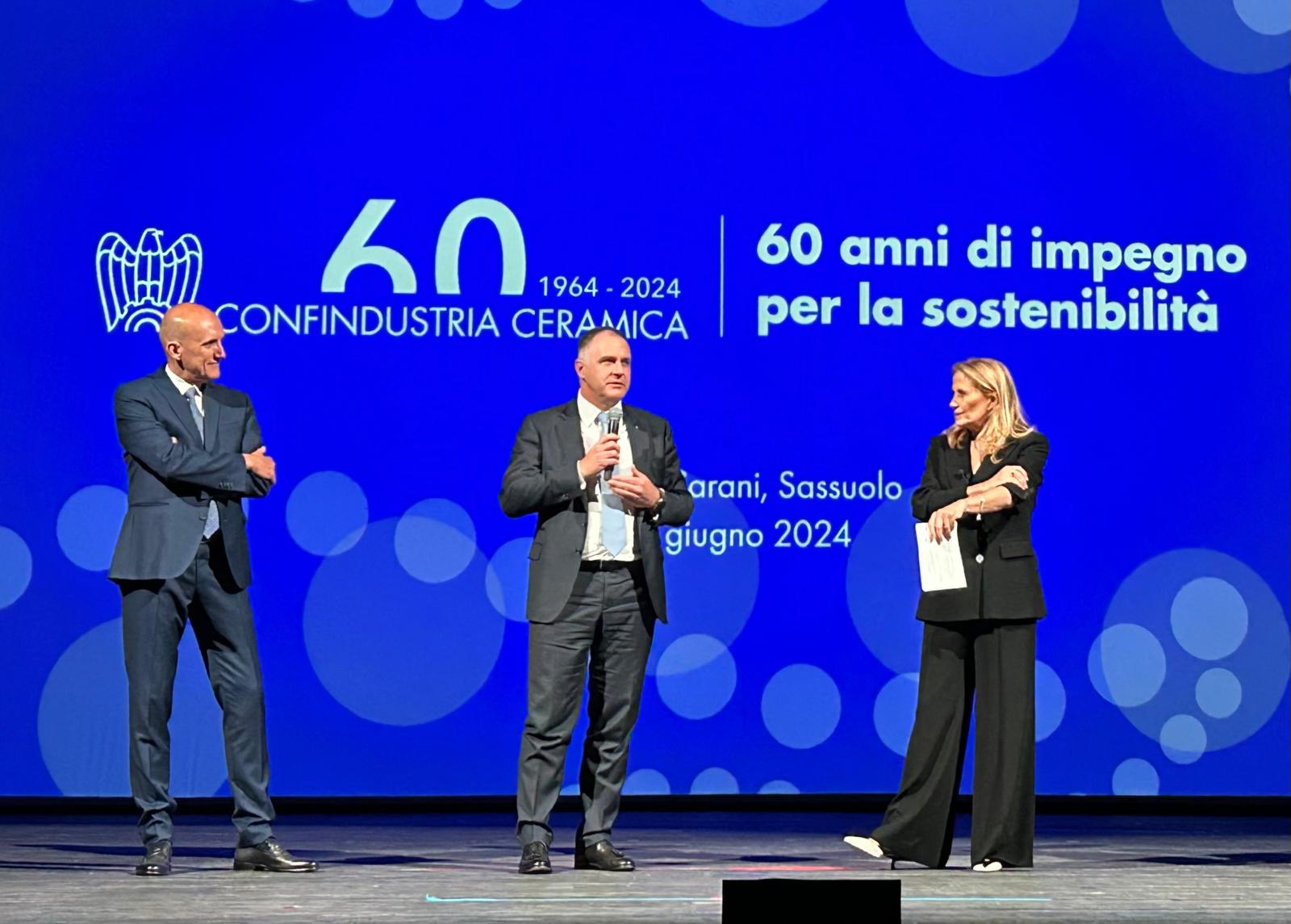
60th birthday party at Teatro Carani
And it was Sassuolo's Carani theatre, reopened three months ago after being closed for ten years, that hosted the celebrations and the presence of a citizen of honour such as Emanuele Orsini, the new president of national Confindustria, born in Sassuolo, who, after attending the private meeting of ceramic industrialists, took the stage at the Carani and spoke of "dialogue, identity, unity", the three key words that will characterise his mandate. The 60 candles were also the occasion for the official presentation of the docufilm 'Ceramics of Italy. Un viaggio nella sostenibilità' (Ceramics of Italy. A journey into sustainability) by director Esmeralda Calabria, just awarded in Rome as 'Best Enterprise Film', a short film on the value of the people and the family community behind the global success of Made in Italy ceramics.
Ciarrocchi at the head of Confindustria Ceramica
And while for the first time a Sassuolo-born Doc goes down to Rome to lead the Italian industry, the first non-emiliano-Romagnolo president of Confindustria Ceramica is coming up from Lazio: Augusto Ciarrocchi, who comes from the sanitaryware district of Civita Castellana, in the Viterbo area, was elected yesterday to lead the association for the next two years. And he takes the baton from Giovanni Savorani, who yesterday - in his last press conference after six years of a mandate ravaged by pandemics, wars, energy crisis and floods - took stock of the sector's figures.
Trend and Prospects in the Italian Ceramic Industry
The year 2023 closed with a turnover of €7.6 billion - €6.2 billion of which in tiles alone - and a drop of 13.1% on the previous year, but the Italian ceramic industry is now slowing its fall, thanks to the dynamism of the American market, and is looking more optimistically to Europe, amidst interest rate cuts and new governance in Brussels.
In the first three months of 2024, exports to the United States increased by 18.5% in volume and 12.8% in value and mitigated the drop in sales in Italy (-7.4%), bringing the overall trend in turnover in the first quarter of the year to -6.7%. A negative sign that is less frightening than the double-digit drops faced by ceramic entrepreneurs in 2023 (sales -17.8% in square metres, turnover -14.1%, production -13.3). "Last year's decidedly negative indicators mark the return from the flare-up in demand recorded in 2022, but there is one figure in clear counter-trend that confirms the health and competitive capacity of our sector, even when volumes are reduced: investments," emphasises Savorani. In fact, investments have also increased by 7.4% in 2023 and reached 474 million euro, equal to a 7.7% share of the total turnover (6.2 billion euro for tiles, of which 5 billion euro for exports).


