Current Affairs

Ceuta: Italy extends border checks with Spain; the Schengen suspension remains in place

Interior Minister Piantedosi has extended border controls at air and sea crossings with Spain by a further 15 days following the migration crisis in the exclave. Madrid is set to grant a further extension to the checks. The dossier has been referred to the GAI Council, whilst the Home Office is stepping up efforts regarding the CPDR and repatriations

 REUTERS

3' min read

Translated by AI
Versione italiana

3' min read

Translated by AI
Versione italiana

The immigration alert remains in place in Ceuta. And Italy is still not reopening its borders. In a brief statement, the Ministry of the Interior announced Interior Minister Matteo Piantedosi’s decision to extend border controls at air and sea crossings with Spain for a further 15 days. In short: the suspension of the Schengen Agreement remains in place.

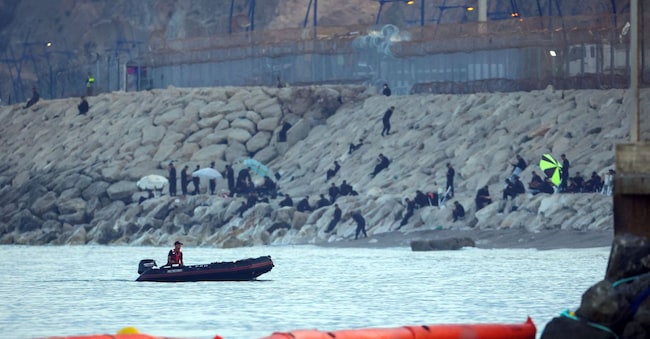
This is the third extension since the migration crisis erupted at the end of July, when around 60,000 migrants arrived in the Spanish exclave, many of whom were young Moroccans and Algerians, with an estimated 7,000 to 10,000 of them being minors. The suspension of free movement stems from a specific policy directive by Prime Minister Giorgia Meloni and has already provoked discontent amongst the Spanish government and a large number of EU countries.

Loading...
Madrid, protesta contro la gestione della crisi migratoria di Ceuta

Ceuta: third extension of border controls

The Ministry of the Interior has now confirmed this position following yesterday morning’s meeting of the Committee for the Analysis of Immigration and Border Security. According to the statement, the extension was decided ‘after consulting the Committee for the Analysis of Immigration and Border Security’.

Ultimately, the ‘aim remains to strengthen the protection of Europe’s borders, not least to safeguard national security, as well as to prevent and counter potential terrorist threats’. The measure has been notified to the European Commission and to the interior ministries of the other European Union member states.

Spain’s response and the new confrontation with Madrid

The Spanish government has decided to extend checks on passengers arriving from Italia for a further 15 days, on the basis of reciprocity. The decision has been confirmed by sources at the Spanish Ministry of the Interior. The Spanish checks, introduced on 8 August and extended several times since then, apply to sea and air travel by third-country nationals arriving from Italia. At this stage, Madrid’s counter-move seems inevitable. Spain first introduced checks on travellers from Italia on 8 August, in response to Rome’s initial measure, and may now extend them beyond 7 October.

This is yet another point of friction between Italia and Spain over the handling of the Ceuta crisis. But this time, the clash is taking place on the eve of a European development set to take the issue far beyond bilateral relations.

Migrants: the dossier reaches the GAI Council

In the coming hours, the JHA Council – the European summit bringing together the Ministers of Justice and Home Affairs – is due to meet. And it is precisely at that meeting that, as announced by Piantedosi himself, the EU Commission will present ‘an action plan to prevent and combat sudden, mass illegal arrivals of migrants, with the aim of strengthening cooperation between Member States, consolidating the EU’s external borders, dismantling migrant smuggling networks and stepping up returns’.

The crisis in Ceuta thus becomes a direct part of the European debate on the management of external borders, sudden influxes of migrants and the ability of Member States to respond to new migratory pressures.

Piantedosi steps up efforts on CPRs and repatriations

On the national front, meanwhile, Piantedosi is aiming to speed up the roll-out of the network of repatriation centres. “We will continue to work on creating a further 106 places in existing facilities in Sicily, Sardinia and Lazio, and we have also initiated procedures for the construction of new facilities in various regions: one each in Campania, Calabria, Tuscany and Emilia-Romagna, and two in Trentino-Alto Adige.”

The minister also sets out the figures for repatriations. “So far this year, there have already been over 6,500 repatriations, including both forced and assisted voluntary returns, and the process is proceeding swiftly and at an increasing pace. We are projected to reach a record figure by the end of the year,” he announced.

Loading...

Ceuta therefore remains the most pressing issue, but the scope of the matter is widening: from border controls with Spain to the European response, right through to the strengthening of the CPRs and Italy’s strategy on repatriation.

Copyright reserved ©
  • Ivan Cimmarustigiornalista

    Luogo: Roma

    Lingue parlate: Italiano, inglese

    Argomenti: Sicurezza, giudiziaria, inchieste, giustizia tributaria

    Premi: Nel 2011 tra i vincitori del Premio Internazionale Antimafia Livatino-Saetta

Loading...

Brand connect

Loading...

Newsletter

Notizie e approfondimenti sugli avvenimenti politici, economici e finanziari.

Iscriviti