
Manovra, CGIL: general strike on 12 December. Irony from Meloni and Salvini: on which day does it fall?
Mobilisation against the government's budget law

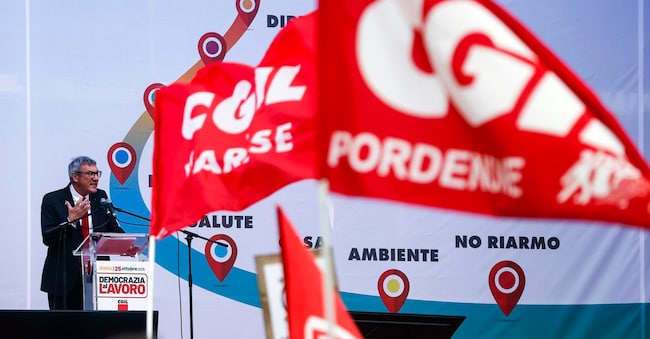
The CGIL delegates' assembly yesterday decided on a general strike for 12 December, against the government's budget law. The announcement was made during a union initiative in Florence by Fulvio Fammoni, president of the CGIL general assembly. The initiative was also attended by the general secretary Maurizio Landini.
"We believe this is an unjust, wrong manoeuvre and we want to change it," Landini said. 'The fundamental emergency right now,' he said, 'is wages: there is a need to increase wages, this manoeuvre does not do that'.
Meloni's Ironia, new CGIL strike? And on what day does it fall...
"New CGIL general strike against the government announced by General Secretary Landini. On what day of the week will 12 December fall?". Premier Giorgia Meloni wrote this on social media, adding the emoticon of the puzzled emoticon, a sarcastic reference to the date chosen by the union, which falls on a Friday. A criticism already expressed at the beginning of October by the Prime Minister when, on the occasion of the strike for Gaza, she said that 'the long weekend and the revolution do not go together'.
Salvini: Landini gives up long weekend
Same ironic underlining by Matteo Salvini: "The CGIL writes on X the deputy prime minister and minister of Infrastructure and Transport Matteo Salvini - announces a general strike on 12 December. And who knows why, precisely on a Friday.... We invite Landini, for once, to give up the long weekend and organise the strike on another day of the week."
Landini insists: take 1% from the 500,000 rich Italians
Landini recalled: 'We have put forward a proposal, a solidarity contribution concerning 1% of Italian citizens. We are talking about 500,000 people who are rich: we are saying that, for those who have more than 2 million in wealth, it would be enough for them to contribute one per cent to the tax authorities in order to have 26 billion to invest in health care, for recruitment, for schooling, to increase the salaries of all people'.

