Lessons on change

Challenges and risks of change management, from Gorbachev to Ficarra and Picone

Lessons and reflections on the challenges of change

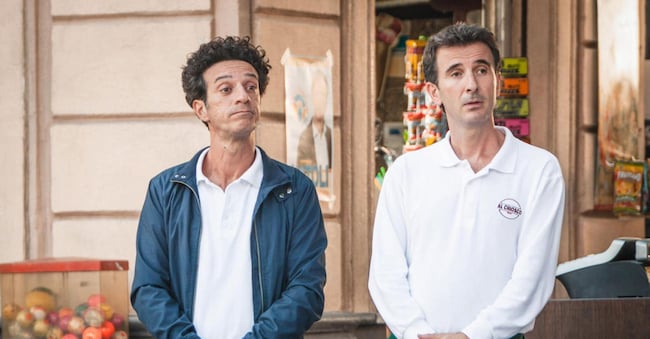
Una foto di scena del film «L'ora legale» con Ficarra e Picone, Roma, 13 gennaio 2017. (ANSA/Ufficio Stampa)

4' min read

4' min read

'We tried'. This is the response of Gorbachev to the question "What would you like to have written on your tombstone?". Inserted in the documentary Herzog meets Gorbachev (2018), this simple and almost disarming phrase restores the sense inherent in unsuccessful experiences of change. How many times, when faced with a transition process that has not produced the desired results, do we find ourselves 'self-assuming' by emphasising the importance of having at least tried and reaffirming our good intentions?

After all, multiple studies report that a large proportion of change management processes are doomed to failure. Even, according to the Harvard Business Review, around 70 per cent. There are various reasons for this: cultural reasons, inappropriate timing, individual resistance, lack of consensus, defence of privileges, fear of uncertainty, poor alignment, dynamic context.

Loading...

Perestroika as a metaphor for failed change

Perestroika and glasnost, launched almost as a surprise by Gorbachev in the 1980s towards the end of the Cold War, are a historical example of failed change heralding a return to autocratic regimes.

In Uzbekistan, the transition was experienced as a shock: being heavily dependent on the Soviet industrial (and social) planning strategy, the reasons for the change were not understood. This unpreparedness led to years of poverty and famine. In a nutshell, the Uzbek population had been given a freedom that they were unable to use, unable to satisfy even their basic needs. The result was a deep aversion to the figure of Gorbachev, still seen as a disgrace by most of the citizens.

Visiting Uzbekistan is an interesting experience: alongside the treasures scattered along the Silk Road, a country in great evolution emerges, suspended between a strong dynamism towards modernity and social and family structures that are still traditional. In order to understand the transition, the history of the alphabet is emblematic, since in the space of a century, the alphabet changed from Arabic (until the 1920s) to Latin (imposed by the USSR), then to Cyrillic (from 1940) and finally back to Latin (after independence in 1993).

Reading this transition through the lens of management theories, it is easy to judge that convincing storytelling was certainly lacking. Or rather, the storytelling was clear to Western countries but not to those who would experience it first-hand. There was a shift from a Command & Control model to a participatory approach in a paternalistic manner, with the belief that it was useful and necessary but ignoring people's experiences and expectations.

The municipality of Pietrammare: when good intentions are not enough

Let's take a thirty-year leap and land in a seemingly very different context: Pietrammare, the fictional village in Sicily where the filmL'ora legale by Ficarra and Picone (2017) is set. Here the initial situation is dramatic: services are non-existent, the population is frustrated by corruption, the town is full of rubbish, illegal building is rampant and lawlessness rages. The upright and incorruptible newly-elected mayor Natoli pledges to shake things up by proposing measures to break down corruption, promote legality, fight favouritism, get services back on track and introduce differentiated waste collection.

The impact on the everyday life of citizens is devastating, however: the reinstatement of fines and taxes combined with the end of privileges leads to a climate of distrust and rejection of the new rules, causing the population to regret the disorder to which they had become accustomed. Although the mayor effectively and convincingly presents his ideas, the community struggles to find its way in a world ordered by rules. The promise of a project built on honesty is overwhelmed by the desire to re-establish the status quo, leading to the mayor's resignation.

As important as storytelling is in management, it alone cannot promote change. Vision and perspective are crucial to stimulate new approaches, but without deep cultural grounding, without an understanding of people's expectations and emotions, it is difficult to exercise leadership and capture consensus.

In a democracy, it is the individual people who decide the fate of politics: if you are not able to intercept their needs and respond to their real needs, you cannot have a following. And there is no leadership without a following. 'We tried,' the mayor of Pietrammare will think bitterly as he joins Gorbachev.

Three ingredients (plus one) for change management that works

These two stories, so different in context, characters and style, show that change management processes can fail for a variety of reasons. So is there no point in trying? Certainly not. When one is intimately convinced that change is necessary, it is always worth the effort, as much to make the world a better place as to fight for one's principles and ideals.

To do so, however, it is useful to remember three key principles:

1. gradualness - change must be introduced in small steps, celebrating partial successes and slight improvements and avoiding focusing only on ideal scenarios far removed from everyday life;

2. relationships - listening, empathy and continuous confrontation are essential to understand people's expectations, desires and emotions;

3. humility - a necessary ingredient to maintain an objective perspective on the effects of change, to welcome different points of view and to question even the most heartfelt ideas and values.

Yet these three ingredients are not enough: you need to know how to balance and dose them according to the situation, without forgetting the value of their opposites (sense of urgency, goal orientation, assertiveness), and have the intuition to add that secret ingredient that can make the difference in that specific context. After all, everyone knows the ingredients of the most traditional dishes, but only great chefs know how to turn them into masterpieces.

*Director Strategic Communication Academy.

**General Manager Theras Lifetech.

Copyright reserved ©
Loading...

Brand connect

Loading...

Newsletter

Notizie e approfondimenti sugli avvenimenti politici, economici e finanziari.

Iscriviti