
Soil consumption, the challenge is to build maxi-lands underground
In Italy, the portion of land occupied by concrete, asphalt and other artificial coverings is growing. Innovative and sustainable solutions are needed

3' min read
Key points
3' min read
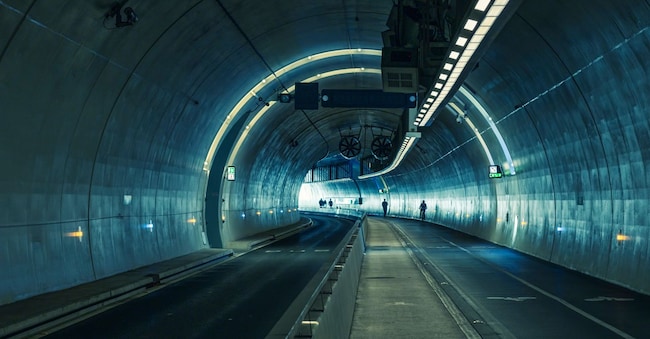
In an increasingly urbanised world, where space on the surface is precious, building large underground infrastructures (road or rail tunnels, subways, hydroelectric plants and aqueducts) becomes a concrete answer to the problem of land consumption and environmental and urban planning impacts. So much so that in the construction world today tunnelling is not just an engineering option, but a conscious choice for urban redevelopment. It means not sacrificing green spaces, agricultural areas, already congested urban environments. It also means limiting the acoustic and visual impact of construction sites and finished works. Large cities such as London, Paris, Milan and Copenhagen are investing heavily in underground infrastructure, especially for public mobility. The same is happening in the United States, Latin America, Asia and the Middle East, where large urban metros are being developed underground, accompanying the transition towards sustainable and human-friendly cities. So says a report published in 'Webuildvalue', the online magazine of the Weduild group.
L’emergenza
Building large mobility infrastructures underground without impacting on people's quality of life is not just a technical solution, but a cultural paradigm shift in urban planning. An urgency also for Italy, where land consumption continues to transform our territory at a rapid pace. According to the Ispra 2024 report, in the last monitoring year (2022-2023) an additional 72.5 square kilometres of national soil were occupied by cement, asphalt and other artificial coverings. All this is in blatant contrast to goal (goal) 15 of the UN 2030 Agenda, concerning the preservation of life on earth. Something might change in the near future in the wake of the new European Nature Restoration Regulation. "An opportunity also for Italy," emphasises Avis (the Italian Association for Sustainable Development). Asvis explains that thanks to the application of the EU regulation, many municipalities will be forced to put a 'stop to soil consumption': in particular, more than 3 thousand Italian municipalities, equal to 40.2% of the total, will have to comply with these new obligations.
The market value of tunnelling
.Meanwhile, according to the latest Global tunnel construction market report, the market value of tunnelling will grow from USD 174 billion in 2024 to USD 330 billion by 2031, an annual growth rate of 9.5 per cent. An increase driven by investments in transport infrastructure. A key contributor to this growth is the use of mechanical moles. In Italy, one of the most emblematic tunnelling projects involving the Webuild Group is the Brenner Base Tunnel, the new high-speed/capacity railway line that will connect Fortezza (Italy) with Innsbruck (Austria), passing under the Alps. With a total length of 64 kilometres, the Brenner Tunnel will become the longest railway tunnel in the world. This colossal work, today at an advanced stage of construction, will drastically reduce road freight traffic, cutting emissions and environmental impact along the Brenner axis, which is among the busiest in Northern Italy.
In the case of the M4 in Milan, where 20 kilometres of tunnels have been excavated at a depth of 30 metres, tunnelling for the construction of metro lines is among the most complex because the tunnels are being built in heavily populated areas. This is similar to what is happening in France, where the construction of the Grand Paris Express is underway, a colossal project that will revolutionise the mobility of the French capital, capable of connecting almost all the municipalities of the Île-de-France. Returning to Italy, another strategic and complex tunnelling infrastructure is the Third Giovi Tunnel currently under construction, which crosses the Ligurian-Piedmontese Apennines connecting Genoa to Milan. Here the complexity is also in the numbers of the work itself. The Valico Tunnel is 27 kilometres long, the longest rail route in Italy. Designed to improve the railway connection between the port of Genoa and northern Italy, the Third Valico is a key work for the future of Italian and European logistics and is destined to change the freight transport sector in a vast area of Europe.
In this way, tunnels become silent arteries that reduce traffic, pollution and surface area consumption, contributing to the well-being of communities and the resilience of urban centres through urban regeneration projects.


