
House against Iran war, Trump attacks 'bad Republicans'
For the president, traitors and House Democrats are enemies of the USA. Rejection is a sign of discontent with the consequences of the conflict
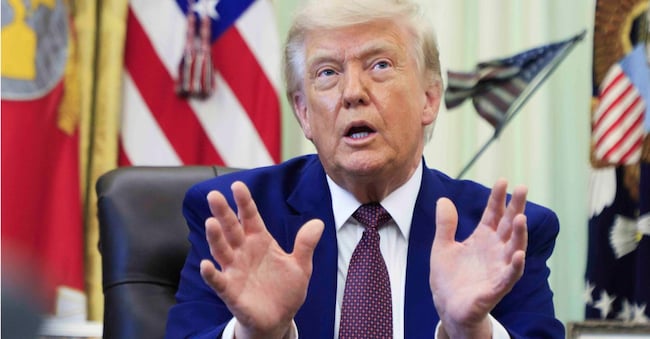
Donald Trump reacts angrily to the revolt in the ranks of his Republican party, which led to the first House vote for a withdrawal of US troops from the conflict with Iran. 'Bad republicans': this is how he apostrophised yesterday the four dissident congressmen who joined the Democratic opposition in passing the resolution with 215 in favour and 208 against. In a message on Truth Social, he condemned the entire motion as a 'petty' attempt to thwart his 'war powers' as commander in chief.
The rejection - Trump denounced - comes 'during my final negotiations to conclude the war with Iran. Who would do such an unpatriotic thing. The Democrats are afflicted with anti-Trump syndromes, they would bankrupt the country just to not allow me another victory among my many. The four Republicans are show-offs, they should be ashamed of themselves. Maga!!!"
The echo of the vote, which took place on Wednesday evening, has continued to reverberate in Washington despite the president's outburst. And despite the fact that the chances of it becoming a measure with the force of law are slim: it would have to pass the Senate and with two-thirds majorities to be veto-proof for the president. Who continues to claim authority for an operation justified by imminent national security emergencies caused by Tehran.
But the hostilities, which began on 28 February with the launch of the Epic Fury mission, have now entered their fourth month, betraying assurances that they would last no longer than five weeks and feeding unease on Capitol Hill. The mission has depleted the US arsenals, raising fears about the US ability to withstand other crises; it has not liquidated the Iranian regime; it has boosted inflation with energy shocks; and it has caused rifts with several friendly countries.
The slap in the face of the vote may also signal, beyond the war, more general resistance to the unilateral and aggressive style adopted by the White House. In recent days, American conservatives have also obstructed Trump's plea bargain with the IRS, angered by a compensation fund for the president's supporters (who insists on the measure even though his own Justice Secretary Todd Blanche has declared it cancelled) and broad immunity from tax audits for the whole family.


