
House scuffle over sex education. Valditara leaves the chamber
The minister first attacks: falsehoods about femicide. Then he leaves the session on the Ddl being examined by Motencitorio. Immediate conference of group leaders requested

Key points
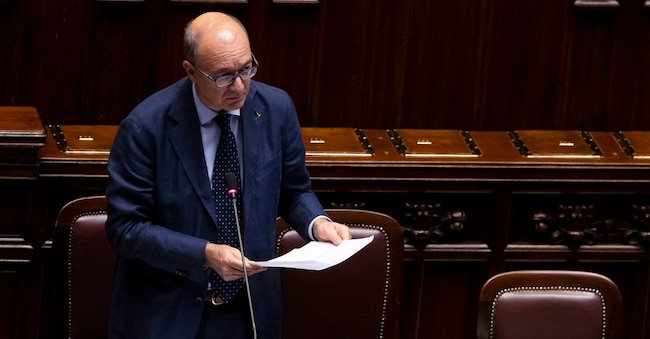
A brawl in the House on sex education in the classroom. After the skirmishes of the past few days during the general debate on the bill introducing prior informed consent from parents or students, if they are of age, for participation in any school activities concerning topics relating to sexuality and regulating the procedures for the involvement of external parties in the performance of such activities. The climax was reached in the morning when Minister Giuseppe Valditara first attacked the opposition and then abandoned the proceedings. The minorities immediately raised their shields, calling for an immediate conference of group leaders and threatening to block the measure that, on paper, was to get the first parliamentary green light today.
The political controversy
"It has been said that with this bill we would prevent sex and affective education in schools, to inform our young people about the risks of sexually transmitted diseases," thundered the MIM holder, who added: "It is false. Shortly afterwards he added: 'Such a sensitive issue as feminicides has been exploited, shame on you,' attacked the minister, who then left due to concurrent institutional commitments. Or at least that was his version.
Immediate and repeated protests from the opposition. They effectively halted the Chamber's work while waiting for Valditara's apology. This was accompanied by a request to the president of the Chamber, Lorenzo Fontana, to convene an immediate conference of group leaders.
The disputed measures
In recounting what the contested measure contains, it is worth starting from the panultimate episode. That is, the amendment filed on Monday, 10 November by the Lega Nord deputy Giorgia Latini, with a partial turnaround compared to the text that came out of the 7th committee last month and that contained a ban on including sex education in disciplinary subjects up to middle school. As a result of the change agreed with rapporteur Rossano Sasso (Lega), the ban would only apply to childhood and primary school with the specification that it could only be mentioned within the limits of the national indications on programmes, recently reformed by Valditara himself.
What changes in middle and high school
If the exam is restarted and the bill is not further amended in middle school and high school, explicit parental consent will be required for all initiatives in the sphere of sexuality, even if they are extra-curricular, or of the student if he or she is of age. Prior informed consent must be requested no later than the seventh day prior to the planned date of the activities. The request for consent shall explicitly state the aims, educational and training objectives, contents, topics and methods of carrying out the activities, as well as the possible presence of external experts or representatives of bodies or associations involved in various ways. If underage pupils are involved, the presence of a teacher is guaranteed during the course of the activities.

Brand connect


Newsletter Scuola+
La newsletter premium dedicata al mondo della scuola con approfondimenti normativi, analisi e guide operative
Abbonati