
Champions of sport and borders
Lamberto Gherpelli recounts the Istrian, Fiuman and Giuliano-Dalmatian exiles who enriched Italian sport: from Benvenuti, to Missoni, to Loik
3' min read
3' min read
Borders are becoming walls, and a book like Lamberto Gherpelli's on Border champions. The Istrian, Fiuman and Giuliano-Dalmatian exiles who made Italian sport great reminds us that we are playing with fire, that we do not remember - forgetful and arrogant - that borders are osmosis, exchange and wealth. The journalist, who has worked for the 'Guerin sportivo' and 'Il Resto del Carlino', wants to 'bring back to memory a forgotten tragedy because even today only a small part of Italians know the story of the exiles, who, when they arrived, were left to themselves, alone and with nothing' and he does so with the universal language of sport and its protagonists.
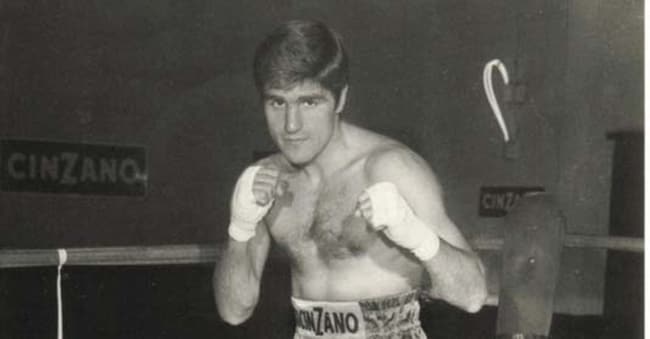
Nino Benvenuti, the history of Italian boxing, was born in Isola d'Istria, which came under Yugoslavian rule after the war and the boxer remembers: 'in the village where I was born, the only inscriptions still in Italian are at the cemetery. A few old fishermen are left to speak my language down at the port'. He made millions of fans stay awake, Benvenuti in the ring against Emile Griffith for the world bantamweight title. Another border boxer was Ulderico Sergo (1913-1967), born in Rijeka in 1913, when the city was still part of the Austro-Hungarian Empire. With an unmistakable class, he won the Golden Glove four times in Chicago and, above all, the gold in Berlin 1936 in the rooster weights. In short, a forgotten Olympic champion who was forced to leave Rijeka, his homeland, in 1947. Mario Andretti came from the province of Pula and remembers the refugee camp in Lucca, before the great leap to the USA and an international career as a pilot.
Gherpelli's portraits follow one another: Ottavio Missoni (1921-2013) came from Ragusa-Dubrovnik. In 1935 he wore the blue jersey in the 400 flat and 400 hurdles, was world student champion in Vienna in 1939 and participated in the 1948 London Games. Then, having given up blue, he began his run in the fashion world together with his wife Rosita Jelmini. There is the hero of two worlds, Cesare Rubini (1923-2011), "the second son of a family of Dalmatians who emigrated to Italy after the Treaty of Rapallo in 1920". The choices of the powerful fall on everyone, lives torn apart, families on the run. Rubini was Olympic gold medallist in London 1948 in water polo and then in basketball he won five titles as a player and fifteen as a coach. Another Olympic gold medal was that of Agostino Straulino (1914-2004), a sailor, gold in Helsinki 1952 and silver in Melbourne 1956. He was born in Mali Lošinj, now in Croatia: 'On my island I came into the world and grew up. There I got to know the wind and made it my friend'. Geography enters and leaves stories, it is a birthplace and marks lives. Orlando Sirola (1928-1995) was born in Fiume and at the end of the war his family left, choosing Latina to start again. From there Orlando became ten times Italian tennis champion with Nicola Pietrangeli. And then there is an almost mythical footballer, that Ezio Loik (1919-1949), who died at Superga with the Grande Torino. He, too, was born in Fiume, a few days after D'Annunzio entered the city. The album proposed by Gherpelli also has stickers of brothers Mario (1905-1978) and Giovanni Varglien (1911-1990), Rijeka glories and pillars of the Juventus team that won five consecutive championships in the 1930s. There are also footballers among the border champions: there is also Rodolfo Ostromann (1903-1960), striker for Milan and Triestina.
The triumphs and forgotten epics of the athletes in this book also bring to the surface ancient wounds, rips in the border and in history, which have become topical again since 2004, when the Day of Remembrance for the victims of the foibe and the Julian-Dalmatian exodus was established, which falls on 10 February each year (on 10 February 1947 the Treaty of Paris was signed, assigning Istria, Kvarner, Zadar with its province and most of Venezia Giulia, formerly Italian territory, to Yugoslavia). To remember is to build a better country: in recent years, refugees and barges have been the focus of debate and clashes, but the reflection of writer Fulvio Tomizza, a native of Materada, Istria, remains: 'How ironic! We talk so much about refugees and we have never understood, never honoured our refugees, the Italians of Istria'.
Lamberto Gherpelli, Border Champions. Gli esuli istriani, fiumani e giuliano-dalmati che hanno fatto grande lo sport italiano, Ultra Sport, pp. 188, euro 16


