
Chanel takes over 35% of Mantero Seta. 'An operation that gives confidence to Italian textiles'
Chairman Franco Mantero recounts the details of the acquisition: 'We will continue with our strategy. An important signal for family businesses that focus on excellence, innovation and management".

3' min read
3' min read
A very long and solid business relationship that becomes a partnership: this is something that happens frequently in the Italian manufacturing chain of excellence, made up of small and medium-sized companies whose business culture, efficiency, sense of innovation and respect for quality and work attract the investments of the larger ones. And that is what happened last week between Chanel and Mantero, one of the historic silk factories in the Como district and one of its symbols. In fact, the French fashion house took over 35% of the capital of the company, with which it has been collaborating for decades.
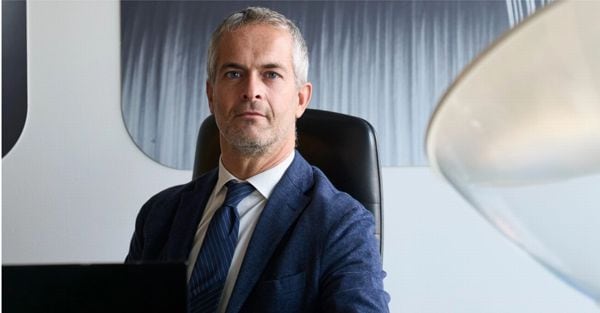
'Here we go beyond established relationships,' explains Franco Mantero, president of the company and member of the fourth generation of the family that founded it in 1902. Obviously in us they have seen and appreciated our strategic path, our approach, but also the management organisation. Often in family businesses like ours this is a weak aspect. Three years ago I decided to be the chairman, but to have two managing directors at my side: Simone Mercuri, who is in charge of corporate and finance, and Simone Taroni, who works more on the product and customer development side. They liked this choice, which is also demonstrated by the fact that we are doing well. And those who work in close contact are able to understand the concreteness and reality of aspects such as those, for example, reported in the sustainability reports'.
For its part, in a note, "Chanel confirms that it has acquired a minority stake in Mantero Seta, an Italian family business renowned for its expertise in the design and production of silk accessories and ready-to-wear. This step is a natural extension of the history that has linked our two maisons for over 50 years and demonstrates our common desire to strengthen Mantero's development potential in a highly competitive environment. Mantero will continue to work with all its customers, in line with Chanel's strategy in this type of operation".
Chanel is not new to this type of operation: the most recent was on 6 March, when it was announced that it had entered the capital of Leo France, a leading Florentine company in the production of bijoux and metal accessories, with a 20% share. In Italy, Chanel realises about half of its global production, and has stakes (minority, majority or total) in numerous companies, from Roveda (shoes) to Nillab-footwear manufacturer Ballin, from Vimar 1991 (yarns) to Cariaggi (also yarns), from knitwear manufacturer Paima to tannery Samanta and leather goods manufacturers Renato Corti and Mabi, to Fashion Art (denim).
For Mantero's management, therefore, nothing will change, but this operation certainly guarantees even more solidity for the future: 'They are asking us to continue along the path taken so far,' he continues, 'and I do not exclude that we may accelerate our 2024-2026 industrial plan, even with new operations such as the one that led us to take over the knitting mill Ites last summer, with which we opened up to a similar category but one that is new to us. And to continue our work of supporting the smaller, but necessary, companies in our area, as we did with the two companies in which we took over a share together with Ratti (another silk mill that is a symbol of the district, ndr) to enable them to continue with their production of excellence and for us to be able to take advantage of it'.


