
Chess: the perfect game is explained to you by artificial intelligence
At the Alma Mater University Chess Tournament in Bologna, an international tournament experiments with ShashGuru, the AI that comments on matches and helps players improve
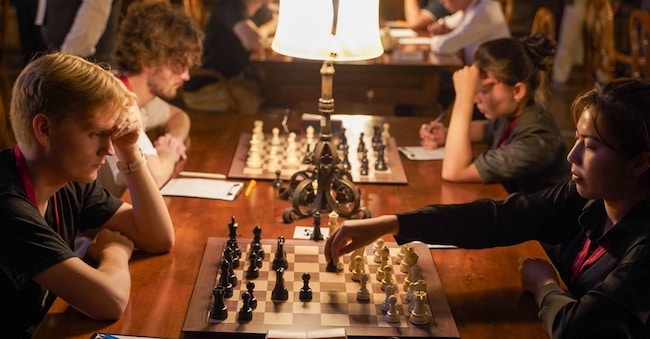
Chess has always been considered the yardstick for measuring logical intelligence: on the chessboard, the ability to think quickly, thoroughly and clearly is assessed. But since Deep Blue defeated Garry Kasparov in 1997, the paradigm has changed: today, software dictates the law, capable not only of calculating millions of moves per second, but also of surprising with creative solutions. It is no coincidence that the great masters train with AlphaZero and other engines that have made collaboration with AI an integral part of their preparation. An alliance that found new form at the Alma Mater University Chess Tournament in Bologna, the competition that brings together eighteen university teams from around the world each year. The novelty of this edition was the introduction of an exceptional tutor: ShashGuru, an artificial intelligence application that, at the end of each game, helps players review their moves, highlighting errors and wasted opportunities. A support that makes it easy to understand how the game might have changed if, for example, the knight had been moved instead of the rook. ShashGuru was developed by Intel and the University of Bologna, integrating the open source ShashChess engine with the conversational capabilities of the latest generation of language models (in this case Meta's Llama-3.1-8B). The idea came from Alessandro Libralesso, a student of Computer Science at the University, with the aim of making the analysis more accessible and engaging not only for the players, but also for the public, who were able to interact directly with the AI, receiving explanations in real time. "ShashGuru combines the conversational capabilities of linguistic models with the precise strategic analysis and computational speed of Intel architecture: a new approach to human-computer interaction in the chess domain," explained Paolo Ciancarini, professor at the Department of Computer Science - Science and Engineering at the University of Bologna, who oversaw the development of the project.
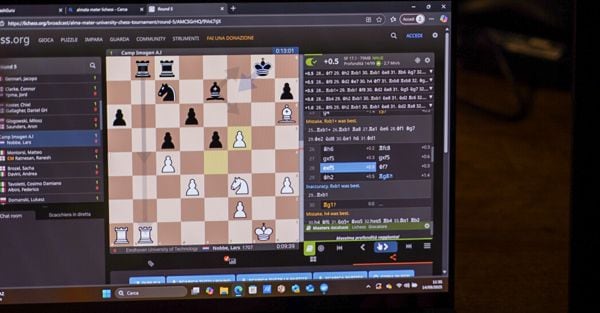
Underlining the technology's impact also on the technical side, Alessandro Palla, Intel's Senior Staff Deep Learning Engineer and AI researcher in the NPU (Neural Processing Unit) team, added: 'Thanks to this research, Lasker's goal of finding even better moves can be realised - with additional analysis - outside the cloud thanks to AI PCs. Optimised to speed up the time at which information is provided and trained to reduce hallucinations, AI now acts as a chess master and supports players in analysing games and improving the game, directly from their PCs'.

