
Children and the justice system: the Ombudsman’s Rights Agenda – removal as a last resort
A document aimed at combating automatic responses, stereotypes and anti-scientific constructs and practices such as parental alienation and ‘reunification therapies’. Terragni: ‘We need a revolution in care’

Key points
- The reference to the judicial system
- Put a stop to parental alienation
- Expulsions as a last resort
- No more compulsory deductions from working parents
- ‘Reunification treatments’ incompatible with the Constitution
- Rejection of the other parent does not justify removal
- Roccella: the family at the heart of the initial response
- Terragni: minors portrayed as a ‘limitation’
- Spotlight on ‘the poverty of relationships’
- Egg freezing? ‘A sick society’
- ‘We need a care revolution’
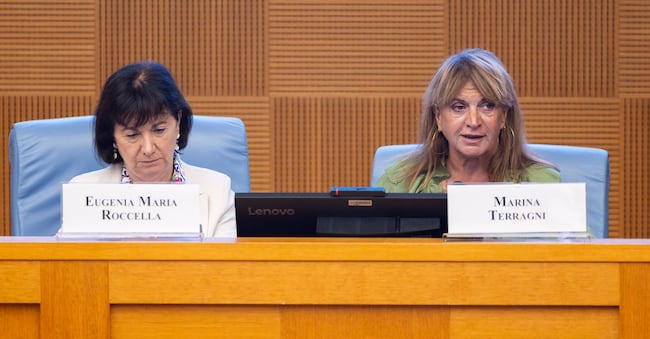
A dynamic and updatable tool for analysing laws, practices and key issues relating to the protection of children and adolescents. The Ombudsman for Children and Young People, Marina Terragni, who appeared before Parliament on 30 September in the Chamber of Deputies’ Group Chamber to present the Annual Report on Activities for 2025, has launched the Agenda on Children’s Rights. Aim: to combat automatic responses, stereotypes and practices lacking scientific validation.
The appeal to the judicial system
The handbook, produced with the contribution of the experts Elvira Reale, Marina Marconato and Alessandra Capuano Branca, also serves as a reminder to ensure, at all times, in courtrooms, decisions are ‘tailored to the individual and based on rigorous investigations, conducted by professionals specifically trained in current juvenile law’. The Authority aims to cooperate with other institutions to create a national system that promotes health, care and scientific rigour in child protection, in accordance with the four principles enshrined in the best interests of the child: listening, health, safety and care.
Put a stop to parental alienation
I would like to explicitly highlight the widespread use, in proceedings concerning the custody of children following separation, of the concept of ‘parental alienation’ (and its derivatives), which often ends up revictimising mothers who are victims of partner violence, by concealing and misrepresenting the abuse, reversing the blame and even leading to the removal of children, almost always from their mothers. A paradigm which ‘continues to play, in certain judicial and advisory practices, a highly influential role, despite the lack of scientific recognition of the construct and the repeated critical statements from the international scientific community, supranational bodies and the Court of Cassation itself. The real risk is that the child’s statements will be devalued or reinterpreted through abstract theoretical frameworks which ultimately prevent the facts from being established and undermine the child’s right to be heard and believed’.
Dismissals as a last resort
The Agenda places great emphasis on the issue of children being removed from their families, which Terragni has repeatedly called for measures to curb and limit, as recommended by the Guidelines on removalsissued by the Authority itself, to cases where there is a danger to the safety of minors and, in any event, as a measure to be adopted only as a last resort, when the current risk of serious harm arising from the child remaining in the family unit is ‘manifestly greater than that associated with removal’.
No more compulsory deductions from carers’ incomes
‘The prohibition of coercive practices against children, as well as forced removals from caring, non-violent parents or from families which, whilst vulnerable, can be effectively supported in strengthening their care-giving capacities – the text states – must be an absolute priority, shared by all institutions involved in child protection: the judicial authorities, social services and the health service.”


