
Chile, Kast is the new president: migrants and security push the country to the right
The ultraconservative José Antonio Kast won with 58% of the vote in the runoff for Chile's presidential election and is the new president-elect
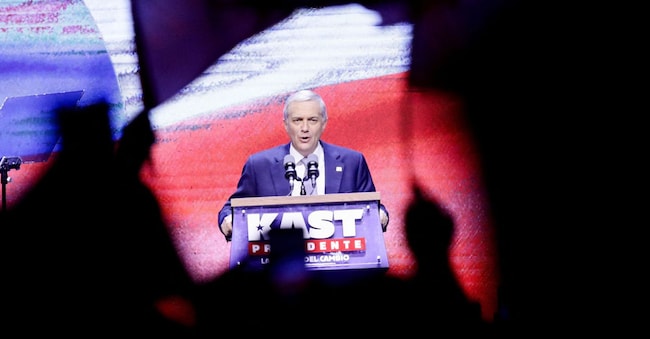
The ultraconservative José Antonio Kast won with 58% of the vote in the runoff for Chile's presidential election and is the new president-elect. Communist Jeannette Jara acknowledged defeat when the Electoral Service published the results with 85% of the ballots counted, which had put her at 42%. 'Democracy has expressed itself in a strong way is clear. I have just spoken with President-elect José Antonio Kast to wish him success for the good of Chile,' Jara wrote on X, dispelling the few doubts that now hung over the result.
Security and migration decisive issues
At the end of a long electoral campaign centred on the issues of security and migration, a drastic turn to the right took place, bringing Chile into a scenario unprecedented since the return of democracy in 1990. Kast, coming to the presidency at the age of 59 and on his third attempt to take office in the palace of 'La Moneda'. Chilean voters, concerned by the growing presence of Venezuelan gangs and the progressive increase in the homicide rate, have largely rewarded his recipe of an iron fist against delinquency and illegal immigration. In the last televised debate, the Republican leader promised to close the borders and gave 92 days for illegal residents to leave the country, exactly the time between the runoff and his inauguration as president on 11 March.
Tensions on the border with Peru
His words had immediately triggered a crisis at the northern border with Peru, where hundreds of migrants, mainly Venezuelans, had poured in seeking refuge in the neighbouring country. The security 'psychosis' - Chile still ranks among the safest countries in Latin America - had also had an impact on the left-wing candidate's campaign. In an attempt to catch up in the polls, Jara had been forced in recent weeks to harden her discourse on the fight against crime, leaving the promises on accelerating economic growth and reducing inequality partially aside.
After casting his vote, Kast had in any case assured on Sunday that in case of victory he would be 'the president of all Chileans beyond political differences' while Jara, in a last ditch attempt to recover votes, had distanced himself from the outgoing president and his ally, Gabriel Boric. "I can only answer for my work as Minister of Labour," he had said in a press point to those asked to take stock of the current government. "I can talk about the reform of social security, the reduction of the working day to 40 hours a week, the revival of employment with 580,000 jobs and the increase in the minimum wage," he had said.
The Right Turn 35 years later
Just six years after the 2019 social protests that propelled Boric to the presidency and thirty-five years after the end of the dictatorship, Chile now sees one of the most staunch defenders of the military government return to the presidency. Kast is in fact the first democratic president to vote for Pinochet in the historic 1988 plebiscite that prevented the Chilean dictator from perpetuating himself in power.

