Chemicals: output down 3 per cent – the EU has a decisive role to play. Meloni: take action on the ETS
At the Federchimica general meeting, industry representatives refocused attention on energy and health. President Buzzella: “It’s a burden”

Key points
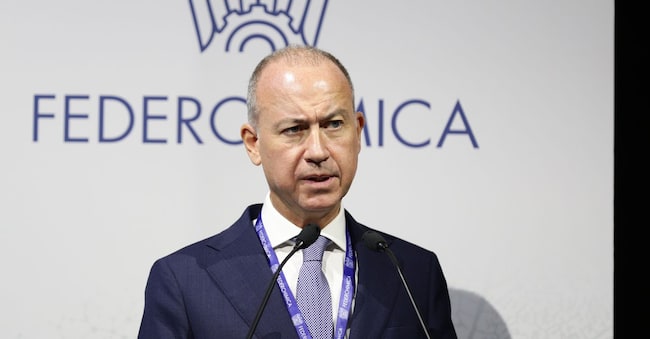
‘In Europe, we have taken our industrial leadership for granted for far too long. The wake-up call – a much-needed jolt for which we are grateful – came from Mario Draghi. Two years on, however, over 80 per cent of the recommendations in the Draghi Report have not been implemented, and progress has been slowest in the fields of energy and digitalisation: two crucial areas.” These are particularly crucial for the chemicals sector, as explained by Federchimica’s president, Francesco Buzzella, in his report at the Annual General Meeting, which was opened with addresses by the Prime Minister, Giorgia Meloni, and the President of the European Parliament, Roberta Metsola.
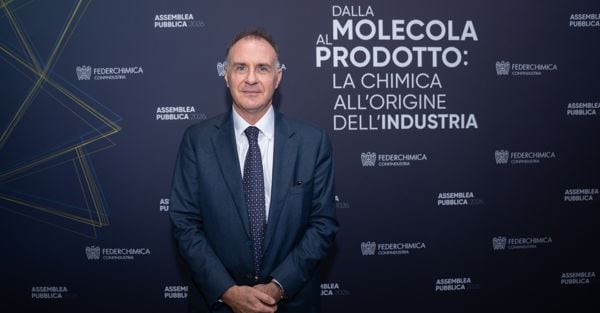
Meloni: take action on the ETS
“The Green Deal and European policies have contributed to exacerbating the difficulties” faced by Italian industry “by imposing costs and burdens that are disconnected” from the needs of the production system, said Meloni. “The ETS system” is where action is needed. “We need realistic timelines and protection against those who do not bear the same costs as us, particularly environmental costs.” The Prime Minister highlighted that “the European chemicals sector is undergoing a profound crisis. Energy costs, weak demand and international competition that we cannot contend with on a level playing field are taking their toll,” explained Meloni. “Europe cannot respond to these challenges by imposing further costs and constraints on those who continue to invest and produce here. The Green Deal and European policies have also contributed to exacerbating these difficulties by imposing burdens and deadlines that are out of step with the availability of sustainable technological and energy alternatives for businesses. The ETS system is one of the key areas requiring action. For this reason, the Government is fighting – and will continue to fight – for a review of European climate policies, starting with the ETS, which balances decarbonisation with competitiveness. We need realistic timelines, technological neutrality, energy at sustainable costs and effective protection against competition from those who do not bear the same costs as we do, particularly environmental costs.”
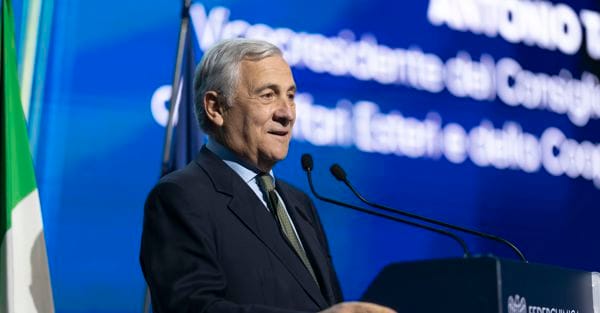
The decline in production
This is not an easy time; at European level, ‘the loss of production capacity in the chemicals sector between 2022 and 2025 amounts to 37 million tonnes, equivalent to around 9 per cent of the total, with some 110,000 jobs affected. Over the last four years, the number of announced closures in the chemical sector in Europe has increased sixfold. In Italia, chemical production is more than 13 per cent lower than in 2021. “Hopes for a swift resolution to the conflict in the Middle East are proving to be in vain, and chemical production in Italia is forecast to contract by a further 3 per cent in 2026, with possible knock-on effects into 2027,” said Buzzella.
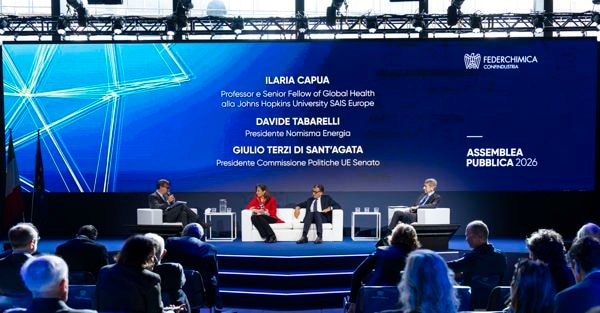
EU policies of vital importance
In his speech, Buzzella highlighted the fact that by 2050, on a planet with a population of nearly ten billion, ‘the combination of demographic and technological change will result in a multipolar world order, with reduced American influence. The influence of the G7 countries will steadily decline in favour of China, India, Indonesia, Brazil, South Korea, Turkey and other emerging economies, such as Vietnam, the Philippines and Nigeria. Europe will have an even smaller role to play and will face fiercer competition to defend it. This is why we have long maintained that the European Union’s policies – now, not tomorrow or the day after – are of vital importance in determining whether we intend to carve out a role for ourselves as co-leaders, or whether we will succumb to the aggressiveness of the world’s new industrial leaders, thereby relinquishing our prosperity and our values.”
American and Asian competition
Europe has an extraordinary industrial heritage, but finds itself caught between the American model, which ‘relies on technological and scientific dominance, a formidable network of innovation and finance, low-cost energy and significantly less stringent environmental regulations than ours’, observes Buzzella, and ‘China, which is at once a market, a supplier and a competitor – unfortunately, often an unfair one. In 2019, 5 per cent of Italy’s chemical imports came from China, compared with 17 per cent in 2025. Over this same period, our exports to that market increased by 20 per cent, but imports rose by 410 per cent’. Moreover, ‘between 2005 and 2024, Chinese companies benefited from forms of public support between three and eight times greater than those in OECD countries. We are therefore talking about pure structural dumping, with strong backing from Chinese state-owned banks,’ explains Buzzella.