Asia

China, Xi Jinping's web embraces the world

A spectacular parade as never before to celebrate the 80th anniversary of the victory over the Japanese invader who surrendered on 2 September 1945 reveals a strategic plan to which only Beijing holds the keys
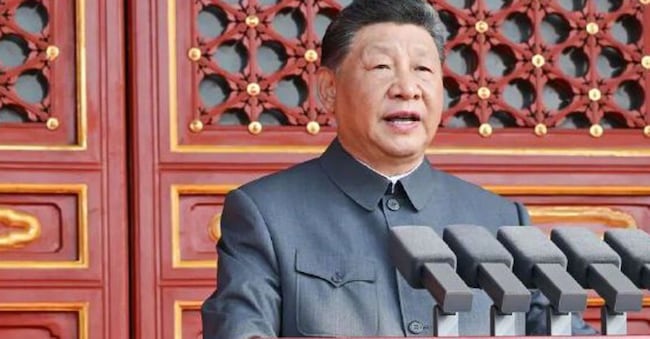
by Rita Fatiguso

Xi Jinping, presidente della Repubblica Popolare Cinese.

5' min read

5' min read

It takes exceptional political stability to replicate, ten years later, a pharaonic celebratory event to the nth degree, not only scenically, but above all diplomatically and militarily.

General tests

.

The seventy-year candles were just a pale dress rehearsal, the V-Day eightieth birthday party in Beijing today became proof of the geopolitical centrality of Xi Jinping China, the core leader in the saddle for over twelve years, the only one able to coagulate around him a fifth of the world's population, a quarter of the GDP, giving impetus to an extended transnational military force, which was sensed in nuce after the weekend in Tianjing, site of the 25th Summit of the SCO, the multilateral organisation set up to guarantee Eurasian security.

Loading...

Economic Dependence

.

The parade on the Tian anmen square becomes the ideal stage to confirm that China is the only power capable of promising the dream of a better life to millions of people in a turbulent planetary context.

A necessary step, the renewed understanding with the axis of evil, George Bush would have said, Xi Jinping has stretched his protective wings over the Russian Vladimir Putin and the North Korean Kim Jong un and Iran, he wanted them with him on stage and justified their presence. After all, the Chinese peace plan for Ukraine did not envisage sanctions, China is opposed to their use and has theorised it in every place, condemning those that affect friendly countries, and so it is on energy above all, the one most affected by the West's interdictory measures, that cooperation will resume, as the bilateral with Putin demonstrated.

That same hunger for energy prompted India's Narendra Modi, another political dinosaur, to reconnect with Xi Jinping's China after being harshly sanctioned by Donald Trump over supplies from Russia.

China's centrality in weaving the network of relations, especially economic ones, with states that the US looks at with a different set of eyes and that need China is obvious. If Beijing were suddenly to pull out, Putin's Russia engaged in Ukraine would fall to its knees. Not to mention North Korea and Iran.

There is no way for Donald Trump to fully implement the 'divide and rule' with Putin and Kim. A compact wall has been created, not an occasional one, and after all, it is impossible to deny that the war has left debris in the bodies and minds of countries like China and Russia, in Korea, so why shouldn't their leaders together shake hands with wheelchair-bound veterans and offer comrade Xi Jinping the opportunity to stand as a beacon of world peace?

The New Military Power

.

The effects of China's steadily increasing defence budget, up to 7.5 per cent in 2025, among the world's heaviest war budgets, paraded before the eyes of the world.

The giant portrait of Mao Zedong bore witness to the reform of the Armed Forces to make it 'a modern body capable of winning a war'. The end of the old Russian- or Ukrainian-made weapons, archived and replaced by high-tech Made in China products. The debut of the DF-41, Dongfeng's hypersonic nuclear intercontinental missile, known as the 30-metre-long 'East Wind'. JL-2 ballistic missiles launched from the navy's nuclear-powered submarines and H-6NA bombers built to counter aircraft carriers return to the Tien anmen. Everything is getting bigger and more powerful, and never before has Vegetius' motto 'if you want peace, prepare for war' been so topical.

In 2015, the military parade for the 70th anniversary of the victory over Japan came as a shock to the whole world. The anniversary of the victorious resistance to Japanese aggression, capable, in the Chinese vulgate, of bringing the country back to the top of the international community, was celebrated with great pomp in a Beijing red-hot and empty as an eggshell, for security reasons. Xi Jinping, in power for just three years, former Field Commander of Defence, announced from the stage in Tian Anmen Square the reform of the Armed Forces, a drastic cut of 300,000.

Next to him was Russian President Vladimir Putin who had just trespassed in Crimea, absent Kim Jong un, to spite South Korean President Park Geun-hye had sent envoy Choe Ryong-hae. UN Secretary General Ban Ki-Moon was there, as well as Sudanese Omar Hassan al-Bashir, wanted for war crimes, and former British Prime Minister Tony Blair, in a personal capacity. Xi wanted his wife Peng Liyuan next to him and, as a sign of continuity, the old guard, Jiang Zemin, Hu Jintao, former prime ministers Li Peng, Zhu Rongji, Wen Jiabao, later decimated by age and internal feuds, a court that is no longer needed, indeed. Even then, the parade was proof of the purge at the top of the People's Liberation Army, with high-ranking military personnel such as Guo Boxiong and Xu Caihou, former vice president of the Central Military Commission, absent from the roll call.

La Cina celebra la pace ma mostra le nuove armi

Photogallery27 foto

Xi Jinping paraded among the twelve thousand military personnel lined up in a Sedan, paying tribute to the troops for their hard work, who hailed him with a "Hello Commander! We serve the people!" Deployed 500 heavy vehicles including the DF-21D anti-aircraft carrier ballistic missiles, J-15 carrier-borne fighters, amphibious vehicles and new drones, the DF-5B intercontinental ballistic missiles, with a range of 15 thousand kilometres and the DF-26 medium-range ones of 'only' 4 thousand kilometres with anti-ship capability but with an even greater range than the DF-21D, the WZ-19 attack helicopters, the H-6K bomber copy of the Russian Tupolev Tu-16, the 99°2 tanks, as well as artillery pieces and combat vehicles.

In between, in 2019, there was the military parade for the 70th anniversary of the Founding of the Communist Party, another show of fifteen thousand soldiers divided into 59 phalanxes, but already the old Russian- or Ukrainian-made contraptions had been archived replaced by Made in China, with the debut of the DF-41, the DF-41, the Dongfeng intercontinental hypersonic nuclear missile, the 30-metre-long 'wind from the East'. The JL-2, the ballistic missile that can be launched from the navy's nuclear-powered submarines, and, the icing on the cake, the H-6NA bomber known as the 'carrier-killer', were also reinforced.

Today, the game, even technological, is getting tougher if possible, even at the foreign and domestic policy and military level, with means to satisfy the finest defence palates.

All together

At the 80th anniversary parade, Russia, North Korea, Iran and Myanmar, all sanctioned, are lined up together for the first time. Shoulder to shoulder Russian president Vladimir Putin and Kim Jong-un, Iranian president Masoud Pezeshkian, Myanmar junta chief Min Aung Hlaing. All veterans of last weekend's Tianjin Sco, the China-led Global South Security Meeting. The UN is represented by Undersecretary Li Junhua, former Chinese Ambassador to Italy.

The thorn in the side of the generals removed or vanished into thin air remains, the shadows of former Defence Minister Li Shangfu, replaced by Dong Jun, or of Miao Hua, removed as party representative in the Central Military Commission for 'serious disciplinary violations'. They are looking for traces of He Weidong, vice-chairman of the Commission, and who knows whether all this will lead to the promotion of Generals Liu Zhenli or Zhang Shengmin.

Certainly, as ten years ago, cleansing in the Armed Forces is theorised as a means to guarantee its integrity, to safeguard the country.

Copyright reserved ©
Loading...

Brand connect

Loading...

Newsletter

Notizie e approfondimenti sugli avvenimenti politici, economici e finanziari.

Iscriviti