Dining with Alfredo Altavilla

The car in China, compared to Europe, has financial strength and strategic energy

The Europe watcher for BYD says that what matters is the car in its complete and articulated profile, not the electric motor-endothermic diatribe

6' min read

6' min read

"BYD employs 1.8 million people. In China it has one hundred and twenty thousand engineers. These engineers are at least as well trained as those who have studied in European polytechnics and American universities. The second largest car manufacturer in terms of number of engineers is the Japanese Toyota, which has 51 thousand'.

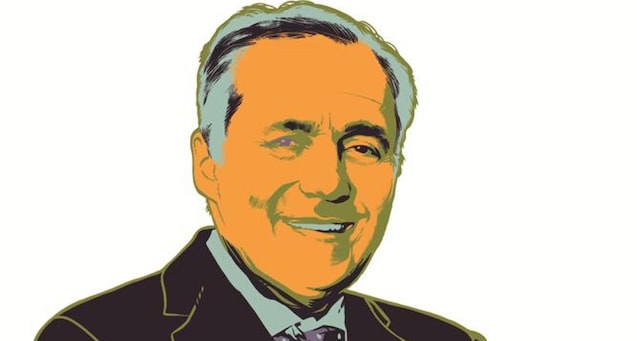
In the automotive world, Alfredo Altavilla has built a reputation as a rough and direct man. More than rough and direct, he is elementary and uncomplimentary. And nothing is more elementary and less complacent than numbers. He learnt at the school, not alien to verbal harshness and overwork as a religion and as a definition of himself and others, of Sergio Marchionne, who with an overflowing energy equal to his strategic creativity took two failed and acephalous companies - Fiat and Chrysler - and made one (then) alive and solid, Fca. Today, Altavilla is in charge of strategic oversight of Europe for BYD. He is, therefore, in the position that is both lateral and central, as the link man between the Asian car and the western car.

Loading...

We are at the Gatto Nero, in Corso Turati in Turin, one of the classic restaurants of the twentieth-century ruling class, both Italian and northern: writers and industrialists, politicians and philosophers have discussed books and closed deals, built power plots and spoken of love gossip in front of top-notch dishes, traditional regional Italian cuisine with some surprising exotic pairings that reflect the madness of an only apparently orderly and canonised city like Turin. With Marchionne, whose most constant collaborator at Fiat since the negotiations with Barack Obama's administration to take over Chrysler in the US in 2009, he has come here for dinner many times. 'We sat at the same table we used to have with Sergio. When we wanted pizza we went to Corso Palermo to Cristina's,' he says.

Alfredo's family is from Taranto. His mother, Francesca, was a housewife. His father, Martino, owned a dealership in the city centre that sold Autobianchi, Citroën and Lancia cars. He - as a real car guy, car-guy you would have said once upon a time, when the sector (and the world) was in the hands of car-crazy men - graduated in economics from the Cattolica University in Milan with a thesis on the strategic management of the Uno's life cycle. Yes, the very car that - in the eighties, the burning season as quick as a flash for the Italian capitalism of Vittorio Ghidella and Raul Gardini, Mario Schimberni and Carlo De Benedetti - allowed Fiat in Turin to wait for the sales figures every month, in a thrilling head-to-head for the European supremacy with Volkswagen of Wolfsburg, which at the time had the Golf as its main model: 'As a student at the Catholic University, meeting Ghidella was decisive for me. Many years later his office in Mirafiori became mine'.

The Gatto Nero's wine list is equal to its cuisine, with both Italian and French labels. We choose a Nebbiolo from Bruno Giacosa, the orthodoxy of one of the Langhe's master winemakers revisited and modernised in taste by his daughter, Bruna Giacosa.

Certainly, however, by leaving Turin Altavilla immediately embarked on a new path by becoming senior advisor to the private equity fund CVC Capital Partners on behalf of which he was chairman of the pharmaceutical company Recordati from 2019 to 2021. In addition, from 2021 to 2022 he was executive chairman of the airline ITA Airways, with the mandate from Mario Draghi, then president of the Council, and the European Commission to find a ropeata for its rescue, at that time identified in the pairing of the Aponte family's MSC and the Germans of Lufthansa.

For starters Altavilla takes an artichoke salad. I, on the other hand, choose the raw meat all'albese, perfect with Giacosa's Nebbiolo. The mark of that experience is very strong: 'the biggest regret is not having succeeded with Sergio in taking the final step on the path of consolidating the sector to make FCA one of the biggest players, if not the biggest, in the world'. But it was precisely that biographical and professional intensity that also created the conditions for Altavilla to become one of the caesura personalities between the declining western car industry and the nascent Asian car industry: 'I had lived in China for Fiat from 1995 to 1999. It was another world. China was producing half a million cars a year. Now it produces 24 million. It was a unique experience. It was a world apart. We were staying in a residence for foreigners. The police control was total.

For the first course Altavilla takes pasta alla genovese, a typical Neapolitan dish. I, on the other hand, choose agnolotti del plin, butter and sage, plus a generous sprinkling of Parmesan cheese. The world has changed dramatically. China has integrated itself into the reality of the international car industry and often surpassed it: 'There is an issue of industrial organisation. In Fiat, the design life cycle of a product was 33 months. With Marchionne we managed to lower it to 27. At BYD you go from a blank sheet of paper to Job 1 in 18 months. Right now, 35 new models are being worked on in BYD's style centre. On average, around 40 patents are filed every day'.

Manufacturing is composed of specific identities, such as companies, and complex mosaics, such as the systems in which industrial groups move. The point is that, today, China's amniotic fluid is more nutritious than that of the West: 'When BYD's founder Wang Chuanfu and Vice President Stella Li called me in Shenzhen and asked me to figure out how their cars could do well, in terms of reputation and numbers, in Europe, I studied their carmaker's present and future technologies in depth.

My main observation concerned the amount of technology and systemic architecture of the car conceived and produced in China today: by European standards, it is all too digitised and refined compared to the potential and real interconnections with the material and immaterial infrastructure of the environment in which the car moves.

The networks that connect the car to the rest of reality are much thinner, more fragile, weaker in Europe than they are in China. For this reason, the Chinese car, which starts with software and then arrives at the sheet metal and the rubber by a route opposite to that of the German or French car, must be presented in Europe in a version calibrated to a digital infrastructure that is far inferior to the Chinese one. The point is not so much the diatribe between the electric motor and the endothermic engine and how many rechargers need to be installed on the grid. The point is the car in its complete and articulated profile.

And it concerns both electric and hybrid cars, which make up the vast majority of the new car fleet produced in China for the Asian and foreign markets. There is an issue of financial strength and strategic energy that is lacking in Europe. But the technological theme, both of the car and the car's environment, should not be underestimated'.

No grappa at the end of the meal, although Altavilla's mentor Sergio Marchionne would not approve, but a dessert would. Altavilla gets a pineapple with cream ice cream and I get a chocolate zuccotto, which is not bad at all. The car industry has a huge political component. It was like that in the 20th century. It is like that now. Europe is the continent of the car. Italy is an essential part of Europe. Car production in Italy is very small. "There is a geopolitical question.

Italy put tariffs on China, following what the US government did in the previous Biden administration, Germany voted against, Spain abstained. Every strategic option of Chinese groups also responds to political logic. I believe that it is complicated, if not impossible, for a Chinese manufacturer to open a production plant in a country that imposes tariffs on China,' says Alfredo Altavilla, a young man from Taranto who grew up in Milan and has become one of the last (and at the same time new) car-guys between Turin, Detroit and, now, Shenzhen, without complacency but in a very, very direct manner.

Copyright reserved ©
Loading...

Brand connect

Loading...

Newsletter

Notizie e approfondimenti sugli avvenimenti politici, economici e finanziari.

Iscriviti