
China cuts back on European beer: sales in Beijing are falling for everyone from Carlsberg to InBev
The decline in exports to China, which initially affected the car and luxury goods sectors, is now also affecting other consumer goods

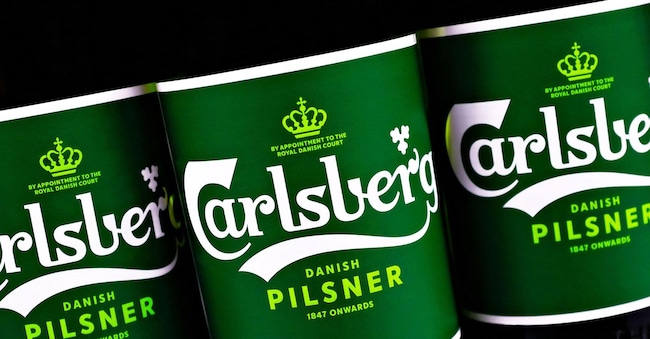
Carlsberg has closed the third quarter with an overall positive performance. The Danish brewer has announced a 3 per cent rise in revenue to 3.38 billion and has confirmed its 2026 guidance, which forecasts operating profit growth of 4–6 per cent. This increase is primarily due to the diversification of the portfolio, with non-alcoholic drinks up by 9 per cent and alcohol-free beers up by 11 per cent.
However, overall growth is being held back by weakness in the Chinese market; CEO Jacob Aarup-Andersen spoke of a ‘challenging business environment in China’, exacerbated by low consumer confidence and heavy rainfall during the summer. In fact, the gradual contraction of the Chinese market is a phenomenon that has been underway for some time, as demonstrated by the decline in its share of revenue from 18.71 per cent in 2024 to 12.03 per cent in 2025. Moreover, this trend is not limited to Carlsberg alone. The Anheuser-Busch InBev group, which owns the Stella Artois and Budweiser brands, has seen its quarterly sales in China fall by 17 per cent. Moreover, the Chinese market is reportedly causing difficulties for many sectors of European exports, from the automotive industry to the luxury goods sector. The French multinational LVMH, for example, recorded a 1 per cent increase in sales in the third quarter – a result below analysts’ forecasts – alongside a 5 per cent drop in Asian turnover. The controversy surrounding Louis Vuitton’s successful lawsuit against the Chinese brand Molly Tea is also having an impact: according to estimates by JL Warren Capital, Louis Vuitton’s sales in China are said to have fallen by 30 per cent in July alone and by 20–25 per cent in August.
A decline is also evident in the telecommunications sector. In August, Reuters reported on Nokia’s plans to scale back its operations in the Chinese market following a 19 per cent drop in revenue in the Beijing market in 2025; this is a result of the rapid replacement of Western technology devices with Chinese alternatives, such as those produced by Huawei.
The automotive sector is also one of those hardest hit by growing competition from China. In addition to the high-profile case of Volkswagen, BMW has also seen a fall in its deliveries to China, totalling 114,355 units.
This trend forms part of a broader trade picture. In 2025, the EU’s trade deficit with China reached a record high of 359.8 billion euros.

