
China sells more cars than the US and duties return
Beijing advances, from automotive to green technologies. And the American manufacturing association asks Biden for new protections to defend against the invasion of low-cost products

4' min read
4' min read
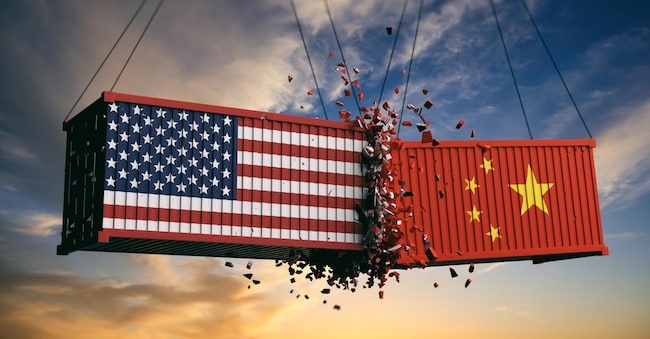
China is advancing, from cars to green technologies. And the US is responding to the challenge of its strategic rival by increasingly sharpening its tariff arsenal and striving to captain a tougher collective response to Beijing's aggressive 'dirigisme' distortions of market economies.
The latest and symbolic wake-up call: Chinese vehicle manufacturers have for the first time overtaken the historic American brands in the global sales ranking. The statistics are from the automotive intelligence company Jato Dynamics: 13.43 million Beijing vehicles arrived on the world's roads in 2023 against Detroit's 11.93 million. This is an advantageous position in an industry that has seen volume growth of 10% on a global basis, 12% in the USA and Canada, 16% in Europe and 3% in China. And where Shenzhen-based Byd is now also challenging Texas-based Tesla on electric models. It is no coincidence that it is on EVs that the US is playing perhaps the toughest game, with the imposition of particularly high barriers imitated by the Europeans.
The car is not an isolated case: the star-studded manufacturing sector fears as never before the overcapacity on which Beijing relies and, in order to exorcise the spectre of neo-invasions of low-cost products, is asking the White House to wield a long-buried weapon. Section 421 - conceived at China's entry into the WTO in 2001 to create temporary barriers to avoid shocks - expired in 2013 and was used, the one and only time, by Barack Obama in 2009 to safeguard tyre manufacturers. Now the Alliance of American Manufacturing is calling for its reinstatement to counter a China that, j'accuse at every level between industry and policymakers, dangerously distorts industry and trade with its heavy hand of state.
Washington is not backing down. The climate is one of reinterpretation of protectionist solutions to correct the over-emphasis on free trade. All the more so as Beijing now assails cutting-edge frontiers, such as the electrification of transport and energy transition. Inaugurated by Donald Trump with a broadside in 2018, which aroused no small sensation and consternation, it is in fact the undisputed verbiage in the capital. An ethos shared by Democrats and Republicans alike, promising rare continuity beyond the next election results, be they re-runs of Joe Biden's administration or a Trump redemption.
Not insignificant differences, in fact, exist behind the widespread neo-confidence in the use of tariffs. In the tones, less warlike those of Biden, and in the sensitivity to allies and multilateralism, greater for the Democratic leader. At the G7 in Italy, Biden advocated, with partial success, a front aimed at containing Beijing. And after the US decided in May to quadruple duties to 1oo% on the import of Chinese Ev cars, this week the EU proposed new barriers from 17.4% to 38.1% against electric vehicles made in China, added to the 10% in force, up to maximums of 48%. Lastly, Turkey has aligned itself with 40% Chinese anti-Ev levies.


