
Duties, latest news. Trump: 'We collect 2 billion a day. Soon we will be very rich again'. 104% tariffs on China. Canada, 25% on US cars

Key points
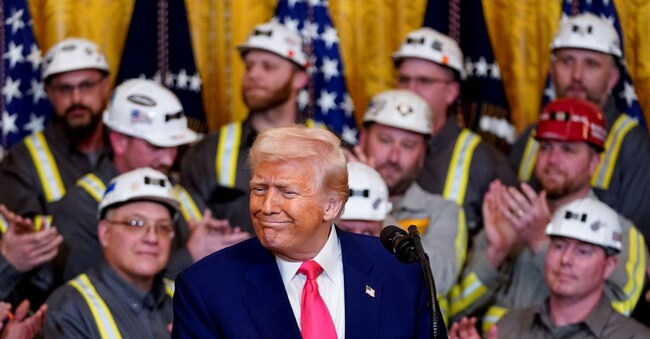
With the duties already enacted, the US is collecting 'two billion dollars a day'. Donald Trump said this during a ceremony at the White House. "We are doing very well," the president said, confirming negotiations with Japan and South Korea and talks with "over 70 countries". "America will very soon be very rich again," Trump added.
Canada, 25% tariffs on US cars from 9 April
Canada has announced that from 9 April it will apply 25% tariffs on American cars.
Brasilia: Trump wants to change the rules of globalisation
The new tariff policy launched by the White House is the 'reaction' of the United States, which after losing 'the globalisation game' against China, is now trying to 'change the rules' of the game. This was stated by Brazil's Finance Minister Fernando Haddad during an interview with the newspaper Folha de São Paulo. 'The United States was the one that set the rules of the globalisation game in the 1980s. The country that defended free trade, the birth of the World Trade Organisation (WTO), is the same country that is now adopting the most radical mercantilist policies seen in many years' because 'forty years later it has discovered that it has lost the game'. "The US imagined that it would be the ;manufacturing centre, thanks to its technology, and that the whole world would be a supplier of raw materials. But that has happened to others," he added. "Today the US is facing something new on the international geopolitical scene: a country like China that is not just a military power, like the Soviet Union, or just an economic power, like Japan, but the combination of the two," he pointed out. "A country with a population of 1.3 billion, a fast-growing GDP, an enviable technological capacity, even in areas where the US felt secure, such as artificial intelligence, and making big investments where Washington is most vulnerable, such as the chip industry," he concluded.
Trump promises to be 'friendly' if China seeks deal
US President Donald Trump promised that he would be 'incredibly gracious' if China approached China to negotiate a deal on tariffs, although he would prioritise US interests. This was stated by White House spokeswoman Karoline Leavitt.
"President (Trump) also wanted to tell everyone that if China came forward to negotiate a deal, he would be incredibly gracious, but he would do what is best for the American people," Leavitt said at a press conference.
White House, duties will remain during deal negotiations
Tariffs will remain in place during the deal negotiations, White House spokeswoman Karoline Leavitt said, after Donald Trump had ruled out tariff breaks yesterday.
Trump orders tailor-made trade agreements with every country
Donald Trump met with his trade team this morning and ordered 'tailor-made trade agreements' with each country. This was announced by White House spokeswoman Karoline Leavitt, emphasising that all options remain on the table for each country.
White House, almost 70 countries call for negotiations on tariffs
"Nearly 70 countries have contacted us to start negotiations on tariffs," White House spokeswoman Karoline Leavitt announced.
White House: 104% tariffs on China from tomorrow
As of tomorrow, tariffs against China will rise to 104%. This is announced by the White House.
Ackman half-reverses: 'Full support for Trump, but a pause is needed'
Partial retreat by billionaire Bill Ackman, who had called for "a 30, 60 or 90-day pause on tariffs before they go into effect" tomorrow, saying President Donald Trump was losing business confidence with his trade war. "I fully support the president and the use of tariffs to eliminate tariffs and unfair trade practices by our partners," he explained today, but "I support a 30, 60 or 90-day pause" to "allow negotiations to be completed without significant disruption to the global economy, which would hurt our country's most vulnerable companies and citizens. If a country does not negotiate in good faith, Trump can use strong-arm tactics, but doing so without giving time to reach an agreement would create unnecessary harm," he explained.
Meloni: on the 17th to Trump I will propose 'zero for zero' on tariffs with the EU
"The challenge to be explored is instead the one that Italy was among the first nations to promote, and which President von der Leyen also reiterated yesterday, namely the possibility of zeroing reciprocal duties on existing industrial products with the zero-for-zero formula. In this it seems to me that there is a willingness on the part of the President of the Commission and the Trade Commissioner who is negotiating. This is the negotiation that must see us all committed and at all levels, that sees us committed and that commits me who will be in Washington on 17 April and obviously I also intend to address this issue with the President of the United States'. So said Prime Minister Giorgia Meloni at the table with companies on duties.
Macron: 'Goal is for Trump to retrace his steps'
"The goal is to arrive in a situation where President Trump retraces his steps". This is what Emmanuel Macron said, speaking during his visit to Egypt, about the global and reciprocal duties imposed by the American president on the rest of the world, and in particular the European Union. "Should we reach a point where we have to explain that we are ready to respond, we should assume our responsibilities," the French president added, referring to the EU's response and stressing that "France and Europe have never wanted chaos".
Sweden gets an exception on US duties
Sweden's foreign trade minister, Benjamin Dousa, managed to negotiate an exception to European duties against the US for the amount of kaolin. The material is essential for the paper industry, which has an important bearing on Sweden's economy. "In this dark period in US trade policy, Sweden has nevertheless achieved a victory," said Dousa. "We have always said that we support the EU, but we will protect the Swedish economy and Swedish jobs, and we do not want to shoot ourselves in the foot by increasing tariffs on consumer goods that are important for Swedish industry," Dousa emphasised, interviewed by the Swedish news agency, Tt. Sweden had also requested an exception for two other products imported from the US, but received a contrary opinion from Brussels on these.
White House: Trump will prioritise negotiations with Japan and South Korea
Donald Trump will prioritise tariff negotiations with Japan and South Korea. This was said by White House Economic Council Director Kevin Hassett, pointing out that the Administration is handling a "massive number of requests for negotiations" to avoid the "reciprocal" tariffs that will be triggered as of midnight today. The president "prioritises two of our closest allies and trading partners: Japan and Korea," Hasset told Fox News, adding that "the message that came out of these conversations was really positive."
EU: 'bazooka' always on the table, but we want negotiations with the US -3-
There are no planned Brussels contacts with the US at the moment. As far as the Commission is aware, there is no clear idea of Trump's next moves and one lives in a 'tomorrow is another day, we'll see' situation.
von der Leyen's conversation with the Chinese premier is important for several reasons. First of all because China is under direct fire from American duties and is the real strategic target of the US president, who wants to weaken its technological and not only its production capacity. Then because the EU has every interest in deepening relations with Beijing because China controls most of the raw materials: currently over 90% of the EU's supply of rare earths comes from China while US dependence on the Dragon is estimated at 80%. Lastly, there is the risk that Chinese overcapacity will be diverted (given the US duties) towards Europe. On this there is alarm in Brussels.
On the political level, the re-establishment of consensual trade relations, the reform of a now dying WTO, and more generally the reorganisation of international relations and global security once an agreement for Ukraine has been reached, can only see China directly involved.
Chinese Premier Li Qiang indicates that China and the EU 'must strengthen communication and coordination, advocate free, open trade and investment, to provide more stability and predictability for themselves and the world economy'.
The Commission today wanted to put the brakes on natural gas purchases from the US, which is one of the European negotiating assets to convince the US to negotiate on trade. The energy spokeswoman indicated that the US "is not the only source for purchases" and that the European goal is "to diversify supplies so as not to be dependent on anyone". Whether or not to contract also depends on price conditions. In 2024, the EU, which has replaced part of its gas imports from Russia with US liquefied natural gas, imported more than 45 billion cubic metres from the US, equivalent to 16.5 per cent of total gas imports and almost 45 per cent of EU LNG imports. In any case, 'the US remains an important partner for the diversification of our energy sources, we are ready to negotiate and discuss' purchases, but it must be kept in mind that it is not the Commission that buys as the contracts are signed by private companies.
With regard to the next EU countermeasures following those for steel and aluminium, there is increasing talk of retaliation in the services sector in which the US has a surplus vis-à-vis the EU. In this context, the issue of large digital groups and also financial companies, which derive large profits from their presence in the EU, emerges. For the former there is first and foremost the tax issue.
In order to negotiate, we need to start from a common basis: 'We do not share the US assessment of what constitutes a non-tariff barrier, although there are quite clear definitions of what a non-tariff barrier is: VAT certainly is not one'. As for health and food standards, European ones are out of the question. Moreover, any attempt to have legislation changed in these areas can result in coercive activity.
For digital groups, EU antitrust commissioner Teresa Ribera said that if "we do not see a willingness to cooperate so that they comply with EU rules, we will not hesitate to impose the sanctions provided by law because we have to protect markets and consumers as in any other sector". However, compliance and the tariff game are cases that Brussels wants to keep separate. In the case of digital groups, an EU decision against Apple or Meta must have a solid legal basis to be litigation-proof at the European Court of Justice. (Antonio Pollio Salimbeni - Radiocor)
Duties, EU countermeasures at 25% in three steps: 15 April, 16 May and 1 December
The EU's counter-duties to respond to the tariffs imposed by the US will be triggered in three stages: on 15 April, 16 May and 1 December and will be based on the 25% rate, with some exceptions at 10%. This is what emerges from the draft document - seen by LaPresse - that will be voted on tomorrow by the member states in the technical committee within the European Commission.
Musk against Trump's trade adviser, 'a jerk'
Elon Musk v Peter Navarro. The Tesla CEO called US President Donald Trump's trade advisor 'a jerk'. Earlier, during an interview with Cnbc, Navarro had said of Musk: 'We all understand in the White House, and the Americans do too, that Elon is a car maker. In fact, he is a car assembler,' considering that 'a good part' of the batteries in Tesla's cars come from Japan and China. 'That's dumber than a lot of bricks,' Musk added, recalling that Tesla is the carmaker with the most cars made in America.
China Premier, 'US economic bullying with tariffs'
The US has announced 'the abuse of tariffs on all its trading partners, including China and Europe, under various excuses. This is a typical act of unilateralism, protectionism and economic bullying'. This is Chinese Premier Li Qiang's harsh attack, the first explicit and public one from the Mandarin leadership, against Donald Trump's policies. In the phone call with EU Council President Ursula von der Leyen, Li assured that Beijing has 'sufficient policy tools in reserve to fully protect itself from adverse external influences', in the account released in the evening by Chinese diplomacy.
EU duties in three stages, 15 April, 16 May and 1 December
- The EU's counter-demands to respond to Donald Trump's trade offensive will be triggered in three stages: on 15 April, 16 May and 1 December. This is what is stated in the draft document - seen by ANSA - that will be voted on tomorrow by the member states in the technical committee within the European Commission (in jargon, comitology). Following the vote by the Twenty-Seven, Brussels will notify the World Trade Organisation (WTO) Council for Trade in Goods of the decision by 15 April.
Further reading/Mutual duties: what Italian industry and Europe risk
Trump, 'good phone call with Seoul from duties to military protection'
"I just had a nice phone call with the acting president of South Korea. We talked about their huge and unsustainable surplus, tariffs, shipbuilding, large-scale purchase of US LNG, the joint venture in an Alaskan pipeline and payments for the great military protection we provide to Seoul." Donald Trump said this after a phone call with Han Duck-soo. "The payments had begun during my first term, billions of dollars, which the sleepy Joe Biden, for reasons unknown, stopped," the president added, attacking his predecessor. "It was a shock to everyone! In any case, we have a chance to strike a great deal for both countries. A South Korean top team is on a plane to the US and things seem to be going well. We are also negotiating with many other countries, all eager to make a deal with the US,' Trump stressed.
Trump, China wants tariff deal, I'm waiting for a call
'China wants the tariff deal but doesn't know how to get it off the ground. I'm waiting for their phone call." Donald Trump said this on Truth after announcing he had spoken to South Korea's president-elect.
EU Sources, No Started Discussion on Stop Pact, It's Early
"I am of course aware that the issue has been raised, but the discussion has not yet started," he said. This was said by a senior EU official asked about the wishes of the Italian side regarding the activation of the general clause to suspend the Stability Pact. "I think it is a bit early to start discussing the general escape clause." The new expenditure-focused pact "makes it unnecessary to respond to economic fluctuations," he then noted. "There is also the consideration that the general escape clause allows more flexibility in the fiscal space, it does not create fiscal space that is not there."
Further reading/ Duties, what does suspending the EU stability pact mean and how would Italy benefit?
India and the EU towards a 'step-by-step' free trade agreement
India and the European Union are exploring the possibility of negotiating the free trade agreement in 'stages'. This was reported by the Indian news agency Pti, which attributed the news to a Delhi official requesting anonymity. The official added that the talks are progressing positively following a visit to Delhi in late February by EU Commission President Ursula von der Leyen and the College of European Commissioners, during which the EU President and PM Modi agreed to conclude the long-awaited free trade treaty by the end of 2025.
Bessent, everything is on the table, Trump involved in negotiations
US Treasury Secretary Scott Bessent told Cnbc that 'everything is on the table', adding that some 70 countries have contacted the White House to start talks. The Guardian reports. President Donald Trump will be personally involved in the negotiations, Bessent added.
Bessent (US Treasury): China's escalation a 'big mistake', they don't have the cards to win
US Treasury Secretary Scott Bessent said that the US has a substantial advantage over China, while a trade war between the two economic powers is ongoing. "I think it was a big mistake, this Chinese escalation, because they're holding a pair of twos," Bessent said in an interview with Cnbc, using the poker metaphor. "What do we lose if China raises tariffs on our products? We export to China a fifth of what they export to the US, so it's a losing hand for them," he added.
-U61175371886rYI-600x313@IlSole24Ore-Web.jpg)
EPA/CHRIS KLEPONIS / POOL
EU: on duties the bazooka is on the table, but we want to avoid it
"Let's be clear, the bazooka is still on the table, but we hope we don't have to use it, to the US we say we want to talk." This was said by a spokesperson of the European Commission about the instrument of economic anti-coercion, which would give the EU a broader and quicker range of measures to respond to Donald Trump's tariffs (and that is why it is also nicknamed the nuclear option). In general, the Commission has indicated that it will present the possible response to the US reciprocal duties to the member states next week.
About / US duties, EU announces European countermeasures but is 'ready to negotiate'
S&P: US duties will hit alcohol and luxury retail harder
Among consumer goods and retail companies in the Emea (Europe, Middle East and Africa) region, alcoholic beverages and personal luxury goods companies are the most at risk from US duties. This is according to a report by S&P Global Ratings, which points out, however, that the unpredictability of the economic policies implemented by the Trump administration leads to "a considerable amount of uncertainty" in forecasts.
According to S&P, most other Emea-based consumer goods and retail companies operating in the US will be less directly impacted due to their global manufacturing footprint and generally diversified revenue streams and sourcing capabilities. However, the secondary effects of higher tariffs, such as lower economic growth, higher inflation and weaker consumer confidence, could outweigh the direct primary effects and have the potential to affect a larger portion of consumer goods and retail companies.
S&P experts also believe that some companies will be forced to pass on, at least partially, the impact of tariffs to end consumers. In this context, most companies are starting to implement mitigation actions, but it may not be possible to change supply chains, production and procurement sufficiently to fully offset the negative impact on profits in the short to medium term.
Salvini: instead of trade wars let's work on EU rules
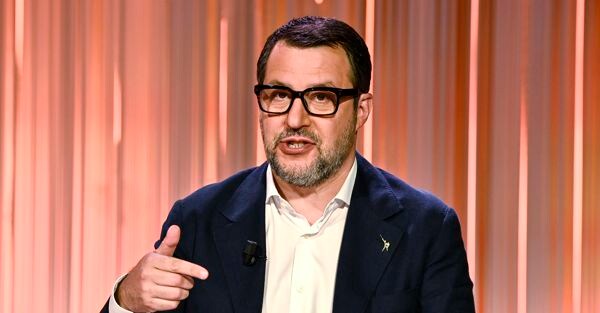
"Rather than waging trade wars that we could only lose, it would be more appropriate for us to work on the EU's over-regulation in terms of the Stability Pact, on the Green Deal, on the Esg and so on". Thus the Minister of Infrastructure and Transport Matteo Salvini on the sidelines of his speech at the presentation of the 'Agorai Innovation Hub' project at Palazzo Carciotti in the centre of Trieste. 'We must understand that we are facing a paradigm shift,' Salvini added, 'the rules of world trade have changed and this will alter the way we work and produce for the next 30 years. The redrawing of this paradigm will see the formation of 2 opposing blocs: the free and western world that respects the rules, trade union, environmental and trade rights on the one hand, and on the other those who instead compete unfairly with us'.
ANSA/RICCARDO ANTIMIANI
EU: if they do not cooperate we will impose fines on Big Tech
"Compliance with the Digital Markets Act is our main goal. We will have a constructive dialogue with the gatekeepers, as we have done so far to find workable solutions, as in the Apple decisions. But if we do not see a willingness to cooperate, we will not hesitate to impose the sanctions provided by law." This was said by the Vice-President of the European Commission for Clean Transition, Teresa Ribera, in a hearing in the Econ Committee of the European Parliament.
Ribera recalled that the 'digital markets law stems from the concern that the economy of digital platforms is controlled by a small group of actors who accumulate considerable economic power'. It is necessary to 'protect European users and companies operating in Europe' and the DMA 'applies in a firm and non-discriminatory manner. There is fair competition for consumers and if companies do not respect these rules, fines can and must be imposed to protect markets and consumers as in any Member State or in any other country or in any other sector,' he concluded.
Urso: avoid escalation of tariff measures and retaliation
"It is absolutely necessary to avoid escalation of tariff measures and retaliation one on top of the other, because we would all pay the cost and certainly we Europeans more than others". This was stated by Adolfo Urso, Minister for Enterprise and Made in Italy. We must aim for "a zero duty system between the two sides of the Atlantic so as to also reunify the West when, as today, it has to face a global competitive challenge," Urso added at the opening of the Salone del Mobile in Milan.
Donnet: trade war with US not appropriate, reaction proportionate
"The crisis was generated by the trade policies of Donald Trump's US presidency and the duties can have a negative impact on the economy. But this situation can also be an opportunity for Europe to become more united. A response must be proportionate because 20 per cent was more or less what was expected. So I do not think it is appropriate to open a trade war with the US'. So says Generali CEO Philippe Donnet on the sidelines of the "Humanaize the future" event currently underway in Trieste and dedicated to the presentation of the major redevelopment project of Palazzo Carciotti in the city centre.
The manager pointed out that it is 'a situation of great uncertainty for all investors, all companies, all employees' and that 'it has created doubt and uncertainty on all financial markets around the world'. "I am confident for Generals, because we have already overcome so many crises. And we know we can overcome this one too, but it takes lucidity in this situation," he concluded.
Bankitalia: businesses pessimistic, uncertainty from US duties
In the first quarter of 2025, Italian companies' assessments of a worsening of both the current general economic situation and their own short-term operating conditions continue to prevail. And companies' prospects for the current year are weighed down by uncertainty and concerns arising from the direct or indirect effects of US trade policies. This is what emerges from the Bank of Italy's Inflation and Growth Expectations Survey, according to which business expectations for inflation have risen over all forecast horizons, although remaining below 2%.
Von der Leyen to Premier China: 'Commitment on fair trade'
Telephone conversation between European Commission President Ursula von der Leyen and Chinese Premier Li Qiang. "The two leaders had a constructive discussion during which they took stock of bilateral and global issues," the EU executive reported, indicating that "the president stressed the vital importance of stability and predictability for the global economy" and, "in response to the widespread disruption caused by US tariffs, stressed the responsibility of Europe and China."
The yuan gives ground against the dollar, slips to 7.3126
The yuan weakened against the dollar, slipping to 7.3126 around the close of the Shanghai and Shenzhen stock exchanges. China's central bank (BoCB) this morning set the renminbi's fixing against the greenback at 7.2038, at its weakest level since 11 September 2023, but well above the markets' estimate of 7.3321. Against the backdrop of most Asian currencies stabilising against the dollar after Monday's turmoil over Donald Trump's tariffs, the yuan gave up more ground after Beijing made it clear it would "fight to the end" with a further escalation in the trade war by Washington, especially after Trump's threat of 50% additional tariffs.
A weaker yuan would make exports cheaper and relieve some pressure on Chinese trade and Beijing's economy in general, but a sharp drop could fuel unwanted capital outflow pressures and put financial stability at risk, several analysts read. The widening gap between benchmark fixes and market estimates, however, underlined the Pboc's 'strong desire for control', Maybank analysts said in a note. In other words, the possibility of measured depreciation is China's possible additional leverage heading into potential negotiation/escalation with the US.
Rates and currencies / Exchange rates against the dollar
Jakarta: we will import more gas and soya from the US
The Indonesian economy minister, Airlangga Hartarto, said that more gas and soya will be imported from the US. Jakarta thus seeks reconciliation with the US after Trump announced 32% tariffs on the South-East Asian country. Indonesia had already stated that it did not expect retaliation. This, says Sky news, paved the way for negotiations and now it seems that Indonesia is willing to accept Trump's trade demands.
Further reading / Duties, Asia ready to negotiate but China takes hard line
Washington Post: 'Musk asked Trump to lift duties'
Over the weekend Elon Musk personally tried to convince Donald Trump to lift the tariffs, including those on China. But the attempt has so far been unsuccessful. This is what the Washington Post writes, citing its own anonymous sources. Musk's break with Trump on tariffs, a priority of the US administration, represents the most important disagreement between the president and one of his top advisors. Tesla saw quarterly sales plummet dramatically due to negative reactions to his role as Trump's adviser.Its shares were trading at $233.29, down more than 42% since the start of the year.
China to Trump: 'Show respect if interested in dialogue'
The US should show "respect" if interested in talks with China after President Donald Trump unleashed a tariff-based trade war. "If the US really wants to talk, it should then adopt an attitude of equality, respect and mutual benefit," Chinese Foreign Ministry spokesman Lin Jian said in the daily briefing.
Beijing to US, 'we are not afraid of pressure and blackmail'
China returns to accuse the US of 'pressure and blackmail' and assures, 'we are not afraid'. After the Ministry of Commerce spokesman, Beijing's Foreign Ministry spokesman also spoke out to denounce the 50% additional tariffs announced yesterday by Donald Trump. 'Trade wars have no winners and protectionism leads nowhere,' said Lin Jian, 'The Chinese do not create problems, but they are not afraid. Pressure, threats and blackmail are not the right way to deal with China'.
Langone (Home Depot) against Trump: 'Misguided'
Home Depot co-founder Ken Langone criticises Trump's tariffs, calling the 46% tariffs on imports from Vietnam "bullshit" and calling the 34% tariffs on China "too aggressive and too soon". "I don't understand the damn formula," says the financier, a veteran donor to Republican political campaigns in an interview with the Financial Times. "I think [Trump] has been misguided by his advisers on this trade situation - and the formula they are applying," Langone added.
Ishiba-Trump phone call, Tokyo seeks exemption from duties
Japanese Prime Minister Shigeru Ishiba had a telephone conversation with US President Donald Trump in which he asked for a duty exemption for Japan, which he did not get. However, the two leaders agreed that there will be further discussions on the topic. This was reported by the Kyodo news agency.
Ishiba explained that he conveyed Japan's serious concern that the 'unilateral' imposition of tariffs on Japanese products would risk damaging the investments of local companies, emphasising that the two allied countries should instead pursue broader and mutually beneficial cooperation, rather than relying on duties and counter-duties.
Trump, who announced a reciprocal 24% tariff on Japanese products effective Wednesday, stated via his social media that Japan will send 'a high-level team to negotiate' on the issue.
The president added that the US has been treated 'very poorly' in the field of trade, in an apparent attempt to justify his tariff attack.
Musk against tariffs? Billionaire would intervene with Trump
Billionaire Elon Musk, a close ally of US President Donald Trump and member of his administration, has reportedly personally asked the White House leader to reconsider the duties imposed on several countries. The Washington Post writes this today, citing two sources.
Musk on social media over the weekend launched a verbal offensive against Peter Navarro, the White House trade official who is the main proponent of the aggressive tariff policy, and directly appealed to Trump to consider pulling the handbrake.
US Treasury Secretary Bessent, Trump ready to negotiate
Donald Trump would be ready to negotiate with other countries on tariffs. This was said by the US Treasury Secretary, Scott Bessent, contradicting other statements by the White House. "President Trump, as you know, is better at applying maximum pressure than anybody else," Bessent said in an interview reported by the New York Times. The Treasury chief said he had suggested to foreign officials to "keep calm, don't overreact, and come to us with your offers." He added: "And at some point, President Trump will be ready to negotiate." This morning, White House trade advisor Peter Navarro, who is considered the architect of the US tariff plan, had said that there will be no negotiations.
The Department of Security asked many migrants to leave the US
The Department of Homeland Security (Dhs) has asked migrants who entered the country via an online app to leave the US immediately. It is unclear how many people are affected by the measure. The department confirmed that the authorities had informed some migrants who had used the Biden administration's Cbp One app, but did not say how many of the more than 900,000 recipients had their permits revoked.
Cbp One was one of the pillars of President Joe Biden's strategy to create and expand temporary legal pathways to enter the US. Trump quickly dismantled these policies, including another form of humanitarian parole for over 500,000 people from Cuba, Haiti, Nicaragua and Venezuela.
Hong Kong: 'Reckless US duties threaten global trade'
Hong Kong Governor John Lee called US tariffs, a threat to the international trade order, 'reckless' in the aftermath of the former British colony's stock market meltdown of 13.22%, the worst thud since the Asian tiger crisis of 1997. "The reckless imposition of tariffs affects many countries and regions around the world, with huge increases in tax rates on a wide range of goods," Lee commented in his weekly briefing. These are measures that 'disrupt the global economic and trade order, bringing great risk and uncertainty to the world', added the governor, for whom the 'ruthless behaviour of the United States is damaging global and multilateral trade'. Lee outlined seven key measures to deal with the newly created uncertainty, including accelerating Hong Kong's integration into China's overall development strategies and strengthening global engagement by expanding the former colony's economic and trade network by entering into more free trade agreements with other countries and economies. In addition, the Governor cited advancing industrial transformation, improving innovation and technology, promoting international financial cooperation with Hong Kong as a global financial hub, diversifying regional risk and continuing business support.
China: 'We will not accept blackmail from the US, fight to the end'
China will never accept the 'blackmailing nature' of the US and considers the latest threats of tariffs made by US President Donald Trump 'mistake after mistake'. A spokesman for the Chinese Ministry of Commerce, in a note, assures that if Washington wants to continue on this path then Beijing will 'fight to the end'. Trump said yesterday that he will impose further tariffs of 50% if China does not withdraw its 34% retaliatory tariffs against the US.
Furthermore, Beijing calls on Washington to engage in dialogue to resolve the various outstanding bilateral trade issues. "China urges the US to cancel all unilateral tariffs against China, stop economic and trade suppression against China, and properly resolve differences with China through dialogue with mutual respect and on an equal footing," a Ministry of Commerce spokesperson said in a note. US President Donald Trump said yesterday that he will impose further tariffs of 50% if Beijing does not withdraw its 34% retaliatory tariffs against the US.
Brand connect

