
Cars, factories and production: China’s moves in the European market
Dongfeng and Leapmotor partner with Stellantis; Xpeng is now operational in Austria

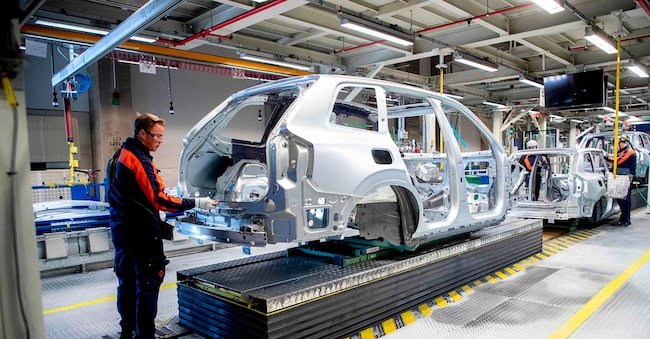
The ‘space race’ among Chinese manufacturers in Europe is already underway, and all the signs suggest that 2027 will be the decisive year for the definitive launch of localised production capacity in the West by the best-equipped and most aggressive Asian carmakers. BYD, Geely, SAIC and others have already increased their export capacity in recent years, but it is not possible to fully penetrate a market – let alone the automotive market – through exports alone. A qualitative leap is needed.
The main players have already made their moves. Geely has long established itself in Europe by acquiring Lotus, Volvo Cars, Polestar and LEVC; it launched its eponymous brand in Europe in 2025 and controls brands such as Lynk&Co and Zeekr; it also holds a 50 per cent stake in Smart. In May, according to local sources, Volvo Cars reportedly acquired part of a Ford factory in Valencia. Chery, meanwhile, holds a 40 per cent stake in a joint venture with the Spanish firm Ebro for production at a former Nissan site in Barcelona and plans to start production in the first quarter of 2027, although some delays have prompted it to explore other opportunities in the UK through an agreement with Nissan. SAIC, the second-largest Chinese player in Europe by market share (through the MG brand), is also targeting a factory in Galicia: the regional president, Alfonso Rueda, has said he will give strategic priority to the project, with an expected initial investment of around 200 million. FAW, meanwhile, according to Reuters, is in talks with Stellantis to manufacture vehicles at one of the Franco-Italian group’s Spanish plants and plans to launch a dozen electric and hybrid models in Europe by 2028.
Leapmotor, however, has long been on the fast track with Stellantis, and plans to start production of two models in Spain, strengthening a partnership that spans from distribution to production. In recent months, Stellantis has also strengthened its dialogue with Dongfeng (which holds a small stake in the Italian-French group): the two companies will set up a joint venture to manage the sales, distribution, procurement and engineering of Chinese electric vehicles in the European market, as well as production: the chosen site is the French plant in Rennes.
Xpeng (in which Volkswagen holds a small stake) has also had its sights set on this market for some time and has formed a partnership with the automotive supplier Magna to assemble up to four models in Graz, Austria, for the European market.
Finally, BYD is the only one to have already started production in Europe, in southern Hungary, which will be fully operational by the end of the year (the first Dolphin Surf models have already been produced, with the Atto 2 SUV set to follow shortly). However, like its Chinese competitors, the manufacturer has approached the main European players in search of surplus production capacity to utilise. According to some observers, Volkswagen, Ford and Nissan may be interested in potential agreements. More recently, Alfredo Altavilla, BYD’s special advisor for Europe, said that a decision would be made very soon. ‘Spain and France’ are among the leading candidates for the project, ‘which involves the acquisition of an existing factory’.

