
Chinese cars, countdown to EU duties. German manufacturers: 'They need to be rethought'
Brussels green light expected, but Europe is divided on measures: Germany pushes for negotiations

4' min read
Key points
4' min read
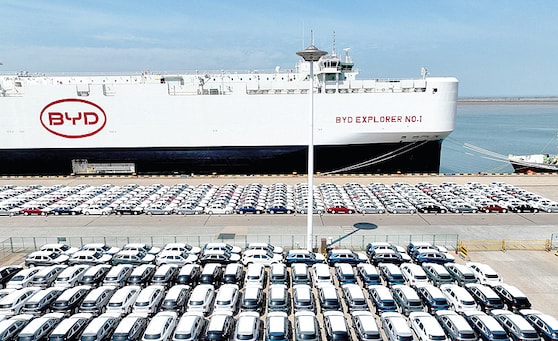
Negotiations started days after the announcement of the new European duties on Chinese electric cars, which added to the previous 10 per cent could reach up to 48 per cent. Today, three weeks later, the actual go-ahead for the measure is expected from the European Commission. The latest call for a rethink, or at least to soften the announced measures, came yesterday from the German car manufacturers' association (Vda). The duties, is the message, would harm Western manufacturers exporting from China. Not only that. The foreseeable price increase would jeopardise the European goal of achieving carbon neutrality by 2050. Finally, Beijing's retaliation would come.
German reliefs
.According to Vda, in 2023 the value of car exports from Germany to China was more than three times the value of imports from China, and the value of component suppliers' exports was four times the value of imports. The Commission, the German manufacturers argue, should instead focus on competitiveness and access to raw materials for electric vehicles.
The duty policy divides German economists, according to an Ifo poll published yesterday. While a third of them believe it is an appropriate step to counter Chinese subsidies - estimated at $230 billion between 2009 and 2023 by the Center for Strategic and International Studies, a Washington-based think tank - another third would prefer no tariffs at all to avoid a trade war. 11% called for lower tariffs, while 6% favoured higher tariffs.
European positions and Beijing's wishes
.In fact, Europe too, and this is not news, is divided. Germany, clearly first for all exports to China (97.3 billion in 2023), is pushing for negotiations. Even Italy is more inclined to mediate. France and Spain are in favour of stronger measures. The Czech Republic, Greece, Ireland and Poland are still debating the issue, according to official and government sources, while Belgium has an interim government and the Netherlands only formed a government this week. The duties, which should be finalised in November, would be blocked if a 'qualified majority' of at least 15 countries, representing 65% of the EU population, voted against.
The Commission says that the aim of the tariff tightening is to create a level playing field, not to exclude the dragonese car manufacturers (today at 6% of the market, less than 20 billion euro, eighth largest item among imported goods to Europe). This could theoretically be the effect of the customs tariffs of more than 100 per cent envisaged by the US and which the Chinese are preparing to circumvent, moreover, by going to produce batteries and car parts in Morocco, a country that enjoys a free trade agreement with the US.


