
Chinese Chery follows in Byd's footsteps and challenges the Japanese at home with a kei car
Chery Automobile is ready to enter the Japanese urban compact car market

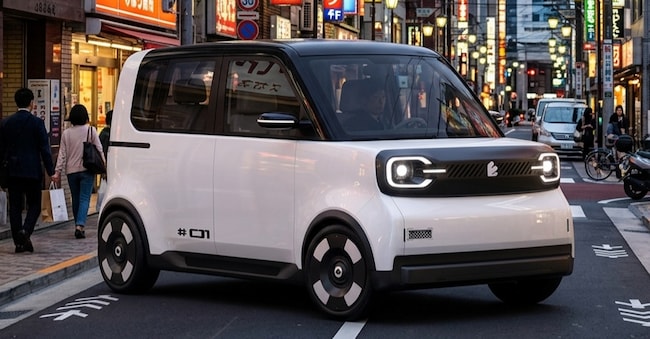
The Chinese Chery Automobile Group is set to enter the Japanese compact car market through the launch of EMTA, a new sub-brand entirely focused on electric kei cars. The debut of the first model, a zero-emission mini-car developed specifically for Japanese regulations, is set for early 2027. The deal is led by Electric Mobility Technology (EMT), a Yokohama-based and Singapore-registered JV that unites five Chinese and Japanese strategic partners. In addition to Chery - which is supplying the technical platform and driver assistance systems - the consortium includes battery giant Gotion High-Tech, Jiangsu Yueda for initial production in China, and two historic Japanese industrial names: equipment supplier Anest Iwata and Autobacs Seven.
It is precisely the involvement of Autobacs that represents the commercial keystone: EMTA will take advantage of its partner's immense retail and service network (around 1,200 outlets) to immediately activate a hundred or so showrooms, bypassing the barriers to entry that historically hold back foreign brands in the country. The business plan calls for the release of four EV models by 2029, with the aim of positioning the first kei car in a price range similar to that of petrol-powered models. Chery's move ignites a direct challenge to local manufacturers and is a frontal response to rival BYD's offensive. The Shenzhen-based giant, present in Japan since 2023, is in fact preparing to launch the Racco, its first native electric kei car designed exclusively for the Japanese market, effectively opening a new era of electrification for the segment with the highest sales in the country.
Chery's move follows that of Byd, which in November last year launched the Racco, a Chinese electric proposal dedicated to Japan, at the Tokyo motor show. A challenge whose outcome, like Chery's, is very doubtful.
The Racco has a front end with a closed grille with daytime running lights integrating turn indicators. The car has a double front pillar structure, a small triangular front window and a floating roof. It has a four-door configuration, the rear doors sliding. The rear side windows are tinted and the rear of the Racco includes vertically arranged lights, a rear window wiper, plus a number plate.

