Airlines

Chinese companies with balance sheets in the red, but traffic above pre-Covid levels

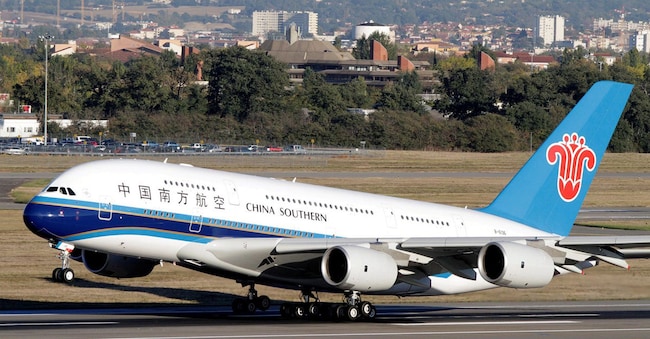
Air China and China Southern Airlines, the two main carriers, closed the first half of the year with a loss, but international traffic is growing

by Mara Monti

2' min read

2' min read

China's two major airlines reduced their first-half losses, but remained firmly in the red due to overcapacity pushing fares down, as the latest half-year results show, confirming the fragility of the industry's post-pandemic recovery in this part of the world.

Flag carrier Air China, the country's third-largest airline with an 11 per cent market share and 8.6 million passengers carried as of July 2025, posted a net loss of 1.8 billion yuan (US$252 million) for the six months to June, 35 per cent less than the previous year's loss of 2.78 billion yuan.

Loading...

Guangzhou-based China Southern Airlines, China's leading airline with a 15 per cent market share and 12.3 million passengers carried in July, posted a loss of 1.5 billion yuan, 64 per cent less than the 4.21 billion yuan loss for the same period in 2024.

China's third largest airline China Eastern Airlines will publish figures on Friday.

Summer is the most profitable time for the airline industry, but the average fare for domestic tickets with a departure date in July and August averages 788 yuan, about $110, down 3.7 per cent from last year and 10.6 per cent from 2019 levels, according to aviation specialist site Flight Master. International capacity has returned to 93% of pre-COVID levels, but yields remain low, according to analysts.

Carriers blamed the losses on the imbalance between supply and demand, more price-sensitive travellers, and competition from China's ever-expanding high-speed rail network. Geopolitical uncertainty and the slow recovery of premium international traffic also hurt revenues despite the fact that Chinese airlines were able to take advantage of Russian airspace overflights unlike Western airlines, a retaliation from the sanctions taken against Russia since the start of the war in Ukraine.

European flights to China have become longer, more expensive, and also more difficult to find, as more and more European airlines are cancelling routes, problems that Chinese airlines do not have. The struggle for profits in travelling between Europe and Asia has led several airlines, including Lufthansa, British Airways and Poland's LOT, to suspend some routes. In contrast, Chinese and non-European carriers have increased direct flights from Asia to European cities.

Despite this disadvantageous position, global airlines have returned to profitability, while the big three Chinese airlines continue to lose money, which puts them behind the post-COVID recovery.

However, the first quarter of this year saw a strong upturn in international travel, with airlines carrying 34% more foreign passengers than in the same period last year, according to Civil Aviation Administration data. Authorities reported that nearly 19 million international passengers flew on Chinese airlines during the quarter, surpassing pre-pandemic 2019 levels by 4.5 per cent, thanks to the facilities introduced to obtain Visa to enter the country. There are 28 Chinese and 100 foreign airlines operating international routes connecting China with 78 countries, four more than before the pandemic.

Total seat capacity increased by 4% over last year, with domestic capacity up 2% and international capacity up 11%.

Copyright reserved ©
Loading...

Brand connect

Loading...

Newsletter

Notizie e approfondimenti sugli avvenimenti politici, economici e finanziari.

Iscriviti