
The Chinese leadership, currently on a retreat in Hebei, is finalising the Congress agenda
Among the objectives of the meeting were the fight against corruption and officials who are disloyal to Xi

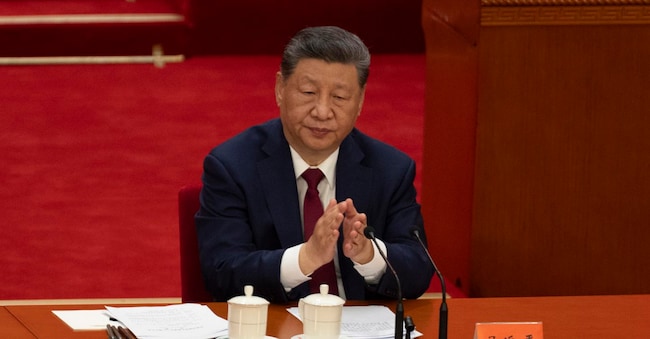
The last vestiges of summer tranquillity are also being enjoyed by the Chinese leadership, who are on retreat in Beidaihe, the coastal resort in Hebei that is the ideal destination for escaping the stifling heat of the capital. Here, the tradition of Chinese leaders meeting behind closed doors to set the political agenda has been repeated since the 1950s, dating back to the time of Mao Zedong, who even dedicated a poem to Beidaihe, whilst Hu Jintao, opposed to informal meetings, abolished the custom in 2003, before Xi Jinping reinstated it, opening the doors to contributions to the discussions from retired senior leaders as well.
In Beidaihe, not coincidentally known as ‘the smoke-filled room’, work and leisure are constantly intertwined; the Political Bureau of the Central Committee, decimated by purges, is this time – and not by chance – focusing on the issues of the fight against corruption, party discipline and the strengthening of political loyalty in the run-up to the forthcoming 21st National Congress and the selection of officials.
The agenda reveals the aim of cracking down on ‘the three types of unworthy individuals’: those disloyal to Xi Jinping’s leadership, those who form factions or groups, and those sympathetic to the US, with zero tolerance for those who have moved their families to the United States. Comprehensive and rigorous Party governance is central to the Fifth Plenum in October, which will be attended by over 370 delegates, including full and alternate members.
At Beidahie, the Party’s other priorities have come to the fore: opposing Taiwanese independence, supporting patriotic forces in Taiwan’s local elections, and countering the increase in Taipei’s military spending – in particular the proliferation of unmanned aerial vehicles, which would radically undermine China’s favourable position in the Taiwan Strait. The Party will continue to restrict Taiwan’s international space and sovereignty in every way, investing resources to cover all sectors ‘to jointly oppose and thwart Taiwanese independence forces and build a force in support of cross-Strait unification’. For this reason, China will provide its full support to Taiwan’s ‘patriotic forces’ during the elections at the end of the year.
With Chinese President Xi Jinping visiting the United States on 24 September, Beijing’s strategy towards the United States is expected to focus on three areas: Beijing intends to use trade and commercial exchanges to ‘woo’ the United States, whilst isolating Japan, the Philippines and Taiwan. Beijing “would make every effort to block a new round of arms sales to Taiwan to avoid disrupting the current strategic balance”.


