The investigation

Chinese underground banks: eight arrests and 31 million seized. Over 200 million laundered

The “Green River” investigation by the Lodi Public Prosecutor’s Office: according to the Guardia di Finanza, a network of 41 shell companies is alleged to have generated false invoices and transferred money to China via underground banking channels

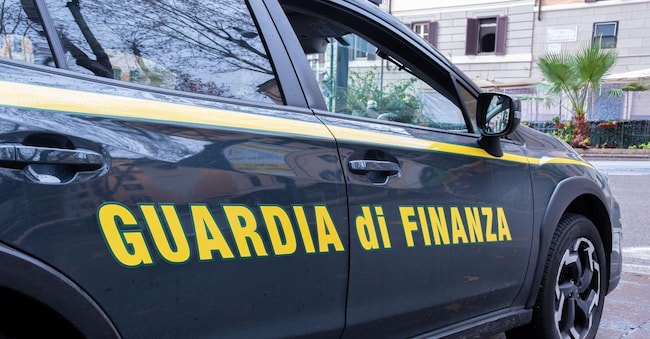
by Rome Editorial Staff

 Alamy Stock Photo

3' min read

Translated by AI
Versione italiana

Key points

  • The 41 paper companies and the 10% commission

3' min read

Translated by AI
Versione italiana

A network of false invoices, shell companies and money transfers to China totalling over €200 million. This is the picture at the heart of the “Green River” investigation, coordinated by the Public Prosecutor’s Office in Lodi and carried out by the Economic and Financial Police Unit of the Lodi Financial Police. The order concerns personal precautionary measures against eight individuals, who are alleged, according to the prosecution’s case, to be members of a criminal organisation engaged in self-laundering and the issuance and use of invoices for non-existent transactions. Real precautionary measures have also been ordered against 44 individuals, amounting to a total of approximately €31 million.

The investigation began in 2024 following a tax audit of a company based in the Lodi area, which later turned out to be a shell company. According to investigators, the company operated as a paper mill and issued invoices for non-existent transactions worth thousands of euros. That initial investigation revealed a wider criminal organisation capable of exploiting the money-laundering mechanisms of ‘underground banking’ – that is, systems for transferring money outside official and regulated financial channels, circumventing anti-money-laundering safeguards.

Loading...
Riciclaggio internazionale tramite banca abusiva cinese, 13 arresti
Underground banking and virtual IBANs: the flow to China

According to the prosecution, over €200 million is transferred to China via this scheme, often channelled through European countries. Investigators have reconstructed the mechanism, which allows the beneficiaries of the false invoices to launder the proceeds of various types of predicate offences: tax offences, corporate offences, bankruptcy offences, but also offences linked to drugs and organised crime.

At the same time, the system enables the Chinese community to launder large sums of money derived from its economic activities and to repatriate the ‘cleaned’ funds to China. This is achieved through a two-way process: on the one hand, cash is returned to the recipients of the false invoices; on the other, these recipients make bank transfers to current accounts managed by the association.

In many transactions, money is transferred via so-called virtual IBANs – codes that redirect funds to a single main account. According to investigators, this system makes it possible to conceal the true beneficiaries and makes it extremely difficult to trace the flow of funds involved in the fraudulent invoicing.

The 41 paper companies and the 10% commission

At the heart of the scheme are 41 shell companies, managed by an anonymous office based in Chiari, in the province of Brescia. Through these companies, the organisation is alleged to have facilitated the issuance of invoices for non-existent transactions worth €200 million to various ‘client’ companies. The sums received were then channelled abroad and subsequently returned in cash to the beneficiary companies themselves. For this service, the group is alleged to have retained a commission of 10%.

According to the investigation, some companies are also alleged to have improperly exploited favourable regulations introduced in response to disasters, such as the 2009 Abruzzo earthquake, and the Covid-19 pandemic. The aim was reportedly to enter entirely fictitious receivables into the accounts, to be used to offset various types of liabilities: tax, social security and insurance.

According to the prosecution, one of the shell companies is also being used to commit VAT fraud on imports of goods from India. The scheme involves the improper use of the VAT warehousing scheme, which allows operators to work under a tax suspension arrangement and defer payment of the tax until after the import has taken place. Investigators have established that the shell company serves only to act as an intermediary between the supplier and the final beneficiary and never actually pays the VAT.

An Italian accountant is also among those subject to the personal measures. According to the prosecution, the professional handles the administrative and accounting management of companies linked to the criminal organisation, prepares the F24 tax forms for the companies receiving the undue payments, and manages the documentation necessary to make the companies appear formally existing and compliant.

Seizures totalling €31 million; cash dogs find over €100,000

Alongside the eight personal precautionary measures, a preventive seizure order has been issued – including for equivalent assets – against the members of the criminal organisation and the other suspects, amounting to €31 million. The sum is identified as the proceeds of the offences of self-laundering and the issuing of invoices for non-existent transactions. The order also covers the 41 shell companies, their bank accounts and the ‘hidden’ office used to manage the companies.

The seizures carried out include financial assets, company shares, property, cars and luxury goods, including watches and jewellery. During the searches, thanks to the assistance of the cash-sniffing dog units serving with the Guardia di Finanza at Bergamo-Orio al Serio and Milan-Linate airports, over €100,000 in cash was found hidden in properties and cars.

One of the eight individuals subject to the personal measures, identified as the head of the association, has been placed under house arrest and fitted with an electronic tag.

Copyright reserved ©
Loading...

Brand connect

Loading...

Newsletter

Notizie e approfondimenti sugli avvenimenti politici, economici e finanziari.

Iscriviti