
Walnuts: Chinese production on the rise – half of global exports come from Beijing
In just a few years, its share has risen from 20 per cent to 47 per cent of the total, taking market share away from the United States in a number of key markets, from Europe to Turkey

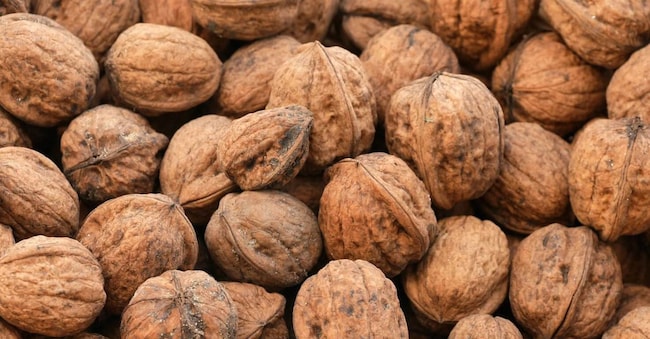
The Dragon’s shadow is lengthening over the global nut market. This is confirmed by data from the US Department of Agriculture (USDA), which reveals a profound rebalancing of the sector’s production and trade structures. Beijing – as analysts explain in ‘Tree Nuts World Market and Trade’, published at the end of October – is no longer merely the leading player in terms of production capacity; within just a few years, it has also taken the lead in exports, eroding valuable market share from the United States, particularly in key markets for American traders.
For the 2026–27 season, Chinese walnut production is forecast to reach a record 1.6 million tonnes, 7 per cent higher than the previous year and accounting for almost 60 per cent of the global harvest. China’s rise began around two decades ago, when its production was still hovering around 400,000 tonnes. Today, it stands at four times that level. But it is above all on the trade front that the figures illustrate the scale of the change that has upended the global balance of power. Chinese exports are estimated at 675,000 tonnes (in-shell equivalent) for 2026–27, compared with 610,000 tonnes last season and less than 213,000 tonnes in 2021–22.
The figures are even more telling when viewed within the context of global trends. In 2026–27, exports are expected to reach a record 1.43 million tonnes, according to USDA estimates, with China alone accounting for around 47 per cent of the market share, compared with just over 20 per cent five years ago.
This expansion – as American experts explain – is the result of a massive investment drive to establish new plantations, mostly high-density ones, centred on Xinjiang and Yunnan. These two provinces now account for almost the entirety of national production, with over half attributable to Xinjiang and a further 40 per cent to Yunnan. In both areas, government programmes to tackle poverty have encouraged walnut cultivation as a supplementary source of income for rural communities. And in Xinjiang, in particular, the model has found the most favourable conditions for maximising the success of the initiative, thanks to a combination of particularly favourable climatic and geographical factors.
Significant efforts have also been made to modernise the downstream supply chain. Drying, grading, shelling and sorting have gradually shifted from individual farms to modern processing plants capable of meeting international standards. This success is borne out by the fact that over 70 per cent of the increase in exports over the last five years is attributable to the shelled segment.

