
Church&Finance: the origin of the Bank of England was born in the Rome of the popes
In Monaldi & Sorti's latest novel (Rizzoli) the revelation from archive research: it was Innocent XI, of the Odescalchi family, who favoured England's economic hegemony over the Catholic powers
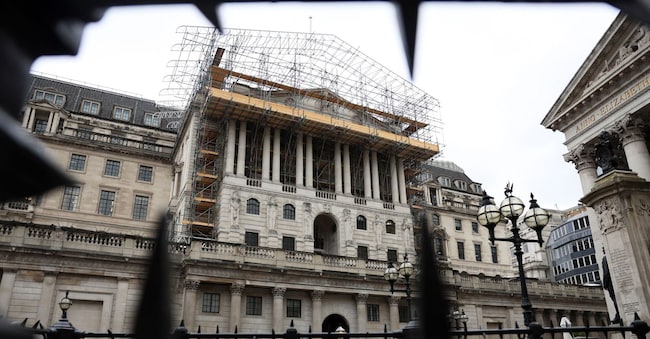
Modern finance, secular and Calvinist, has an unsuspected origin: it was born in 17th century papal Rome. In fact, it was Benedetto Odescalchi, the banker from Como who became pope under the name of Innocent XI, beatified in 1956 by Pius XII and celebrated in the history books as the pope of the Catholic uprising against Ottoman expansion, who gave the decisive push to the birth of the Bank of England in 1694. This is the revelation contained in the latest book by the Monaldi & Sorti team (Rita Monaldi, Francesco Sorti and Theodora Maria Sorti), Unicum Opus, the last book in a series of novels-investigations on ancien régime European diplomacy, which began in 2002 with Imprimatur. The authors, on the basis of archive documents, have uncovered a network of financial relations that would have been decisive for a key event in European history and economy: the accession to the English throne of William III of Orange, the Calvinist prince who drove the Catholics out of England forever and, indeed, the foundation of the 'Old Lady'.
The investigation started 25 years ago
The thesis, the authors admit, is certainly bound to cause debate, as it mixes church history, international finance and the troubled religious history of England. The authors, therefore, do not present it as a literary inference, but rather as the outcome of a documented investigation that began 25 years ago with Imprimatur, published in 2002 and now republished by Rizzoli in an updated and expanded edition. It all starts with the protagonist of the series, Atto Melani (Pistoia 1626 - Paris 1714), whose adventurous career: in his youth he was a famous castrato singer, then rose to diplomat and finally to secret agent in the service of Mazarin, the Medici and Louis XIV. Employed by the Sun King as a special agent in conclaves, he became a bitter opponent of Innocent XI: in his confidential reports from Rome to the French court, he revealed the dark sides of the pope-banker to the Sun King. Odescalchi put a spoke in his wheels and even threatened to excommunicate him. Following in the footsteps of Louis XIV's castrato-spy, Monaldi & Sorti finally uncovered Innocent XI's (real) banking secrets, with their long-range consequences.
Melani's secret archive
A few months ago, the authors also found Melani's secret archive, lost since 1907. Over three thousand letters from the greats of European history: in addition to Louis XIV also Mazarin, Richelieu, popes, cardinals, spies, beautiful ladies and ambassadors. The news of the discovery comes precisely in 2026, when anniversaries of both adversaries are celebrated: 400 years since Melani's birth, 350 since Innocent XI's election and 70 since his beatification. Exhibitions and study days are planned (with the authors of Unicum Opus in the scientific committee) in Florence, Livorno, Pistoia and Rome; on 17 June the Melani dossier will be the subject of a meeting-debate in the Senate, on the initiative of Senator Daniela Sbrollini (Italia Viva), between historians and MIC leaders. The castrato-spy will also be remembered in Paris, at the Journées Italiennes dell'Opéra Comique, with a speech by Monaldi & Sorti.
The accusations against Innocent XI
However, the rivalry between Melani and Pope Odescalchi opens up new historical scenarios. In fact, already in the 17th century accusations were circulating against Innocent XI: the pontiff, born in Como in a family of bankers with branches in Italia, Poland, Germany and Spain and interests everywhere, had allegedly made a secret pact with William III, the Dutch Calvinist prince who in 1688 led the Glorious Revolution that forced the Catholic James II Stuart to flee and the end of Catholicism in England. Accusations of collusion between the Catholic pontiff and his Calvinist enemies came mainly from the France of Louis XIV, who was an enemy of both William III and Innocent XI on a doctrinal level (Paris attempted to limit Rome's control over bishops and church property in France). The end is known: it was England that won, and created in the 18th century with the Commonwealth a true global empire. The Catholic powers, France and Spain, lost the geopolitical challenge. At the root of this revolution in the modern world would therefore be betrayal by the pope-banker.


