Luxury

Cilento relaunches the old Brera spice shop

The Neapolitan entrepreneur registered the trademark of the Jesuit factory and licensed it to the Milan-based Rarae

by Vera Viola

Elisir dell’Antica Spezieria di Brera

5' min read

5' min read

It took a Neapolitan, such as Ugo Cilento, director of a prestigious Neapolitan fashion company, to rediscover and relaunch the Antica Spezieria di Brera 1591. Ugo Cilento, who runs the Neapolitan maison Cilento 1780, bought the historic premises of the spezieria in Brera two years ago, creating the Milan headquarters of his maison. And he started an in-depth restoration based on accurate research work. Part entrepreneur, part historian and philologist, Ugo Cilento immediately became passionate about study and research, especially when products and furnishings from the ancient Carlo Erba apothecary's shop came to light. And the next step was to register the trademark, something no one had ever done in the past.

Today, the Cilento family owns the brand and has transferred the licence to produce and sell, recovering the old spice recipes, to the Milan-based company Rarae, founded by partners Beatrice Gigli, Giovanni Cutolo and Luigi Giovanni Ferrante. The new company aims to combine tradition and innovation to create a brand that symbolises excellence.

Loading...

RARAE offers fine craftsmanship items to food and wine selections to creations inspired by Italy's cultural and historical heritage. "The company does not just offer products _ says Beatrice Gigli, Rarae's managing director _ but unique experiences designed for customers who seek the rare and the original. Our vision is to inaugurate a new era of excellence and distinction dedicated to those who appreciate the unusual and the rare".

The history of apothecaries

It is the first apothecary shop in Milan and a historic Milanese institution founded in 1591 by the Jesuits. Famous for its herbal preparations, over time it has welcomed illustrious personalities such as Napoleon Bonaparte and Alessandro Manzoni. In 1837, a young Carlo Erba began his work as a pharmacist here, destined to make his mark on pharmaceutical culture. "In relaunching the Antica Spezieria di Brera 1591, a brand rooted in the historical legacy of the Jesuits, we are committed to celebrating a tradition that originated with St Ignatius of Loyola. Founded in 1591, this place was not only a landmark for the preparation of medicinal remedies, but also a symbol of the Jesuit mission, which combined science, charity and care for the sick. Then there was Carlo Erba, who began his industrious activity as pharmacist and patron right here. Today, with the brand Antica Spezieria di Brera 1591, we continue to pay homage to this tradition, reinterpreting history for the modern consumer. Our aim is to preserve the legacy of this place as a testimony to innovation and historicity,' explains Beatrice Gigli, administrator of RARAE.

With the enhancement project already under way, RARAE is committed to bringing the Spezieria's historic formulas back to the market, including the Elisir di China, the oldest preparation, and the Elisir di Carciofo, Rabarbaro and Menta, known for their intense flavours and beneficial properties. Also soon to be released is a Rosehip Elixir, prized for its revitalising and antioxidant properties. RARAE has also reintroduced to the market the famous 'Brera pills', now reworked as artisanal candies, prepared with natural ingredients according to a careful traditional manufacturing process. Each pill is made with a delicate and slightly floury texture, reminiscent of the ancient pills prepared in spice factories, offering contemporary palates an authentic taste experience steeped in history. The artisanal process follows methods inspired by ancient practices, with careful blending of raw materials to achieve the ideal balance of flavour and texture. The pills are available in China, mint and liquorice flavours, with new flavours on the way, each evoking a little journey back in time. Starting next year, the offer of the Antica Spezieria di Brera 1591 will be further expanded with new product lines, ranging from cosmetics to confectionery and household products.

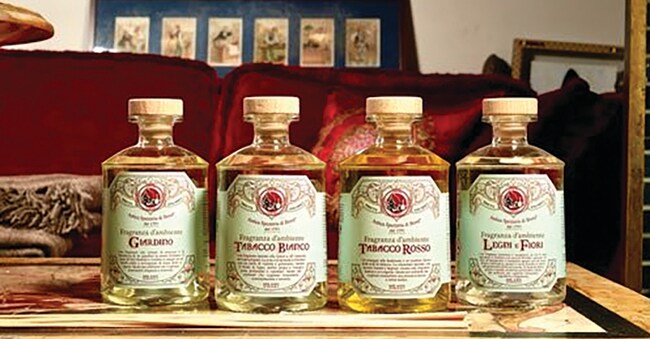
At Christmas, the Red Tobacco, White Tobacco, Woods and Flowers, and Garden fragrances will be presented. This expansion aims to consolidate the brand's sensory and authentic experience, extending its presence to sectors related to health, wellness and excellence.

Commercial expansion between direct sales and selected distribution

RARAE will launch its offer through a dedicated e-commerce platform, allowing fans to purchase Antica Spezieria di Brera 1591 branded products directly online. In parallel, the company has launched a distribution network aimed at wholesalers and selected partners in the horeca sector, including bars, restaurants, wine shops, pharmacies and perfumeries, to extend its market presence. Looking to the future, RARAE is considering opening a physical shop in order to offer an even more immersive and complete experience to its customers.

Tailor-made accessories by Cilento 1780

To further celebrate the value of Italian craftsmanship, RARAE will introduce, alongside the products of the Spezieria, a line of exclusive sartorial accessories made of silk by Cilento 1780 and dedicated to the Antica Spezieria di Brera. These will include scarves and ties representing the excellence of the Italian sartorial tradition.

International ambition and sustainability

RARAE aims for significant growth both nationally and internationally, with a strategy to expand its network of selected artisans and suppliers. The company adopts a business model that integrates quality craftsmanship and innovation, respecting values of sustainability and authenticity and responding to new global trends in excellence and responsible consumption.

The History of the Antica Spezieria di Brera: Tradition and Innovation since 1591

Founded by the Jesuits in 1591, the Antica Spezieria di Brera was Milan's first apothecary's shop, an authentic temple of herbal medicine, guardian of alchemical and phytotherapeutic knowledge that has spanned the centuries. Within these walls, the Jesuits created remedies that would become legendary, such as the famous Brera Pills and the Jesuit Rosolio, the elixir of life.

Initially, the apothecary's role was closely linked to the Jesuit mission of caring for and supporting the poorest, and was fed by produce grown in the surrounding gardens and agricultural areas, including those in the old Brera agricultural zone, or 'Braida' as it was once called. This name, derived from the Germanic word breit ('wide'), emphasised the rural and cultivated character of this part of Milan. Later, with the foundation of the Brera Botanical Garden in 1774 at the behest of Maria Theresa of Austria, the cultivation of medicinal and rare herbs found new impetus. Although the Garden was not directly linked to the Jesuit apothecary, it became a centre of botanical research for medicinal plants, continuing and expanding the tradition of studying medicinal herbs in the same area.

Over time, the apothecary's shop attracted illustrious figures, including Napoleon Bonaparte. In 1812, it evolved into the Antica Farmacia di Brera and became a point of reference for figures such as Alessandro Manzoni. In 1837, a young Carlo Erba started his business here, destined to make his mark on pharmaceutical and Milanese culture. Erba embodied the values of the Spezieria: innovation, dedication and respect for a tradition rooted in Milan's history.

In the context of the Counter-Reformation, however, the Jesuit apothecary's shop suffered difficult times. In 1571, shortly before its official foundation, the archbishop of Milan, St. Charles Borromeo, suppressed several apothecaries' shops linked to religious orders, as he was concerned about the risk of unregulated and controversial measures used in cures. Borromeo considered it essential to centralise and regulate the use of drugs and remedies, limiting the power of religious apothecaries to avoid practices that he perceived as risky for the population. However, the Jesuits managed to assert the importance of their health care mission, finally obtaining permission to continue their activities with the official foundation of the Spezieria di Brera two decades later.

Copyright reserved ©
Loading...

Brand connect

Loading...

Newsletter

Notizie e approfondimenti sugli avvenimenti politici, economici e finanziari.

Iscriviti