
CIMA closes, Italian art is no longer fashionable
The Centre founded by Laura Mattioli held 13 exhibitions from Rosso to Depero and de Chirico, from Rotella to Schifano and Balestrini

-ktcF-U38625676845iKC-1440x752@IlSole24Ore-Web.jpg?r=650x341)
3' min read
3' min read
If it were only the CIMA - Center for Italian Modern Art in New York that announced the sad closure, which was bounced around in the major art journals, from The ArtNewspaper to The New York Times to artnet to the lively Italian web, conformists might shrug at founder Laura Mattioli, daughter of collector Gianni, pretending to be a pain-in-the-ass heiress. But in the Art Departments of the universities of Philadelphia and San Francisco many professors and students are in shock. They closed their art departments and heard about it from the local newspapers.
.jpg)
What is happening in the States? "Funds not forthcoming, budget problems after the pandemic despite the fact that donations and membership fees, which are always 100% deductible according to US tax law, are normal even for the middle class'. Ms Mattioli vented: 'As CIMA we have reached 24% of external contributions, but as a Public Charity we have to reach 30% with 12 different donors. With an annual budget of 1-1.2 million dollars, the target was within reach for a Centre for Research and Promotion of 20th Century Italian Art that has rapidly achieved international renown since 2013. With 13 exhibitions fromMedardo Rosso to Fortunato Depero and Giorgio de Chirico, from Mimmo Rotella to Mario Schifano and Nanni Balestrini, which have led MoMA to pull Italian works out of storage or buy them to complement public collections that lacked them. Instead, the Italian and Italian-American communities, which boast entrepreneurs with offices and incomes in the stars and stripes, stood by. The immediate return was lacking. As a matter of fact: 'the growth in expenses, the many difficulties typical of Italian art exhibitions from the combination of very expensive museum loans and disincentives to lending by private individuals, frightened by notifications and eyecatching customs, forced us to abandon our project. Despite being designed for innovative value, with research grants of 5-6 months at $25-30,000 each, resulting in original and educational programming. With 2-3 curators from mixed Italian and US backgrounds, the annual exhibitions were born. There is nothing like it, not even the scholarships of Magazzino, an Italian collection in Cold Springs. Our average cost of an exhibition is $200,000, $100,000 if works on paper. But the focus is no longer on the quality of the works, but on the social context of the artist'.
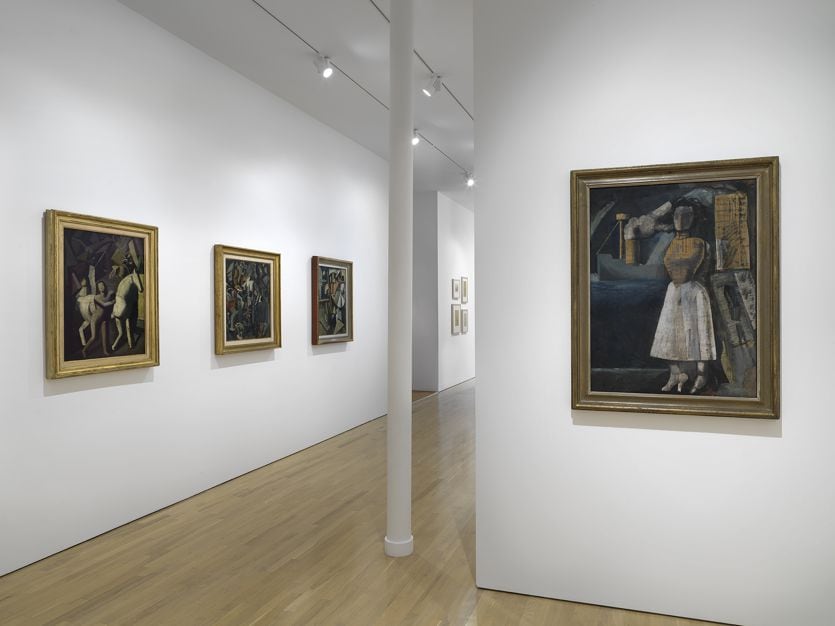
And hosting the social realism of the Divisionists or the Jewish diaspora fleeing racial persecution with Corrado Cagli is a far cry from an American sentiment that brands the museum institution itself and Western and European art in general as a "colonialist and imperialist legacy. Turning its attention to the arts of South America, Africa and women, as long as minorities and identities hitherto underrepresented'. And Italy, with its Greco-Roman culture confused overseas with ancient slavery and past imperialistic dreams in Africa, "becomes indefensible" because it is catalogued among indecipherable ruins and suspicions of Nazi-fascism. And, in contemporary art, trends are being wedged in, which are bending the sensibility towards art. "In the US, clever pseudo-galleries are springing up selling colourful, noncommittal, post-pop, light subject matter or art that refers to the everyday, understandable to all. The opposite of crypto-critical currents of the contemporary of which certain elites claim to be the interpreters. There is a shortage of candidates for scholarships because trends penalise the arts as conceived up to now, as the dedicated Association of Research Institutes in Art History" points out.
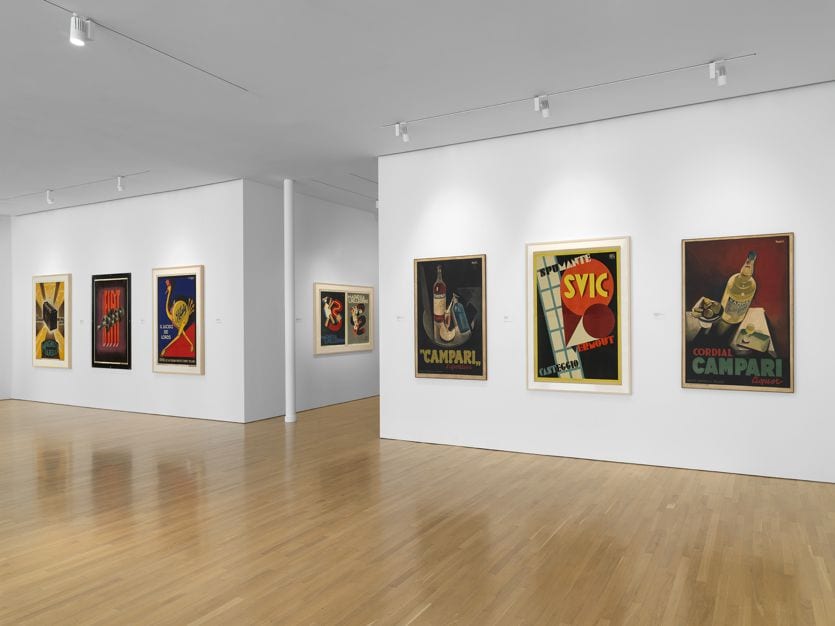
So better to close?
"The difficulties are too many. The $200-300 thousand in annual external contributions came from 250 members, mostly with only the basic membership fee of $125, while some donated $500-1000. And two regular supporters for 60 thousand and event contributions of about 20 thousand. Fiscally American, some of Italian origin. About 2/3 of the budget was for fixed expenses (rent, routine maintenance, permanent staff - 4 permanent and 4 external collaborators) while only 1/3 covered the cost of exhibitions, scholarships and events'.
Where are the Foreign Ministry MAE and the institutions, including the banks? Italian art is in danger of 'remaining a provincial episode', Futurism a fascist copy of Russian Cubo-Futurism and a younger brother of Cubism. Or can anyone do anything?

