
The Network of Circular Cities is born in Genoa
The initiative was launched by the municipal administration together with Italia circolare. The meeting was attended by 15 Italian municipalities

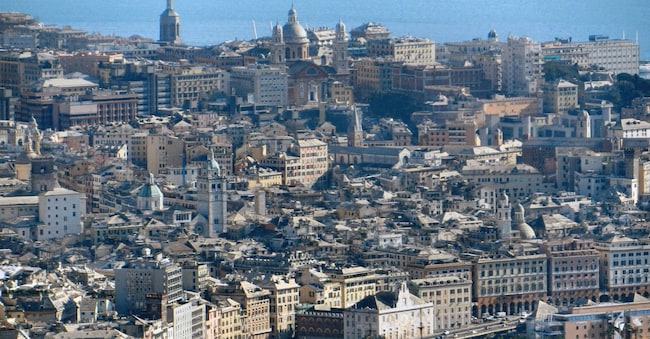
The Italian Network of Circular Cities is born, an initiative promoted by the Municipality of Genoa together with Italia circolare, to bring together the Italian administrations of provincial capitals committed to the transition towards circular, sustainable, resilient and inclusive urban models. The presentation took place in Genoa during the Circular city forum 2026, introduced by the mayor, Silvia Salis. The meeting was attended by 15 municipalities in addition to the host city: Rome, Florence, Turin, Naples, Parma, Aosta, Pavia, Livorno, Imperia, Perugia, Lodi, Mantua, Verona, Lucca and Capannori. The latter is the only non-main city involved and is a pilot project of the Circular cities and regions initiative (Ccri), promoted by the European Commission to support cities and regions in the transition towards circular models.
"The birth of the Network of Circular Cities," explained Silvia Pericu, the Genoese councillor for Environment and Circular Economy, "marks a step that goes beyond the simple sharing of virtuous experiences; it is a concrete attempt to build a common grammar with which Italian cities can read, plan and govern the ecological transition. It is not just a matter of 'doing better', but of learning to do together, in a more coherent, measurable and transformative way. The challenge before us is to move from the sum of good practices to the construction of systems. In this the Network is fundamental, because it allows us to share data, tools and responsibilities, overcoming fragmentation and building a more solid and shared administrative capacity, also through digital infrastructures and common evaluation metrics'.
Cities, pointed out Paolo Marcesini, director of Italia circolare, 'are living organisms: they consume global resources, they are responsible for most of the planet's CO₂ emissions, they produce waste, they move, they heat and cool, they feed, they share, they choose; and they do so at an increasingly intense pace. The growth of cities is a structural and irreversible phenomenon. Managing them in a circular way means transforming their environmental and social impact into an opportunity for innovation, competitiveness and sustainable development'.
The Network was set up with the aim of structuring a stable space for collaboration between administrations, in a circular economy perspective. Its main lines of action include the collection, valorisation and dissemination of good practices at the national and international level; the activation of synergies between cities on strategic supply chains and areas of innovation; the development of a platform for the collection and analysis of data, useful to strengthen the positioning of circularity in public debate and decision-making processes; the facilitation of access to resources, projects and partnerships at the national and European level; and the promotion of the active involvement of local communities.
In the coming months, Pericu and Marcesini explained, the phase of defining operational tools and governance will be launched, with the aim of consolidating a shared and participatory working method. The path envisages the construction of a coordination model among the member cities, the creation of a national digital platform for collecting, sharing, communicating and monitoring good practices, and the drafting of the Manifesto of Circular Cities. In parallel, thematic groups on the main areas of circularity will be activated, collaborations with enterprises, universities and research centres will be developed, and communication and citizen involvement initiatives will be promoted.


