
Drug driving, a circular loosens the grip but risks remain (even on drugs). MIT confirms tests
However, it must be ascertained whether the driver is still under the influence of narcotic or psychotropic substances. Meanwhile, the Consulta is awaited

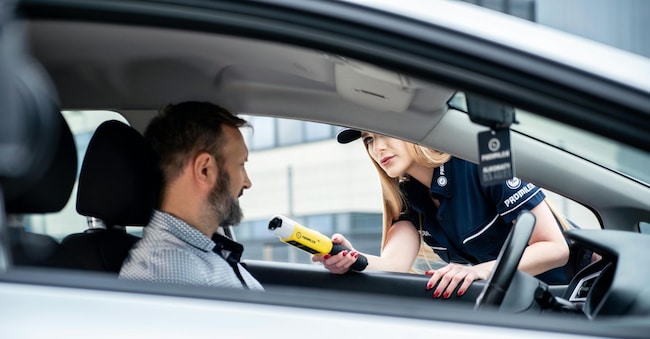
4' min read
4' min read
Just a few months after its entry into force, the new offence of driving after taking narcotic or psychotropic substances - introduced by the reform of the Road Code (law 177/2024) by amending Article 187 - confirms its critical aspects. So much so that, in a circular dated 11 April 2025, the Ministries of the Interior and Health issued guidelines on detection procedures, on the assumption that the offence can be said to be integrated on the sole condition that 'the substance still produces its effects in the body while driving'.
This is no small thing. In fact, it means recovering the requirement of the state of psycho-physical impairment suppressed a few months ago. Before 14 December 2024, the offence was to have created danger by driving in a psycho-physical altered state: after that date, it became mere assumption (except for the offences of homicide and road traffic injuries - serious or very serious - for which the requirement of altered state remains). But risks remain both general and for those taking medicines.
Risk of unconstitutionality
The reform may lead to discriminatory arbitrariness and strict liability. Will it be enough for judges to follow an adaptive interpretation such as that of the circular? The Constitutional Court will decide in the coming months.
In fact, by order of 8 April 2025, the Court of Pordenone raised the question of constitutionality before the Constitutional Court, considering:
- "manifestly unreasonable and unfair" to define as criminally relevant the mere positivity of a subject to the substance, without any investigation of the effects on driving ability;

