Renewables

Circular economy, new batteries from the silicon of disused photovoltaic panels

It's an Enea patent: silicon turned into nanomaterial for cheaper batteries. The map of panel recycling centres

by Davide Madeddu
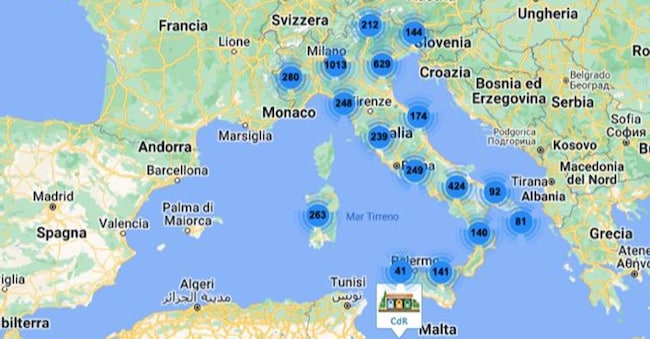
Fotovoltaico, la mappa italiana dei centri di raccolta comunali

3' min read

3' min read

The silicon of end-of-life photovoltaic panels becomes an innovative nanomaterial for the development of cheaper and better performing batteries. And then the other materials that make up photovoltaic panels separated by infrared to be used for other purposes.

These are the objectives of the two patents filed by Enea researchers as part of studies aimed at recycling the materials that make up photovoltaic panels.

Loading...

Enea Patents

.

One of the processes that ENEA researchers are developing, based on a patent, is one that allows the recovery of the main components of photovoltaic panels, such as glass, cells, electrical contacts, and plastic components, thanks to an infrared treatment that allows the thermal degradation of the plastic layer and avoids combustion, 'typical of other methods, with benefits in terms of reduced emissions into the atmosphere'.

"The growth of photovoltaic waste at a global level requires special attention to the end-of-life sector of panels," emphasises Marco Tammaro, head of ENEA's Laboratory of Technologies for Reuse, Recycling, Recovery and Valorisation of Waste and Materials. "In this context, research and innovation can play a crucial role in reducing the problems related to the scarcity of resources and reducing imports from abroad, at lower costs than primary raw materials.

Silicon for batteries

.

One of the patents concerns the environmentally friendly process for recovering silicon from end-of-life photovoltaic panels and transforming it into an innovative nanomaterial, useful for the development of cheaper, higher-performance and longer-lasting batteries.

"The patent can be used in recycling plants for disused photovoltaic panels and in photovoltaic panel production plants themselves," the research agency points out, "for example, to recover silicon from defective panels.

The patents, as the researcher points out, are at the prototype stage and not at the industrial stage, which will have to follow a different path. Currently, the treatment of photovoltaic panels takes place, in most cases, by mechanical means.

The current scenario

.

Explaining how the so-called 'end-of-life' of panels works is Fabrizio Longoni, general manager of the Centro di Coordinamento Raee. "In Italian law, the nature of panels that are discarded is defined by the plant they come from," he explains. "Let's take for example the case of two identical panels: one is in a plant that has a nominal power under 10 kilowatts and is considered domestic WEEE and can access municipal collection centres. The twin panel of this one, but installed in a plant with a higher power rating is a professional WEEE. In this case, the responsibility for handling falls on the producer or a third party or one appointed by the producer, and that panel will be handled by the producer or by the guarantee system to which the producer has turned".

Nets for conferring

.

In the first case, the network of municipal parks, or ecocentres, has 4,370 facilities spread across all regions. "The citizen who has to dispose of a panel under 10 kilowatts," Longoni adds, "must go to the municipal park and deliver it to the appropriate space, then it will be transferred to the treatment centres. For the time being, the transfer of panels is still limited to "those who want to replace their existing panel with a higher-performance one", but the change "could take place from 2026, i.e. 20 years after the first installations". And if it seems simple enough to deal with the end of life of a panel for domestic use, the situation changes when it comes to professional installations.

"In these cases, but we also operate on plants with a power output of less than 10 kilowatts," says Luigi Zen, Technical Director of Consorzio Eco-pv, "we take care of all aspects from the bureaucratic side, with all the documentation, to the planning of collection, transport, and transfer to the treatment plant where we operate, for the time being mechanically.

All this through a network that operates throughout Italy even though, as the director reiterates, 'most of the plants are located in the South'.

Copyright reserved ©
Loading...

Brand connect

Loading...

Newsletter

Notizie e approfondimenti sugli avvenimenti politici, economici e finanziari.

Iscriviti