
Mattarella’s 1990 circular on inclusive education, followed by his resignation
In the text drafted by the Minister for Education, Mattarella proposed, ‘where possible’, that there should be no more than 5 pupils per language group

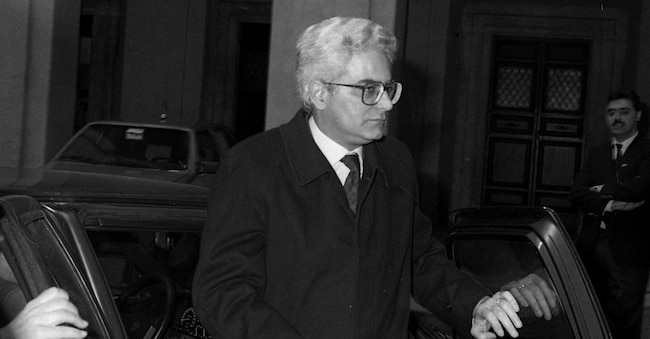
In fact, even the Head of State, Sergio Mattarella, has had occasion to deal with foreign pupils in Italian schools. During his brief tenure as a minister in the Sixth Andreotti Government, which lasted about a year, the then Minister for Public Education (as the current Ministry of Education was then known) issued a circular (No. 205 of 26 July 1990) which, following on from one issued a few months earlier (No. 301 of 1989), dealt with integration in the classroom. And the very subject line (“Compulsory education and foreign pupils. Intercultural education”) set out the path to be followed.
Bearing in mind that this was a different Italia, a different education system and indeed a different immigration policy (the Turco-Napolitano Act, which was the first to provide a comprehensive framework for regulating immigration, would not be introduced until eight years later, ed.), that document has, in its own way, gone down in history. In fact, just a few hours after signing it, Mattarella resigned, along with four other ministers from the left-wing Christian Democrats, in protest against the government’s decision to call for a vote of confidence in the Chamber of Deputies on the Mammì Bill concerning private television stations.
The call for integration and the cap
Turning to the substance of the ministerial guidelines of the time, after citing the figures on the presence of pupils of non-Italian nationality in our classrooms and having suggested the establishment of ‘committees or working groups and a liaison office for issues relating to foreign pupils’, the circular first focuses on the admission of foreign pupils to compulsory education and on how to determine the class in which they should be enrolled. It urges the school community not to ‘forget that foreign pupils are, first and foremost, pupils: boys and girls, with their individuality and differences, including their belonging to a different ethnic group’ and not to neglect, in any case, ‘the necessary assessments of motor, cognitive and socio-emotional development, which form the basis for proper planning for all pupils’.
The text then goes on to address organisational matters and stipulates that ‘pupils are allocated to classes, where possible, by grouping together those from the same language group; however, there must not be more than five such pupils in any one class’. It suggests, on the one hand, ‘distributing foreign pupils at a rate of just a few per class, in order to facilitate their natural linguistic integration with Italian pupils’ and, on the other hand, exceeding that threshold of five ‘during specific language activities’.
The importance of ‘where possible’
What is particularly striking about the provisions laid down 36 years ago is the phrase ‘where possible’, which reappears a few lines further down when it states that ‘as far as possible, language support activities will be stepped up in the early part of the school year’ – and which has been echoed repeatedly in recent discussions between officials from the Ministry of Education, Palazzo Chigi and the Quirinale whilst drafting the text of the decree due to be discussed tomorrow in the Council of Ministers. This also applies to the 30 per cent cap that is now set to be introduced. Where possible, that is.

Brand connect


Newsletter Scuola+
La newsletter premium dedicata al mondo della scuola con approfondimenti normativi, analisi e guide operative
Abbonati