Immigration

Citizenship for foreigners, stricter measures on criminal offences and the Italian language: heading for a vote in the Chamber of Deputies

The League’s proposal introduces new restrictions on foreign nationals born in Italia who have been convicted of certain offences and broadens the grounds for revocation. For marriage and naturalisation, the requirement to demonstrate at least a B1 level of Italian is extended. An oath in Italian is also envisaged.

 ANSA

3' min read

Translated by AI
Versione italiana

3' min read

Translated by AI
Versione italiana

Convictions for terrorism, espionage and other offences may bar the way for citizenship for foreigners born in Italia. Through marriage and naturalisation, even those who have signed the integration agreement or hold a long-term EU residence permit will have to demonstrate a level of Italian equivalent to at least B1.

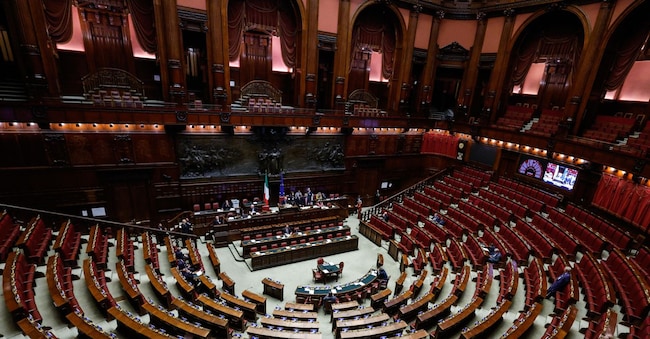
This is the bill proposed by Igor Iezzi (Lega), with Simona Bordonali as rapporteur, which will be put to a vote on Tuesday 20 October in the Chamber of Deputies. The bill also expands the range of offences that result in the loss of citizenship already acquired.

Loading...

The proposal was welcomed by the leader of the League Matteo Salvini, who last Thursday sought to clarify that the legislation represents a ‘battle’, a “proposal by the League not only to strip foreigners who commit serious crimes of their citizenship and residence permits, but also to deny them to minors who are arrested for drug dealing, because we want decent people, not drug dealers”.

The new bans

Nowadays, a foreign national born in Italia who has had lawful and uninterrupted residence until the age of 18 can become an Italian citizen by submitting a declaration, as a rule, by the age of 19.

The proposal extends the ban to offences against the State and political rights punishable by imprisonment, and to those resulting in the revocation of citizenship. For the unlawful production, trafficking and possession of drugs, including where committed as part of a criminal organisation, or for offences aggravated by discrimination or ethnic, national, racial or religious hatred, a prison sentence of more than three years is required.

A suspended sentence does not prevent the purchase if, during the period of suspension, no further offences have been committed. Rehabilitation removes this obstacle. Anyone charged with these offences must await the final judgement. For these applications, the time limit is two years from the date of application, extendable to three years.

Even those applying for citizenship on the basis of residence will be subject to the same restrictions as those already in place for marriage. Where proceedings are underway in relation to the relevant offences, the application remains suspended until notification is received of the case being dropped or of a final acquittal. Here too, rehabilitation removes this obstacle.

Italian and the oath

In the case of marriage and naturalisation, even those who have signed the integration agreement or hold a long-term EU residence permit will be required to demonstrate a level of Italian equivalent to at least B1. This may be demonstrated by means of an appropriate educational qualification or a valid language certificate. Those who, due to age, illness or disability, have serious difficulties in learning the language – as certified by a public healthcare facility – are exempt.

The oath will be taken in Italian. Anyone who is unable to take the oath due to a serious disability, as certified by a public healthcare facility or a doctor registered with the National Health Service, is exempt.

Who might lose it

The revocation, which already applies to certain offences of terrorism and subversion, applies to those who become Italian citizens through marriage, naturalisation or by means of the declaration required for those born in Italia upon reaching the age of majority. Citizens by birth are excluded.

Loading...

The proposal extends the revocation to offences committed using mafia-style methods or to benefit criminal organisations, including foreign ones. Human trafficking, female genital mutilation and death or injury resulting from offences relating to illegal immigration are also included. Specific cybercrimes targeting systems of military interest, public order and security, healthcare, civil protection or otherwise of public interest are also included. Murder and certain sexual offences have been removed from the original text.

Revocation is ordered by the Head of State, on the recommendation of the Minister of the Interior, within ten years of the final conviction. The person must hold, or be able to obtain, another nationality.

To regain Italian citizenship, an application must be submitted and ten years must have elapsed since the decision regarding the end of the risk to society became final. During that period, there must be no new final convictions or declarations of danger relating to offences that would lead to revocation. The Ministry of the Interior may object on serious and substantiated grounds, subject to a favourable opinion from the Council of State, within one year of the requirements being met.

Copyright reserved ©
  • Ivan Cimmarustigiornalista

    Luogo: Roma

    Lingue parlate: Italiano, inglese

    Argomenti: Sicurezza, giudiziaria, inchieste, giustizia tributaria

    Premi: Nel 2011 tra i vincitori del Premio Internazionale Antimafia Livatino-Saetta

Loading...

Brand connect

Loading...

Newsletter

Notizie e approfondimenti sugli avvenimenti politici, economici e finanziari.

Iscriviti