Turin Book Fair

Citizenship? A commodity to be sold to the rich

Citizenship, when bought and sold, turns democracy into a form of oligarchy, argues Lea Ypi in her lucid pamphlet 'Class Boundaries. Inequality, migration and citizenship in the capitalist state'.

by Lara Ricci

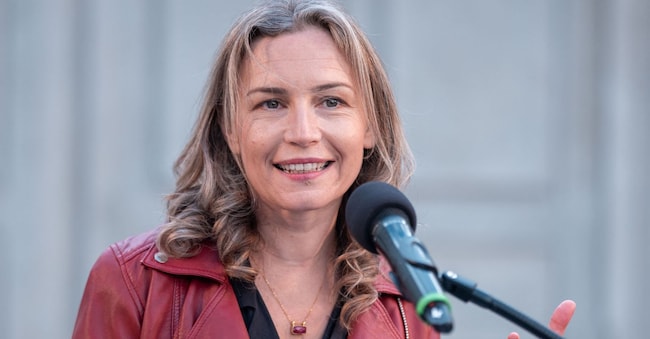
La politologa e filosofa albanese-britannica Lea Ypi, giovedì 15 maggio 2025, durante il suo discorso “Un discorso all’Europa 2025” di fronte al Memoriale dell’Olocausto di Judenplatz, nell’ambito del Festival viennese Wiener Festwochen a Vienna, Austria. (Photo by Georg Hochmuth / APA-PictureDesk / APA-PictureDesk via AFP)

4' min read

4' min read

"Citizenship, when bought and sold instead of conceived as a vehicle for political emancipation, becomes an instrument of domination and oppression. Democracy, as an ideal that professes that everyone has a part in governing and being governed, is gradually transformed into a form of oligarchy through which a wealthy minority controls political power, appropriating the means to conquer and wield it,' writes Lea Ypi - Professor of Political Philosophy at the London school of economics and an expert on Marxism and critical theory - in Class Boundaries. Inequalities, migration and citizenship in the capitalist state (translated by Eleonora Marchiafava, Feltrinelli, pp. 80, euro 10). It is a short pamphlet that aims to explain how the left has lost its compass, accepting the dilemma between social justice and immigration as a fact of reality, and not as the result of power relations. And it does so by showing how contemporary migration policies reinforce the division between social classes.

Citizenship, today, what is it?

Loading...

A commodity. It is a commodity that is bought. It is sold to the richest and instead denied to those who cannot afford it because they have no income or no language requirements. This is particularly dramatic because we have moved from a universalist, expansive conception of citizenship as a vehicle for democratic progress to a restrictive one. This means that today citizenship, instead of opening up the possibility of having certain rights, restricts them. And this takes us back to the days when citizenship was restricted by census, accessible only to the rich, to those who spoke the national language and not dialects. To the era, that is, of pre-democratic citizenship,

What kind of citizenship does a democracy need?

Of a citizenship that reflects the conception of democracy as a political process that allows those subjected to laws to also have the opportunity to contribute to their creation. Democracy is a form of government that offers a synthesis of individual and collective freedom, because it allows the law to be not only a vehicle of submission but also of political emancipation, of progress. And this is a far cry from the political dynamics of today.

What should the left do?

In my opinion, it is a matter of recovering an analysis of migration, in which migration is not only seen as a problem of freedom of movement, but which also includes in the discussion the causes of migration and thus the political, social and economic foundations of global inequalities that cause migration. Migration is not a problem as such, nor are borders a problem as such, they only become a problem when they reflect power dynamics that need to be analysed not as dynamics resulting from a clash of civilisations or culture, as the right wing does, but which have to do with the development of global capitalism.

What alternative to capitalism?

To criticise capitalism, there is no need to already have a ready-made vision of the alternative, otherwise we make what Marx called the recipes for the cook-shops of the future. It is about recovering an analysis of society that builds an alternative through an understanding of political dynamics and social conflict and the discovery of a subjectivity in struggle.

How does intersectional feminism fit into your way of seeing things?

In my opinion there are two ways to relate to the issue of feminism, one is to make it an identity battle and the other is to understand the relationship between gender oppression and the socio-economic oppression produced within the capitalist system. In the latter case, it is about promoting battles for women's rights that are not only limited to demanding liberal and abstract rights, but also look at the social limits of the possibility of success of these battles. For example, one cannot demand access to the highest spheres of representation in business or academia without realising that the possibility of women's advancement in these fields is through the exploitation of immigrant women doing domestic work, taking care of children, and so on.

In what context did your thinking mature?

I was born in communist Albania and experienced the regime collapse and the replacement of the communist world and real socialism with a capitalist world. I saw how in both systems there is a difference between freedom as an ideal and freedom as an ideology. This made me particularly attentive to power dynamics, to the formation of consensus by means of propaganda, by manipulation of common sense, and led me to study philosophy, and a certain kind of critical philosophy, to approach these issues in a way that tries to go beyond the surface. The experience of growing up in Albania, which was a completely isolated country where citizens were not allowed to go outside their borders, was replaced with the experience of open borders, but at a time when Albanians who escaped went from being dissident heroes of communism to being considered criminals who threatened the values of liberal societies. And this made me particularly alert to the manipulation of the concept of freedom and the hypocrisy surrounding the discussion of freedom. Because if freedom of movement matters, it matters both when talking about emigration and when talking about immigration, whether to leave a certain country or to enter another. We cannot condemn as criminals those states that repress freedom of exit and instead normalise the exclusion of those who arrive at Europe's borders.

Copyright reserved ©
  • Lara Ricci

    Lara Riccivicecaposervizio curatrice delle pagine di letteratura e poesia

    Luogo: Milano e Ginevra

    Lingue parlate: Inglese e francese correntemente, tedesco scolastico

    Argomenti: Letteratura, poesia, scienza, diritti umani

    Premi: Voltolino, Piazzano, Laigueglia, Quasimodo

Loading...

Brand connect

Loading...

Newsletter

Notizie e approfondimenti sugli avvenimenti politici, economici e finanziari.

Iscriviti